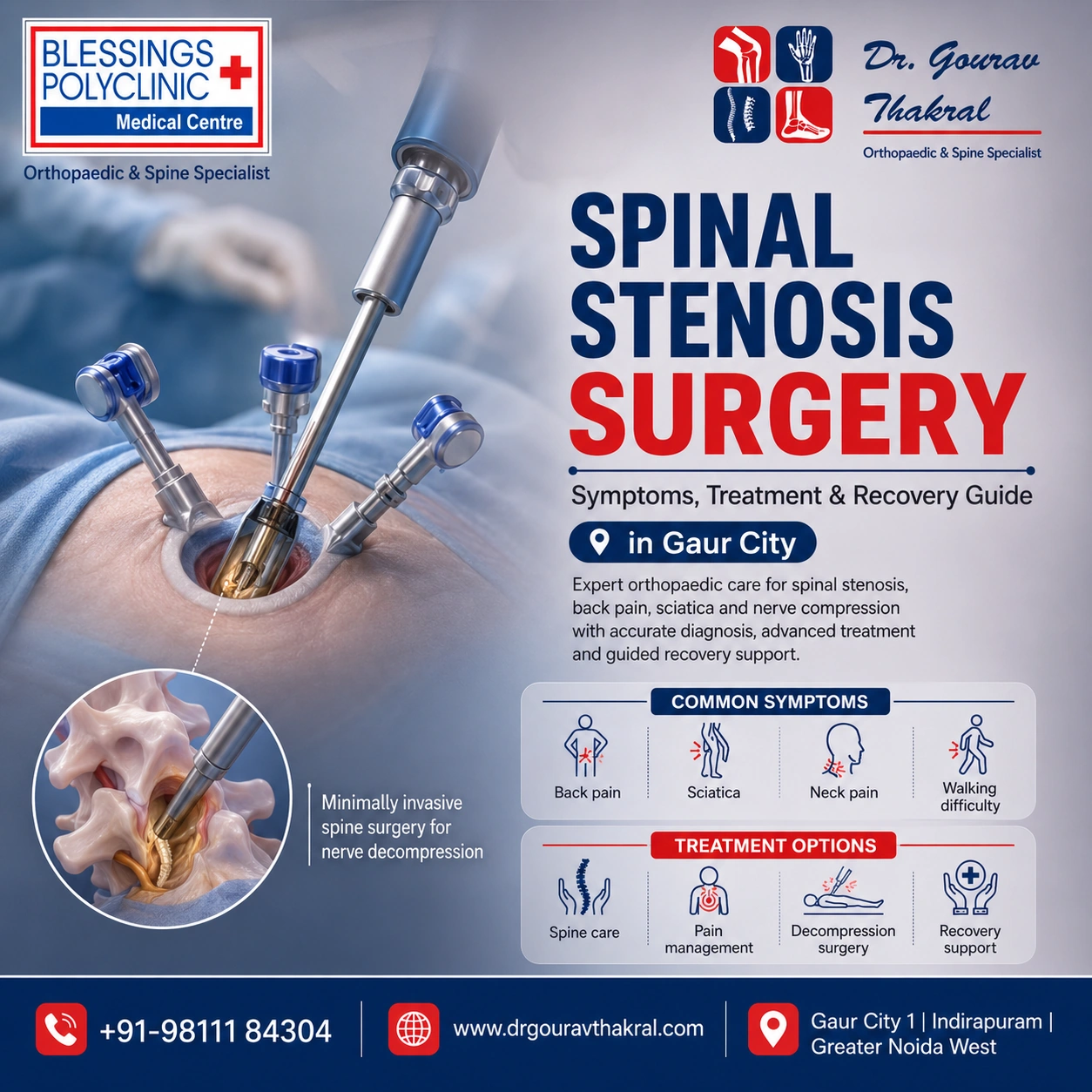
Spinal Stenosis Surgery in Gaur City: Symptoms, Treatment and Recovery Guide
Spinal Stenosis Surgery in Gaur City may become necessary when narrowing inside the spine starts pressing on the spinal cord or nerves. This pressure can cause back pain, neck pain, leg pain, sciatica, numbness, tingling, weakness, or walking difficulty. Many patients first try medicines, physiotherapy, lifestyle changes, exercises, and Pain management. However, surgery may become an option when symptoms continue or nerve compression becomes severe.
Spinal stenosis means the space inside the spine becomes narrow. This can happen in the lower back, called lumbar spinal stenosis, or in the neck, called cervical spinal stenosis. Mayo Clinic explains that spinal stenosis in the lower back can cause pain or cramping in one or both legs, especially while standing for a long time or walking, and symptoms may improve when sitting or bending forward.
For patients looking for Back pain treatment, Sciatica treatment, Neck pain treatment, and advanced Spine care in Gaur City, Dr. Gourav Thakral provides expert orthopaedic evaluation and treatment guidance. As an experienced Orthopaedic doctor and Orthopaedic specialist, he helps patients understand whether they need non-surgical treatment or surgical care.
What Is Spinal Stenosis?
Spinal stenosis occurs when the spinal canal or nerve passage becomes narrow. The spine contains bones, discs, ligaments, joints, nerves, and the spinal cord. When age-related changes, disc bulges, arthritis, thickened ligaments, or bone spurs reduce space inside the spine, nerves may become compressed.
This compression can create pain, numbness, tingling, weakness, and difficulty walking. In the lower back, it may cause leg pain or sciatica-like symptoms. In the neck, it may cause neck pain, arm pain, hand numbness, balance issues, or weakness.
A Spine specialist can examine symptoms and identify whether pain is due to spinal stenosis, slip disc, arthritis, nerve compression, or another spine condition.
Common Symptoms of Spinal Stenosis
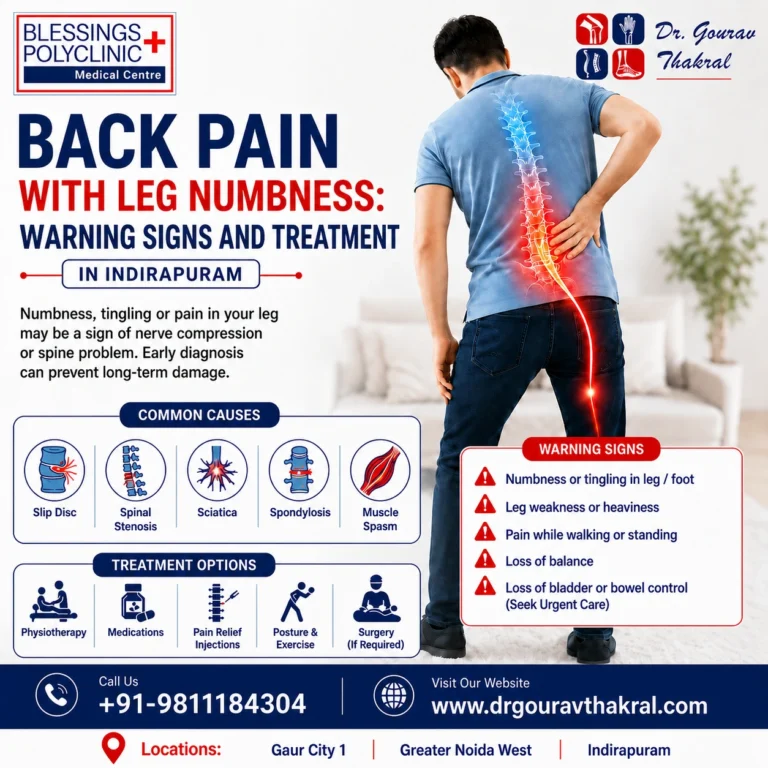
Spinal stenosis symptoms depend on where the narrowing occurs. Lumbar stenosis affects the lower back and legs. Cervical stenosis affects the neck, arms, hands, and sometimes balance.
Common symptoms may include:
Lower back pain
Neck pain
Pain going down the leg
Sciatica-like pain
Numbness or tingling in legs or arms
Weakness while walking
Leg heaviness after standing or walking
Pain relief after sitting or bending forward
Difficulty walking long distances
Balance problems in some neck stenosis cases
Mild symptoms may improve with non-surgical care. However, progressive weakness, walking difficulty, balance issues, or bladder and bowel symptoms need urgent medical attention.
Causes of Spinal Stenosis
Spinal stenosis often develops slowly with age. Wear and tear in the spine can lead to arthritis, bone spurs, disc degeneration, and thickened ligaments. These changes can reduce space around the nerves.
Common causes include age-related degeneration, herniated or bulging discs, arthritis, thickened spinal ligaments, past spine injury, spinal deformity, congenital narrow spinal canal, or previous spine surgery changes.
Some patients may also have a slip disc along with stenosis. In such cases, Slip disc surgery may become part of the overall treatment plan. The doctor must identify the exact reason for nerve compression before suggesting surgery.
When Should You Consult a Doctor?
You should consult an Orthopaedic doctor if back pain, neck pain, sciatica, numbness, or walking difficulty continues despite rest and basic treatment. Early evaluation can help prevent worsening symptoms and guide the right treatment.
Consult a doctor if you notice pain going down the leg, numbness in the foot, weakness while walking, reduced walking distance, neck pain with arm symptoms, tingling in hands, or repeated balance issues. Do not ignore symptoms that keep increasing.
Urgent consultation is needed if there is sudden weakness, loss of bladder or bowel control, numbness around the private area, or severe difficulty walking.
Diagnosis of Spinal Stenosis
Diagnosis starts with a detailed history and physical examination. The doctor checks pain location, walking ability, nerve function, reflexes, sensation, muscle strength, posture, and spine movement.
X-rays may show arthritis, alignment changes, or bone-related problems. MRI is commonly used to check nerve compression, spinal canal narrowing, disc bulges, and soft tissue changes. CT scan may help in selected cases, especially when bone detail is needed.
A proper diagnosis helps the Orthopaedic specialist decide whether the patient needs medicines, physiotherapy, injections, Pain management, or surgery.
Non-Surgical Treatment for Spinal Stenosis
Not every patient needs surgery. Many patients improve with conservative treatment, especially when symptoms are mild or moderate. The goal is to reduce pain, improve movement, strengthen supporting muscles, and control nerve irritation.
Non-surgical treatment may include medicines, physiotherapy, posture correction, activity modification, weight management, walking support, exercises, and guided pain management. Some patients may need injections to reduce inflammation around the nerves.
For Back pain treatment, the focus should not be only on painkillers. A complete spine care plan includes posture improvement, safe movement habits, muscle strengthening, flexibility, and lifestyle correction.
When Is Spinal Stenosis Surgery Needed?
Spinal stenosis surgery may be considered when symptoms do not improve with proper non-surgical care or when nerve compression causes serious functional problems. Surgery aims to create more space for the spinal cord or nerves.
Mayo Clinic describes decompression options such as laminectomy, where the surgeon removes the back part of the affected spinal bone to ease nerve pressure by creating more space.
Surgery may be needed when:
Leg pain or sciatica remains severe
Walking distance keeps reducing
Numbness or weakness continues
Pain affects sleep or daily work
Non-surgical treatment fails
MRI shows significant nerve compression
Balance or hand function worsens in neck stenosis
Bladder or bowel symptoms appear
The final decision depends on symptoms, MRI findings, nerve function, overall health, age, and daily activity needs.
Types of Spinal Stenosis Surgery
The type of surgery depends on the location and severity of stenosis. The most common aim is decompression, which means removing pressure from nerves.
Laminectomy
Laminectomy removes part of the bone at the back of the vertebra to create more space for the nerves. It is one of the commonly used surgeries for spinal stenosis.
Laminotomy
Laminotomy removes only a smaller part of the lamina. It may help relieve pressure at a specific area.
Foraminotomy
Foraminotomy enlarges the opening where the nerve exits the spine. This may help when nerve compression occurs at the nerve exit point.
Decompression With Fusion
Fusion may be needed when the spine is unstable, severely degenerated, or when decompression may affect stability. Fusion joins two or more spinal bones using implants and bone graft.
Mayo Clinic notes that sometimes, after decompression, the bone may need to be connected to nearby spinal bones using metal hardware and bone graft.
Recovery After Spinal Stenosis Surgery
Recovery after spinal stenosis surgery varies from patient to patient. It depends on the type of surgery, number of spine levels treated, age, health condition, nerve compression severity, and rehabilitation.
Patients may need wound care, medicines, walking guidance, activity restrictions, physiotherapy, and follow-up visits. NHS explains that after lumbar decompression surgery, some people may return to work around 4 to 6 weeks depending on work type and medical advice, while usual activities may take up to 12 weeks.
Recovery may include gradual walking, avoiding heavy lifting, safe sitting posture, spine exercises, pain control, and strengthening. Some patients feel improvement in leg pain early, while numbness or weakness can take longer because nerve recovery is gradual.
Spine Care After Surgery
Proper Spine care after surgery helps support healing and reduce the risk of future problems. Patients should follow the doctor’s advice about movement, walking, sitting, bending, lifting, and exercises.
Important recovery steps may include:
Walking as advised
Avoiding heavy lifting early
Maintaining correct posture
Taking medicines on time
Keeping the wound clean and dry
Doing physiotherapy as guided
Avoiding smoking
Controlling diabetes and weight
Attending follow-up visits
A safe recovery plan helps patients regain confidence and return to routine activities gradually.
Spinal Stenosis Surgery in Gaur City by Dr. Gourav Thakral
If you are dealing with back pain, neck pain, sciatica, numbness, tingling, or walking difficulty, Dr. Gourav Thakral can help with proper diagnosis and treatment planning in Gaur City. He evaluates symptoms, MRI findings, nerve function, movement limitations, and previous treatment response before suggesting the next step.
Patients searching for Back pain treatment, Sciatica treatment, Neck pain treatment, Slip disc treatment, or advanced spine care can consult Dr. Gourav Thakral for expert guidance. As an experienced Orthopaedic doctor and Orthopaedic specialist, he focuses on patient-specific care and safe recovery planning.
Final Thoughts
Spinal stenosis can slowly affect walking, movement, comfort, and daily life. Many patients improve with medicines, physiotherapy, exercises, and pain management. However, surgery may help when nerve compression becomes severe or symptoms do not improve with proper non-surgical care.
For Spinal Stenosis Surgery in Gaur City, consult Dr. Gourav Thakral for proper evaluation, treatment planning, and recovery guidance.
FAQs
1. What is spinal stenosis?
Spinal stenosis is narrowing of the spinal canal or nerve passage. It can press on nerves and cause pain, numbness, weakness, or walking difficulty.
2. Does every spinal stenosis patient need surgery?
No. Many patients improve with medicines, physiotherapy, exercises, injections, and pain management. Surgery is considered when symptoms remain severe or nerve compression worsens.
3. What symptoms suggest spinal stenosis?
Back pain, neck pain, sciatica, leg heaviness, numbness, tingling, weakness, and walking difficulty may suggest spinal stenosis.
4. What surgery is done for spinal stenosis?
Common surgeries include laminectomy, laminotomy, foraminotomy, and decompression with fusion in selected cases.
5. How long does recovery take after spinal stenosis surgery?
Recovery varies. Many people gradually return to daily activities over weeks, while full recovery may take longer depending on surgery type and nerve condition.