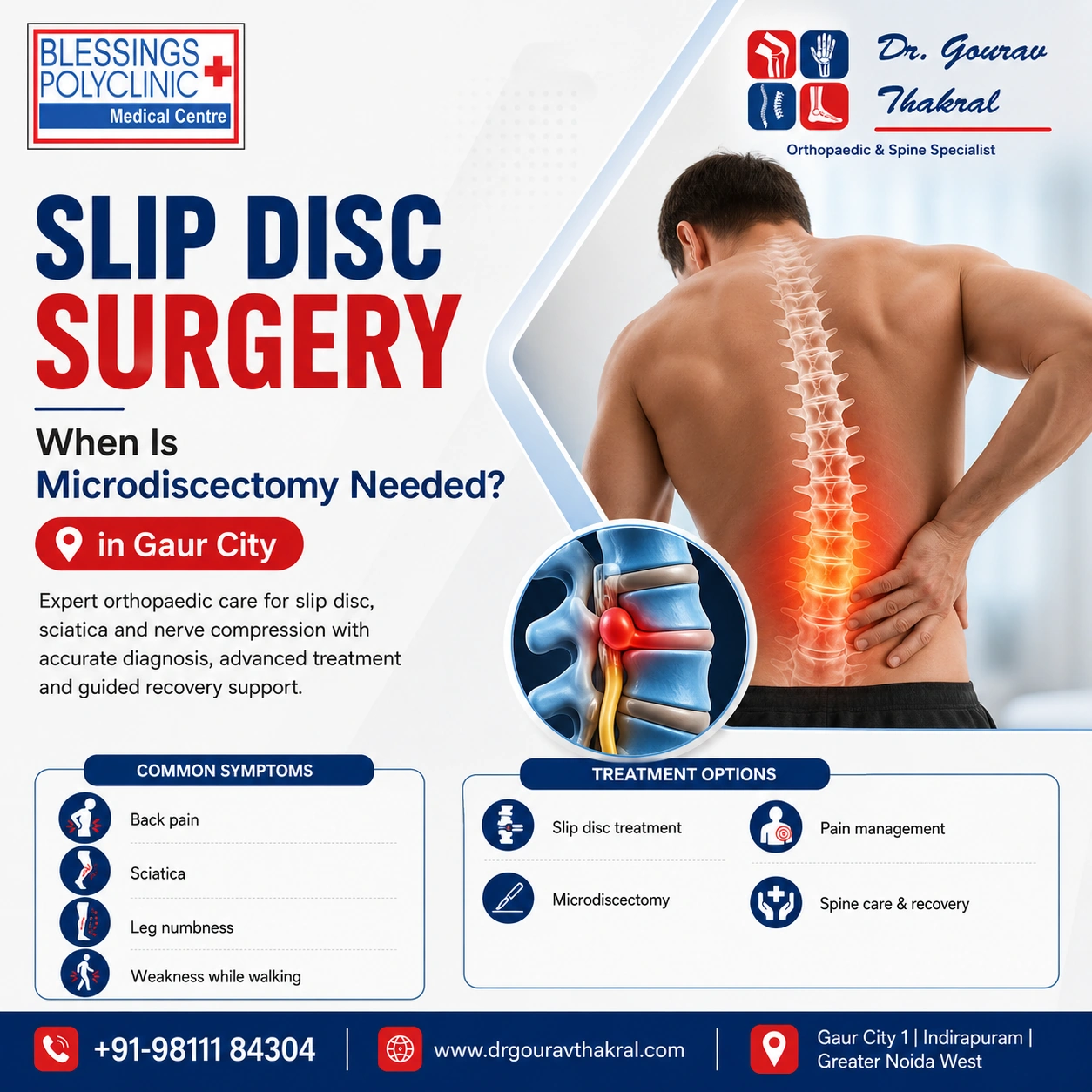
Slip Disc Surgery in Gaur City: When Is Microdiscectomy Needed?
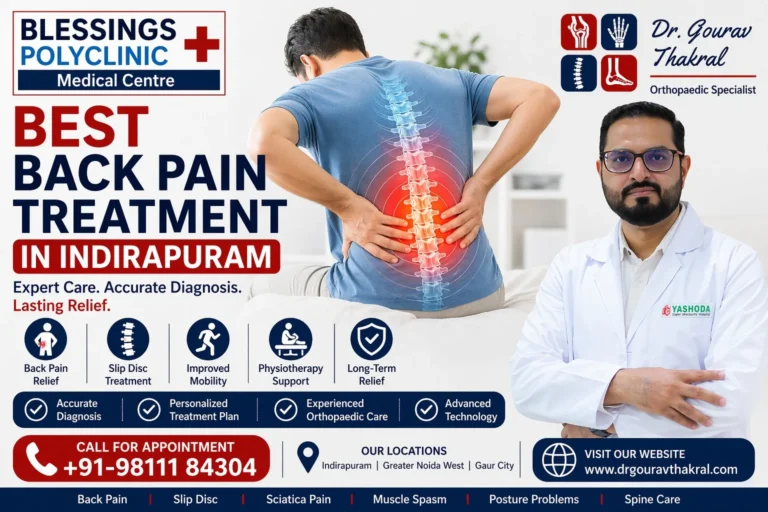
Slip Disc Surgery in Gaur City may become necessary when a slipped disc causes severe leg pain, sciatica, numbness, weakness, or nerve compression that does not improve with proper non-surgical treatment. Many patients with slip disc first feel lower back pain. In some cases, pain travels from the lower back to the buttock, thigh, calf, or foot. This condition is commonly known as sciatica.
A slipped disc, also called a herniated disc, happens when the soft inner part of a spinal disc pushes out through the outer layer. If this disc material presses on a nerve, it can cause pain, tingling, numbness, or weakness. Mayo Clinic explains that a herniated disc in the lower back can cause pain in the lower back, buttock, thigh, calf, and sometimes the foot.
For patients looking for Slip disc treatment, Back pain treatment, and Sciatica treatment in Gaur City, Dr. Gourav Thakral provides expert orthopaedic evaluation and treatment guidance. As an experienced Orthopaedic doctor and Orthopaedic specialist, he helps patients understand whether they need medicines, physiotherapy, injections, Pain management, or surgery.
What Is a Slip Disc?
A slip disc means one of the soft cushioning discs between the spine bones has bulged or herniated. These discs work like shock absorbers and help the spine move smoothly. When a disc herniates, it can irritate or compress nearby nerves.
Not every slip disc causes symptoms. Some people may have a disc bulge on MRI but no major pain. Others may develop severe back pain, leg pain, numbness, or weakness. The severity depends on the location of the disc, nerve pressure, inflammation, and the patient’s activity level.
A Spine specialist can examine the symptoms and decide whether the pain is coming from the disc, nerve, muscles, joints, or another spine problem.
Common Symptoms of Slip Disc
Slip disc symptoms can vary from mild discomfort to severe pain. In the lower back, the most common concern is sciatica. Sciatica pain usually travels along the path of the nerve, from the lower back to the leg.
Common symptoms include:
Lower back pain
Pain spreading to the buttock, thigh, calf, or foot
Tingling or pins-and-needles sensation
Numbness in the leg or foot
Weakness while walking or lifting the foot
Pain that increases while sitting, bending, coughing, or sneezing
Difficulty standing or walking for long periods
Burning or electric shock-like leg pain
If symptoms are mild, conservative care may help. However, worsening weakness, bladder or bowel issues, or severe pain needs urgent medical attention.
What Is Microdiscectomy?
Microdiscectomy is a spine surgery used to remove the part of the herniated disc that is pressing on a nerve. The goal is to reduce nerve pressure and improve leg pain, numbness, or weakness.
This surgery usually uses a smaller incision and specialized instruments. It focuses on the affected nerve and disc fragment. Mayo Clinic states that diskectomy can reduce herniated disc symptoms in many people who have clear signs of a compressed nerve, such as pain travelling down the legs.
Microdiscectomy does not replace the whole disc. It removes only the problematic disc material that compresses the nerve. The surgeon decides suitability after clinical examination, MRI findings, symptom severity, and response to previous treatment.
When Is Microdiscectomy Needed?
Microdiscectomy is usually considered when non-surgical treatment does not provide enough relief, or when nerve symptoms become serious. Most slip disc cases improve without surgery, but some patients need surgical care when nerve compression continues.
NHS explains that surgery for a slipped disc is not usually needed, but a specialist may discuss surgery if symptoms do not improve with other treatments or include worsening weakness or numbness.
Microdiscectomy may be considered when:
Leg pain is severe and continues despite treatment
Sciatica affects walking, sleep, or daily activity
MRI shows disc herniation pressing on a nerve
Numbness or tingling continues
Muscle weakness develops
Pain keeps returning after conservative care
Non-surgical treatment fails over time
The patient cannot perform normal work due to nerve pain
The decision should always come after a detailed evaluation by a Spine specialist or experienced orthopaedic spine expert.
Non-Surgical Treatment Before Surgery
Most patients do not need immediate surgery. Doctors usually start with conservative treatment unless there are severe nerve symptoms or emergency signs. Non-surgical treatment aims to reduce pain, inflammation, nerve irritation, and muscle spasm.
Treatment may include rest for a short period, medicines, physiotherapy, posture correction, activity modification, exercises, hot or cold therapy, and guided Pain management. Some patients may need injections if pain remains severe.
For Back pain treatment, the focus should not be only on painkillers. A proper plan should include spine care, muscle strengthening, flexibility, posture correction, and safe movement habits.
When Should You Seek Urgent Care?
Some slip disc symptoms need urgent medical attention. These signs may indicate serious nerve compression.
Seek immediate care if you have:
Loss of bladder or bowel control
Numbness around the private area
Sudden or worsening leg weakness
Difficulty lifting the foot
Severe pain that does not settle
Difficulty walking due to weakness
These symptoms should not be ignored. Early action can help prevent long-term nerve problems.
Diagnosis Before Slip Disc Surgery
Diagnosis starts with medical history and physical examination. The doctor checks pain location, leg symptoms, reflexes, sensation, muscle strength, walking pattern, and spine movement.
MRI is commonly used when symptoms are severe, long-lasting, or linked with nerve compression. MRI helps show the disc, nerve pressure, inflammation, and level of herniation. X-rays may help check bone alignment, arthritis, or other spine conditions, but they do not show discs clearly.
A proper diagnosis helps the Orthopaedic specialist decide whether the patient needs conservative care, injections, or surgery.
Benefits of Microdiscectomy
Microdiscectomy can help selected patients with nerve compression due to a herniated disc. It mainly helps leg pain caused by sciatica. Back pain may improve in some patients, but the main goal is nerve decompression.
Possible benefits include:
Reduced sciatic leg pain
Better walking comfort
Relief from nerve pressure
Improved sleep due to less pain
Improved daily movement
Faster return to activity in selected patients
Better function when conservative treatment fails
Mayo Clinic notes that diskectomy may reduce herniated disc symptoms in many people with clear compressed nerve symptoms, but it does not cure the reason the disc became injured or herniated.
Recovery After Microdiscectomy
Recovery after microdiscectomy varies from patient to patient. Some patients walk soon after surgery as advised by the medical team. Pain relief may happen early, but numbness or weakness can take longer depending on nerve recovery.
Recovery may include wound care, medicines, walking, avoiding heavy lifting, posture correction, physiotherapy, and gradual return to daily activity. The doctor may advise avoiding bending, twisting, and lifting heavy objects during early recovery.
A good recovery plan includes Spine care, strengthening exercises, weight control, safe sitting posture, and regular follow-up. Patients should not rush back to intense activity without medical advice.
Can Slip Disc Come Back After Surgery?
Yes, a slip disc can recur in some patients. Microdiscectomy removes the disc portion that presses on the nerve, but it does not make the disc new again. The remaining disc can still degenerate or herniate later.
Patients can reduce risk by following spine care advice, maintaining healthy weight, avoiding unsafe lifting, strengthening core muscles, and improving posture. Regular exercise and proper movement habits can support long-term spine health.
Slip Disc Surgery in Gaur City by Dr. Gourav Thakral
If you are dealing with severe back pain, leg pain, sciatica, numbness, or weakness, Dr. Gourav Thakral can help with proper diagnosis and treatment planning in Gaur City. He evaluates symptoms, MRI findings, nerve function, pain severity, activity limitations, and previous treatment response before suggesting the next step.
Patients searching for Slip disc treatment, Sciatica treatment, or Back pain treatment can consult Dr. Gourav Thakral for expert guidance. As an experienced Orthopaedic doctor and Orthopaedic specialist, he focuses on patient-specific care, clear advice, and safe recovery planning.
Final Thoughts
Slip disc surgery is not needed for every patient. Many people improve with medicines, physiotherapy, activity changes, and pain management. However, microdiscectomy may help when a herniated disc causes ongoing sciatica, nerve compression, numbness, weakness, or severe leg pain that does not improve with proper care.
If back pain or sciatica is affecting your walking, sleep, work, or daily life, consult Dr. Gourav Thakral in Gaur City for proper evaluation and treatment guidance.
FAQs
1. What is a slip disc?
A slip disc happens when the soft inner part of a spinal disc pushes out and may press on a nearby nerve.
2. Does every slip disc need surgery?
No. Many slip disc cases improve with medicines, physiotherapy, activity changes, and pain management. Surgery is considered in selected cases.
3. What is microdiscectomy?
Microdiscectomy is a surgery that removes the herniated disc portion pressing on a nerve to reduce sciatica and nerve symptoms.
4. When is microdiscectomy needed?
It may be needed when severe leg pain, numbness, weakness, or sciatica does not improve with proper non-surgical treatment.
5. Can microdiscectomy help back pain?
It mainly helps nerve-related leg pain. Back pain may improve in some cases, but the main goal is to relieve nerve compression.