Cervical Disc Problem Surgery in Gaur City: When Neck Pain Needs Surgical Care
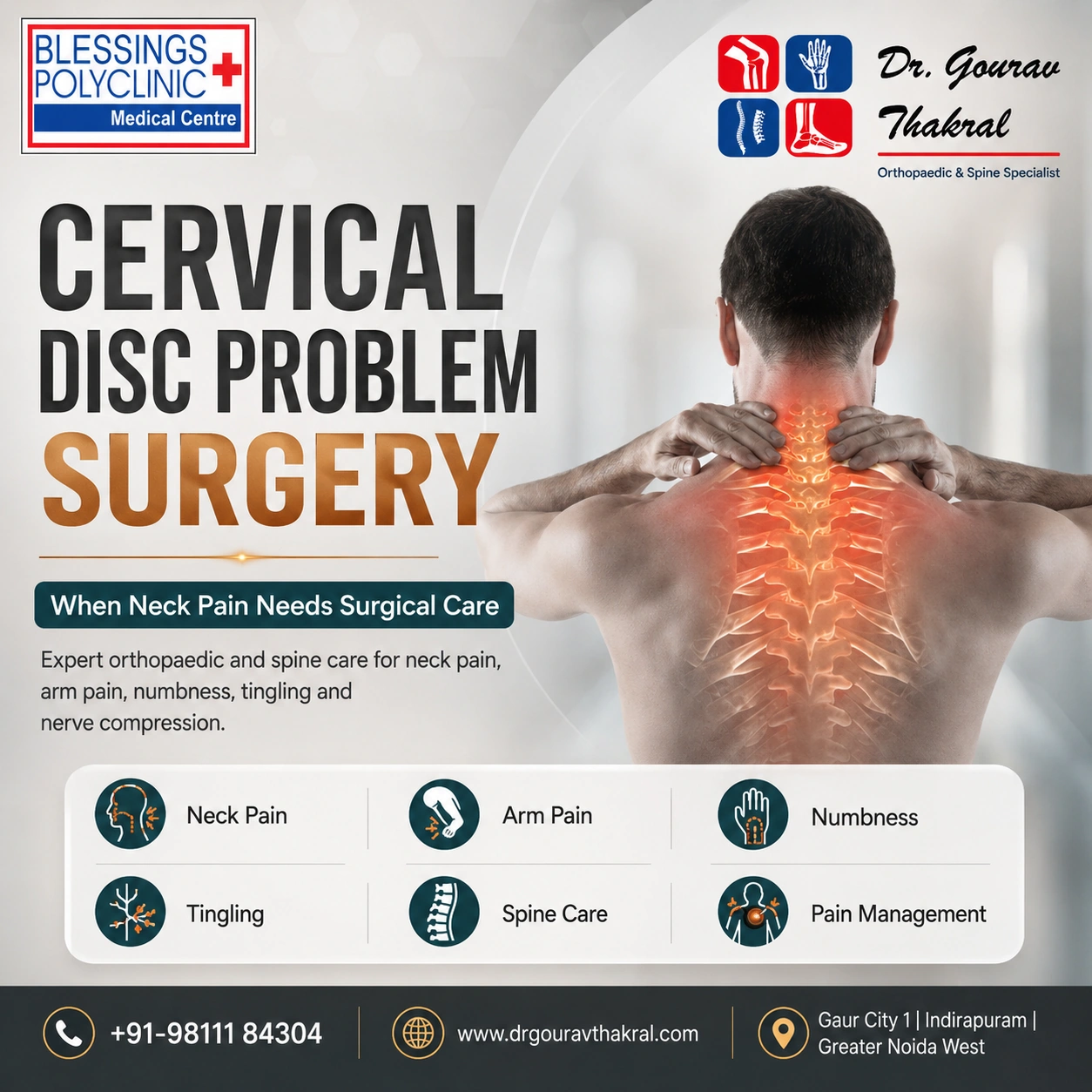
Cervical Disc Problem Surgery in Gaur City may become necessary when a disc problem in the neck causes severe neck pain, arm pain, numbness, tingling, weakness, or nerve compression that does not improve with proper non-surgical treatment. Many patients first feel stiffness or pain in the neck. Later, pain may travel to the shoulder, arm, hand, or fingers.
A cervical disc problem can happen when a disc in the neck bulges, herniates, or degenerates. If the disc presses on a nerve root or spinal cord, symptoms can become more serious. Mayo Clinic explains that a herniated disc can cause pain, numbness, or weakness in an arm or leg depending on where the disc is located. It also notes that many people improve over time and surgery is usually not needed for every patient.
For patients looking for Neck pain treatment, Slip disc treatment, and advanced Spine care in Gaur City, Dr. Gourav Thakral provides expert orthopaedic evaluation and treatment guidance. As an experienced Orthopaedic doctor, Orthopaedic specialist, and Bone specialist, he helps patients understand whether conservative care, Pain management, or surgery is the right option.
What Is a Cervical Disc Problem?
The cervical spine is the neck part of the spine. It contains bones, discs, nerves, muscles, ligaments, and the spinal cord. The discs sit between the spine bones and work like cushions. They help the neck move and absorb pressure.
A cervical disc problem happens when one of these discs becomes damaged, dry, weak, bulged, or herniated. In some patients, the disc may press on a nerve. This can cause pain that spreads from the neck to the shoulder, arm, or hand.
Some people call this condition a neck slip disc. Others may describe it as cervical disc bulge, cervical disc herniation, cervical radiculopathy, or pinched nerve in the neck. A Spine specialist can identify the exact cause through examination and imaging when needed.
Common Symptoms of Cervical Disc Problems
Cervical disc symptoms can vary from person to person. Some patients feel only neck stiffness. Others may develop severe arm pain, tingling, numbness, or weakness.
Common symptoms include neck pain, shoulder pain, arm pain, hand numbness, tingling in the fingers, burning pain, weakness in the arm, stiffness in the neck, headache starting from the neck, reduced neck movement, and pain that increases while sitting, driving, bending the neck, or using a phone.
Cervical radiculopathy happens when irritation or pressure affects nerves that travel from the neck into the arms. NHS Inform explains that cervical radiculopathy can happen due to nerve irritation from inflammation, injury, or age-related changes in discs, ligaments, or joints. It also notes that many symptoms improve with time.
When Neck Pain Needs Medical Attention
Not every neck pain needs surgery. Mild neck pain may improve with rest, posture correction, medicines, exercises, and lifestyle changes. However, some symptoms need proper medical evaluation.
You should consult an Orthopaedic surgeon if neck pain keeps coming back, spreads to the arm, causes numbness, affects sleep, or limits daily work. Weakness in the arm or hand should not be ignored. Difficulty holding objects, buttoning clothes, writing, typing, or lifting things may indicate nerve involvement.
Urgent evaluation becomes important if symptoms worsen quickly, walking balance becomes poor, hand coordination reduces, or bladder and bowel control changes. These signs may indicate serious nerve or spinal cord pressure.
Causes of Cervical Disc Problems
Cervical disc problems may develop due to age-related wear and tear, poor posture, sudden injury, repetitive strain, heavy lifting, long screen use, or disc degeneration. Some patients develop symptoms after a sudden neck jerk or accident. Others develop pain gradually over months or years.
Long hours on mobile phones, laptop work, poor sitting posture, weak neck muscles, and lack of exercise can increase neck strain. However, the exact cause should always be confirmed by a doctor.
A cervical disc problem may occur along with arthritis, bone spurs, spinal canal narrowing, or ligament thickening. This is why proper diagnosis matters before planning Orthopaedic treatment.
Diagnosis Before Cervical Disc Surgery
Diagnosis starts with a detailed history and physical examination. The doctor checks pain location, neck movement, arm strength, sensation, reflexes, posture, and nerve signs. This helps identify whether symptoms are coming from the disc, nerve, muscle, joint, or another spine condition.
X-rays may show alignment, arthritis, or bone-related changes. MRI can show the disc, nerve compression, spinal cord pressure, and soft tissue condition. In selected cases, nerve tests or CT scans may help.
A correct diagnosis helps the Orthopaedic specialist decide whether the patient needs medicines, physiotherapy, injections, pain management, or surgery.
Non-Surgical Treatment for Cervical Disc Problems
Most patients do not need immediate surgery. Doctors usually start with non-surgical care unless there are serious nerve or spinal cord symptoms. Non-surgical treatment aims to reduce pain, inflammation, muscle spasm, and nerve irritation.
Treatment may include medicines, physiotherapy, posture correction, neck exercises, activity modification, hot or cold therapy, ergonomic changes, and guided Pain management. In some patients, injections may help reduce nerve inflammation.
AAOS explains that non-surgical treatment for cervical radiculopathy may include medicines, oral corticosteroids, steroid injections, physical therapy, and other measures depending on the patient’s condition.
A good Spine care plan should focus on posture, muscle strength, flexibility, safe movement, and daily habit correction. Pain relief alone is not enough if the cause continues.
When Is Cervical Disc Problem Surgery Needed?
Cervical disc surgery may be considered when symptoms do not improve with proper non-surgical treatment or when nerve compression causes serious problems. Surgery may also be needed when arm weakness progresses, spinal cord compression appears, or daily life becomes severely affected.
Mayo Clinic notes that surgery may be an option if conservative treatment fails to improve symptoms after several weeks, especially when pain remains poorly controlled or numbness and weakness continue.
Surgery may be considered when:
Neck pain with arm pain does not improve
Numbness or tingling continues
Arm or hand weakness develops
MRI shows significant nerve compression
Pain affects sleep, work, or daily activity
Conservative treatment fails
Spinal cord compression signs appear
Balance or hand coordination becomes poor
The final decision depends on symptoms, MRI findings, nerve function, overall health, age, and treatment response.
Common Types of Cervical Disc Surgery
The type of surgery depends on the location of compression, number of disc levels involved, spinal alignment, nerve condition, and patient health.
Anterior Cervical Discectomy and Fusion
Anterior Cervical Discectomy and Fusion, also called ACDF, is one of the commonly performed surgeries for cervical disc problems. The surgeon removes the damaged disc from the front of the neck and relieves pressure on the nerve or spinal cord. Then the affected level may be fused for stability.
Cleveland Clinic explains that ACDF treats pinched nerves in the neck by removing the disc and fusing the bones together.
Cervical Disc Replacement
In selected patients, cervical disc replacement may be an option. In this surgery, the damaged disc is removed and replaced with an artificial disc. It may help preserve movement at the treated level in suitable cases.
Posterior Cervical Decompression
Some patients need decompression from the back of the neck. This may help when nerve compression occurs at the nerve exit point or when the surgeon decides that a posterior approach is more suitable.
AAOS explains that the main goal of cervical radiculopathy surgery is to decompress the compressed nerves in the neck. Other goals may include improving neck pain, maintaining spine stability, improving alignment, and preserving range of motion.
Recovery After Cervical Disc Surgery
Recovery after cervical disc surgery varies from patient to patient. It depends on the type of surgery, number of levels treated, nerve compression severity, age, fitness, and overall health. Some patients feel improvement in arm pain early, while numbness or weakness may take longer because nerve recovery is gradual.
Recovery may include wound care, medicines, neck support if advised, walking, avoiding heavy lifting, posture correction, physiotherapy, and follow-up visits. The doctor may advise restrictions on bending, twisting, driving, lifting, or prolonged sitting during early recovery.
Patients should follow recovery instructions carefully. A safe recovery plan helps reduce complications and supports better long-term spine health.
Spine Care After Surgery
Good Spine care is important even after surgery. Surgery can relieve pressure on nerves, but daily habits still matter. Poor posture, weak muscles, heavy lifting, smoking, and lack of exercise can affect long-term recovery.
Important recovery habits include maintaining good posture, taking breaks from long sitting, avoiding heavy lifting early, doing exercises as advised, controlling weight, avoiding smoking, and attending follow-up visits.
Patients should not rush back to intense work or gym activity without medical guidance. Gradual recovery gives the spine and nerves time to heal.
Cervical Disc Problem Surgery in Gaur City by Dr. Gourav Thakral
If you are suffering from neck pain, arm pain, numbness, tingling, weakness, or suspected cervical disc problem, Dr. Gourav Thakral can help with proper diagnosis and treatment planning in Gaur City. He evaluates symptoms, MRI findings, nerve function, daily activity limitations, and previous treatment response before suggesting the next step.
Patients searching for Neck pain treatment, Slip disc treatment, or expert Spine care can consult Dr. Gourav Thakral for guidance. As an experienced Orthopaedic doctor, Orthopaedic specialist, and Bone specialist, he focuses on patient-specific care, clear advice, and safe recovery planning.
Final Thoughts
Cervical disc problems can cause neck pain, arm pain, numbness, tingling, and weakness. Many patients improve with medicines, physiotherapy, posture correction, and pain management. However, surgery may become necessary when nerve compression continues, symptoms worsen, or daily life becomes difficult.
For Cervical Disc Problem Surgery in Gaur City, consult Dr. Gourav Thakral for proper evaluation, treatment planning, and recovery guidance.
FAQs
1. What is a cervical disc problem?
A cervical disc problem happens when a disc in the neck bulges, herniates, degenerates, or presses on a nerve or spinal cord.
2. Does every cervical disc problem need surgery?
No. Many patients improve with medicines, physiotherapy, posture correction, exercises, and pain management. Surgery is considered in selected cases.
3. When does neck pain need surgery?
Surgery may be needed when neck pain with arm pain, numbness, weakness, or nerve compression does not improve with proper non-surgical care.
4. What is ACDF surgery?
ACDF is a cervical spine surgery where the damaged disc is removed from the front of the neck, nerve pressure is relieved, and the spine level is fused.
5. Can cervical disc problems cause arm pain?
Yes. A cervical disc problem can press on a nerve and cause pain, tingling, numbness, or weakness in the shoulder, arm, hand, or fingers.