Heel Pain in Morning in Gaur City: Causes and Treatment
Heel pain in morning is a common problem that can make the first few steps after waking up painful. Some people also feel discomfort after sitting for a long time and then standing or walking again.
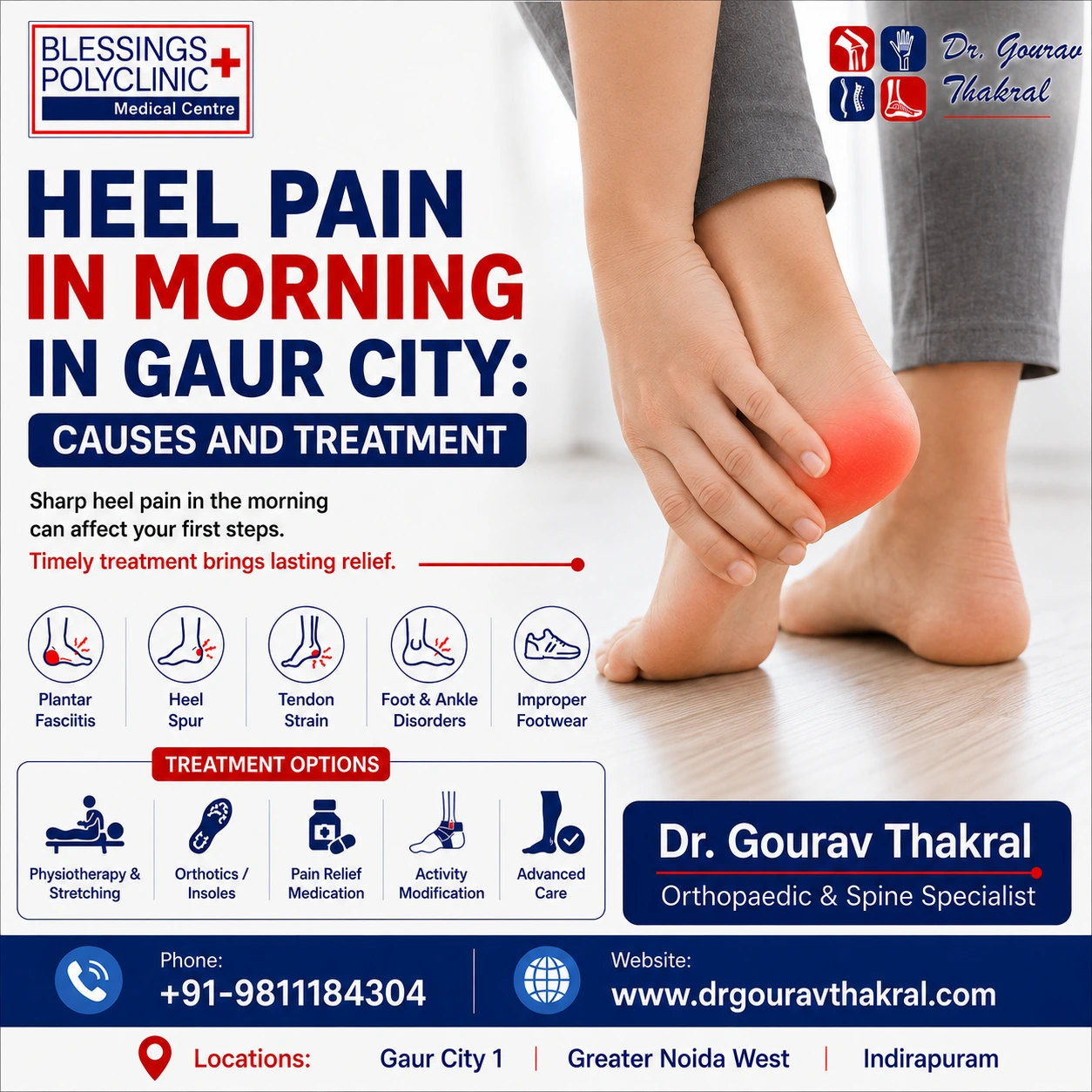
Although the pain may reduce after a few minutes of movement, repeated morning heel pain should not be ignored. It may be linked to plantar fasciitis, tight calf muscles, heel-pad strain, tendon problems, poor footwear, or other foot conditions.
People looking for heel pain treatment in Gaur City can consult Dr. Gourav Thakral for orthopaedic evaluation and personalised treatment guidance.
Early care can help reduce pain, improve walking comfort, restore foot movement, and prevent the problem from becoming long-term.
Why Does Heel Pain Feel Worse in the Morning?
The plantar fascia is a strong band of tissue under the foot. It connects the heel bone to the toes and helps support the foot arch.
While sleeping, the foot remains relaxed for several hours. As a result, the plantar fascia and calf muscles may become tight. When a person stands in the morning, these tissues stretch suddenly and may cause sharp heel pain.
The discomfort often appears during the first few steps. After walking for some time, the tissue may loosen and the pain may reduce.
However, the pain may return after prolonged sitting, standing, or heavy activity.
Common Symptoms of Morning Heel Pain
Symptoms may differ depending on the cause.
Common signs include:
- Sharp pain under the heel
- Pain during the first steps in the morning
- Pain after sitting for a long time
- Heel stiffness
- Tenderness under the foot
- Pain after standing
- Pain after walking
- Discomfort while climbing stairs
- Tightness in the calf
- Pain after exercise
- Difficulty walking barefoot
- Pain on hard floors
- Mild swelling
- Burning or aching around the heel
If these symptoms continue, proper heel pain treatment in Gaur City can help identify the exact cause.
Common Causes of Heel Pain in the Morning
Several foot and ankle conditions may cause morning heel pain.
Plantar Fasciitis
Plantar fasciitis is one of the most common causes of heel pain.
It develops when the plantar fascia becomes irritated because of repeated stress.
Common risk factors include:
- Long hours of standing
- Walking on hard floors
- Poor footwear
- Tight calf muscles
- Flat feet
- High foot arches
- Excess body weight
- Sudden increase in activity
- Running
- Age-related tissue changes
Common symptoms include:
- Pain under the heel
- Pain during the first morning steps
- Pain after rest
- Tenderness near the heel
- Pain after prolonged standing
Most cases improve with non-surgical treatment. However, recovery may take several weeks.
Tight Calf Muscles
Tight calf muscles can increase tension on the heel and plantar fascia.
This may happen because of:
- Lack of stretching
- Long sitting
- Running
- Gym workouts
- Unsuitable footwear
- Sudden increase in exercise
- Reduced ankle movement
Calf stretching and guided physiotherapy may help reduce heel pressure.
Heel Spur
A heel spur is a small bony growth near the heel bone.
It may develop after long-term stress on the plantar fascia. However, not every heel spur causes pain.
Symptoms usually depend more on tissue irritation than on the spur itself.
Therefore, treatment should focus on the complete condition rather than only the X-ray finding.
Achilles Tendon Problems
The Achilles tendon connects the calf muscles to the heel bone.
Pain may occur at the back of the heel because of:
- Running
- Jumping
- Tight calf muscles
- Sudden exercise
- Poor footwear
- Repeated overuse
Common symptoms include:
- Pain behind the heel
- Morning stiffness
- Swelling
- Tenderness
- Pain while walking uphill
- Pain during running
Early treatment may help prevent worsening tendon damage.
Heel Pad Strain
The heel pad acts as a natural cushion under the heel bone.
Repeated impact, hard surfaces, or age-related thinning may cause pain.
Symptoms may include:
- Deep pain under the centre of the heel
- Pain on hard floors
- Pain after long standing
- Tenderness during pressure
Soft heel cushions and supportive footwear may provide relief.
Flat Feet
Flat feet can change the way body weight moves through the foot.
As a result, extra pressure may fall on the heel, arch, and ankle.
People with flat feet may experience:
- Heel pain
- Foot tiredness
- Ankle discomfort
- Arch pain
- Difficulty standing for long periods
Insoles, footwear changes, exercises, and physiotherapy may be recommended.
Stress Fracture
A stress fracture is a small crack in the bone caused by repeated pressure.
It may occur after:
- Sudden increase in running
- Long-distance walking
- High-impact exercise
- Repeated jumping
- Weak bones
Unlike plantar fasciitis, stress-fracture pain may continue during rest and gradually become worse.
Medical evaluation is important when walking becomes difficult.
Arthritis and Joint Problems
Arthritis may affect the ankle, heel area, or nearby joints.
Symptoms may include:
- Morning stiffness
- Swelling
- Pain during walking
- Reduced movement
- Joint warmth
- Difficulty standing
People requiring joint pain treatment in Greater Noida should get the exact joint and cause assessed before starting treatment.
Foot & Ankle Disorders in Gaur City
Foot & ankle disorders in Gaur City can include problems involving bones, joints, muscles, tendons, ligaments, nerves, and soft tissues.
Common conditions include:
- Plantar fasciitis
- Heel pain
- Ankle sprain
- Achilles tendonitis
- Flat feet
- Foot arthritis
- Stress fracture
- Ankle instability
- Ligament injury
- Tendon injury
- Nerve-related foot pain
A proper examination helps identify whether the pain comes from the plantar fascia, tendon, bone, joint, or nerve.
Heel Pain Treatment in Gaur City
Heel pain treatment in Gaur City begins with identifying the exact cause of discomfort.
The doctor may ask:
- When did the pain start?
- Is it worse in the morning?
- Does pain improve after walking?
- Is swelling present?
- Does footwear affect the pain?
- Have you increased exercise recently?
- Do you stand for long hours?
- Is there any previous foot injury?
Afterward, the foot and ankle are examined for tenderness, movement, swelling, arch position, muscle tightness, and walking pattern.
Treatment is planned according to the diagnosis.
Diagnosis of Morning Heel Pain
A detailed clinical examination is often enough to identify common causes of heel pain.
The evaluation may include:
- Heel tenderness
- Plantar fascia tightness
- Calf flexibility
- Ankle movement
- Foot arch
- Walking pattern
- Balance
- Swelling
- Achilles tendon assessment
- Nerve function
Imaging may be advised in selected cases.
Digital X-Ray
An X-ray may help identify:
- Heel spur
- Stress fracture
- Arthritis
- Bone injury
- Foot alignment problems
- Old injury changes
However, an X-ray does not show the plantar fascia clearly.
MRI Scan
An MRI may be advised when the diagnosis remains unclear or a tendon, ligament, or hidden fracture is suspected.
It may show:
- Plantar fascia damage
- Achilles tendon injury
- Stress fracture
- Soft-tissue swelling
- Ligament damage
Still, an MRI is not required for every patient.
Non-Surgical Heel Pain Treatment
Most causes of morning heel pain can be managed without surgery.
Activity Modification
Activities that increase heel pressure may need to be reduced temporarily.
These may include:
- Running
- Jumping
- Long standing
- Barefoot walking
- High-impact workouts
- Walking on hard floors
However, complete rest for too long may cause weakness and stiffness.
Supportive Footwear
Shoes should provide:
- Heel cushioning
- Arch support
- Proper fitting
- A stable sole
- Comfortable walking support
Worn-out slippers or flat footwear may increase heel stress.
Heel Cushions and Insoles
Heel pads or prescribed insoles may help distribute pressure more evenly.
They may be useful for:
- Plantar fasciitis
- Heel-pad strain
- Flat feet
- Long standing
The correct type should be selected according to the foot shape and diagnosis.
Ice Application
Ice may reduce pain after activity.
An ice pack can be applied over a cloth for around 15 minutes. However, it should not be placed directly on the skin.
Medicines
Pain-relief or anti-inflammatory medicines may be prescribed when required.
Patients should avoid long-term self-medication because medicines alone may not correct the underlying cause.
Physiotherapy for Heel Pain
Physiotherapy may help:
- Stretch the plantar fascia
- Improve calf flexibility
- Strengthen foot muscles
- Improve ankle movement
- Correct walking patterns
- Reduce stiffness
- Prevent repeated pain
A guided programme is especially useful when symptoms have continued for several weeks.
Stretching Exercises for Morning Heel Pain
Gentle exercises may reduce tightness.
Commonly advised exercises include:
- Calf stretch
- Plantar fascia stretch
- Towel stretch
- Ankle movement
- Toe stretching
- Foot-arch exercises
Exercises should be performed gently and regularly.
Patients should stop if severe pain or swelling increases.
Morning Routine for Heel Pain
Before standing from bed, try gentle movements such as:
- Moving the ankle up and down
- Rotating the ankle
- Stretching the toes
- Pulling the foot gently with a towel
- Massaging the sole lightly
Afterward, wear supportive footwear instead of walking barefoot.
This routine may reduce the sudden pull on the plantar fascia.
Can Heel Pain Improve Without Surgery?
Yes. Most plantar fasciitis and heel-pain cases improve with non-surgical care.
Treatment may require:
- Regular stretching
- Supportive footwear
- Activity changes
- Physiotherapy
- Weight management
- Patience and follow-up
Symptoms may not disappear immediately. Therefore, the treatment plan should be followed consistently.
When Are Injections Considered?
Injection treatment may be considered in selected cases when pain remains severe despite proper conservative treatment.
However, injections are not suitable for every patient.
The decision depends on:
- Diagnosis
- Duration of pain
- Tissue condition
- Previous treatment
- Overall health
The benefits and possible risks should be discussed before treatment.
When Is Surgery Required?
Surgery is rarely required for common morning heel pain.
It may be considered only when:
- Pain continues for a long period
- Non-surgical treatment has been followed properly
- Walking remains severely affected
- A structural problem needs correction
- A serious tendon injury is present
The decision is based on symptoms, examination, imaging, and daily activity needs.
Role of the Best Orthopaedic Doctor in Gaur City
People searching for the best orthopaedic doctor in Gaur City should focus on proper diagnosis, clear treatment guidance, and a personalised recovery plan.
An orthopaedic doctor may:
- Examine the foot and ankle
- Check walking pattern
- Identify plantar fascia or tendon problems
- Advise X-ray or MRI when needed
- Plan medicines and physiotherapy
- Recommend footwear or insoles
- Guide safe activity
- Monitor recovery
Correct diagnosis helps avoid unnecessary treatment and long-term discomfort.
Joint Pain Treatment in Greater Noida
Heel pain may sometimes be connected with ankle arthritis, foot-joint problems, or altered walking mechanics.
Joint pain treatment in Greater Noida may include:
- Clinical examination
- Imaging guidance
- Medicines
- Physiotherapy
- Joint exercises
- Weight management
- Footwear advice
- Injection treatment in selected cases
- Surgery when required
The treatment plan should focus on pain relief, movement, and long-term joint protection.
When Should You Visit an Orthopaedic Doctor?
Consult a doctor if heel pain continues, keeps returning, or affects walking.
Seek early care if you have:
- Severe pain
- Inability to walk
- Increasing swelling
- Pain after a fall
- Pain that continues at rest
- Numbness or burning
- Sudden tendon pain
- Redness or warmth
- Pain that affects sleep
- Symptoms that do not improve
Early evaluation can help rule out fractures, tendon injuries, arthritis, and nerve problems.
Tips to Prevent Morning Heel Pain
Simple habits may reduce heel stress.
Helpful tips include:
- Wear supportive footwear
- Avoid walking barefoot on hard floors
- Stretch the calf regularly
- Increase exercise gradually
- Maintain a healthy body weight
- Replace worn-out shoes
- Warm up before sports
- Take breaks from long standing
- Treat foot pain early
- Follow physiotherapy advice
These steps can support better foot movement and walking comfort.
Why Choose Dr. Gourav Thakral?
Dr. Gourav Thakral provides orthopaedic care for heel pain, plantar fasciitis, foot and ankle disorders, sports injuries, joint pain, and movement-related problems.
Patients looking for heel pain treatment in Gaur City can consult him for detailed evaluation and personalised treatment guidance.
His approach focuses on:
- Correct diagnosis
- Pain relief
- Better walking
- Improved foot movement
- Stretching and strengthening
- Footwear guidance
- Prevention of repeated pain
- Surgery only when required
Conclusion
Heel pain in the morning can make the first steps of the day uncomfortable. Although the pain may reduce after movement, repeated symptoms should not be ignored.
For heel pain treatment in Gaur City, consult Dr. Gourav Thakral for plantar fasciitis care, foot and ankle evaluation, physiotherapy guidance, and personalised orthopaedic treatment.
Timely diagnosis can help reduce pain, improve walking comfort, and prevent the problem from becoming long-term.
FAQs
Why is my heel painful during the first steps in the morning?
Morning heel pain commonly occurs because the plantar fascia and calf muscles become tight during sleep and stretch suddenly while standing.
Is morning heel pain always plantar fasciitis?
No. It may also be caused by Achilles tendon problems, heel-pad strain, arthritis, flat feet, or a stress fracture.
Can heel pain improve without surgery?
Yes. Most cases improve with stretching, supportive footwear, physiotherapy, activity changes, and medical guidance.
Should I walk barefoot when I have heel pain?
Walking barefoot on hard floors may increase heel stress. Supportive footwear is usually more comfortable.
Is an X-ray required for heel pain?
An X-ray may be advised if a heel spur, fracture, arthritis, or bone problem is suspected.
How long does plantar fasciitis take to improve?
Recovery varies. Some patients improve within weeks, while long-standing cases may take several months of regular treatment.
When should I consult an orthopaedic doctor?
Consult a doctor when pain continues, affects walking, occurs at rest, or does not improve with basic care.
Where can I get heel pain treatment in Gaur City?
You can consult Dr. Gourav Thakral for heel pain treatment in Gaur City, plantar fasciitis, foot and ankle problems, and walking-related discomfort.