Orthopaedic Specialist in Greater Noida West
An Orthopaedic Specialist in Greater Noida West can help diagnose and treat problems related to bones, joints, muscles, ligaments, tendons, cartilage, and the spine.
Joint pain, knee pain, stiffness, swelling, sports injuries, fractures, back pain, or difficulty walking can affect daily life. At first, symptoms may seem mild. However, repeated pain or reduced movement should not be ignored.
Dr. Gourav Thakral provides orthopaedic evaluation and personalised treatment guidance for joint pain, knee problems, fractures, sports injuries, spine conditions, and movement-related disorders.
Early diagnosis can help reduce pain, improve movement, restore strength, and prevent the condition from becoming worse.
What Does an Orthopaedic Specialist Treat?
An orthopaedic specialist treats conditions affecting the musculoskeletal system.
This includes:
- Bones
- Joints
- Muscles
- Ligaments
- Tendons
- Cartilage
- Spine
- Sports injuries
- Fractures
- Movement-related problems
Some conditions develop after an injury. Others may occur because of arthritis, ageing, overuse, poor posture, sports activity, or muscle weakness.
Therefore, a detailed evaluation is important before starting treatment.
Common Problems Treated by an Orthopaedic Specialist in Greater Noida West
Common orthopaedic problems include:
- Knee pain
- Joint pain
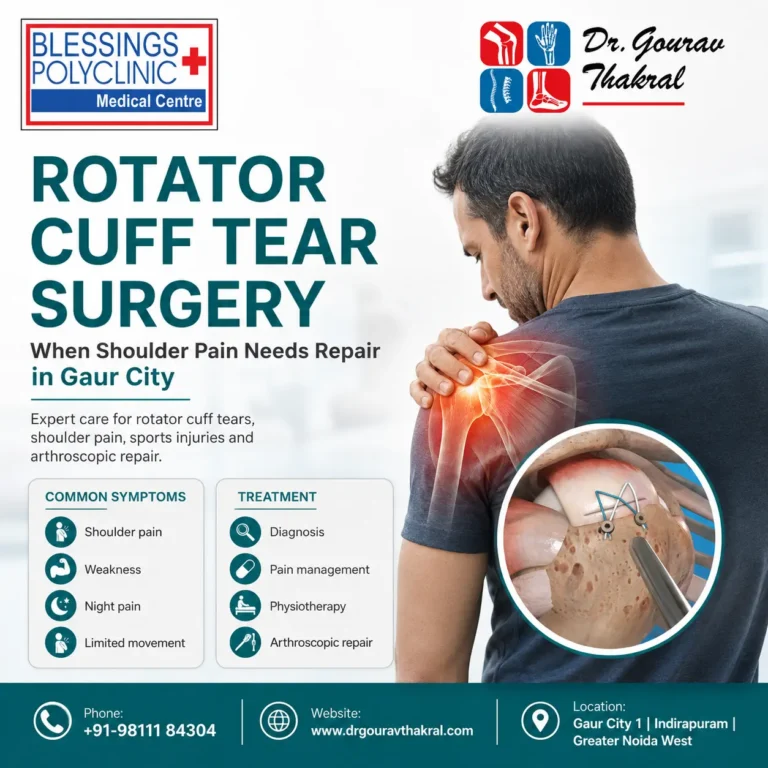
- Shoulder pain
- Hip pain
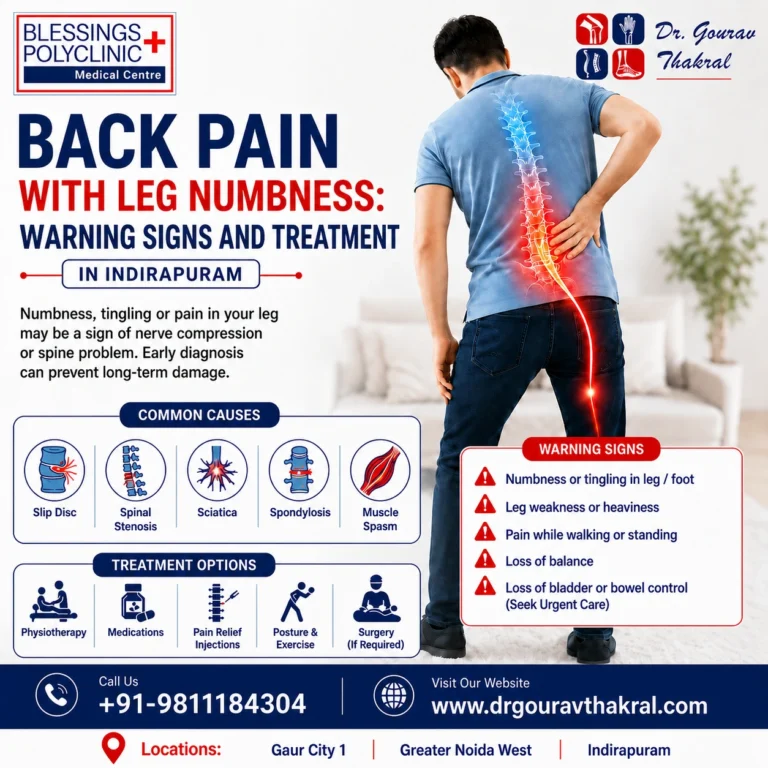
- Back pain
- Neck pain
- Ankle pain
- Heel pain
- Fractures
- Sports injuries
- Ligament injuries
- Meniscus problems
- Arthritis
- Frozen shoulder
- Tennis elbow
- Slip disc
- Sciatica
- Muscle strain
The treatment plan depends on the affected area, symptoms, age, daily activity, and severity of the condition.
Common Symptoms That Need Orthopaedic Evaluation
You may need an orthopaedic evaluation if you experience:
- Joint pain
- Swelling
- Stiffness
- Muscle weakness
- Difficulty walking
- Reduced movement
- Pain while climbing stairs
- Pain after exercise
- Pain after a fall
- Numbness or tingling
- Joint instability
- Clicking or locking
- Pain that affects sleep
- Repeated sports injuries
Persistent symptoms should not be treated only with self-medication.
Orthopaedic Doctor in Greater Noida West
An Orthopaedic doctor in Greater Noida West evaluates the exact cause of bone, joint, muscle, or spine-related symptoms.
During consultation, the doctor may ask:
- When did the pain start?
- Was there an injury?
- Is swelling present?
- Which movements increase pain?
- Is weakness present?
- Does the joint lock or give way?
- Does pain affect walking?
- Is numbness or tingling present?
After that, the affected area is examined for movement, strength, tenderness, swelling, and stability.
Orthopaedic Treatment in Greater Noida West
Orthopaedic treatment in Greater Noida West may include both non-surgical and surgical options.
Depending on the condition, treatment may include:
- Medicines
- Physiotherapy
- Stretching
- Strengthening exercises
- Activity modification
- Braces or supports
- Posture correction
- Weight management
- Injection treatment
- Fracture care
- Surgery when required
The goal is not only to reduce pain. Instead, treatment should also restore movement and help patients return safely to normal activities.
Joint Pain Treatment in Greater Noida West
Joint pain treatment in Greater Noida West may be needed for pain affecting the knee, shoulder, hip, ankle, elbow, wrist, or spine.
Common causes of joint pain include:
- Arthritis
- Sports injury
- Ligament damage
- Cartilage wear
- Tendon problems
- Previous fractures
- Overuse
- Joint inflammation
Treatment may include medicines, physiotherapy, joint exercises, activity changes, injections, or surgery in selected cases.
Early treatment can help reduce stiffness and improve daily movement.
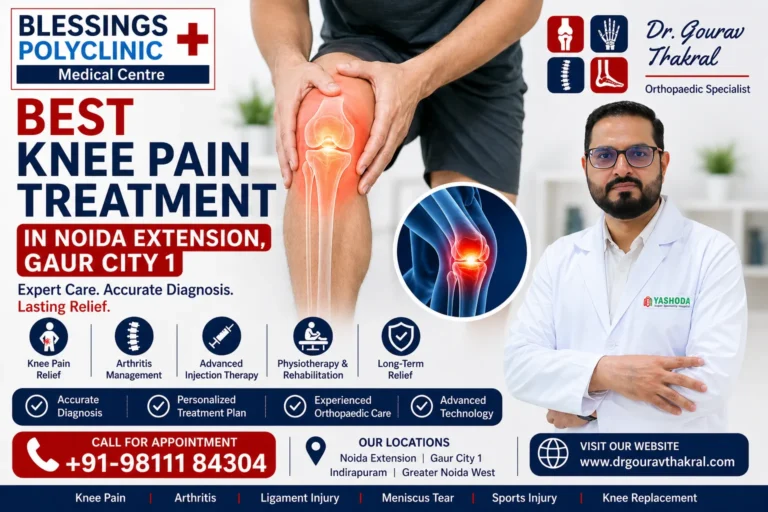
Knee Pain Treatment in Greater Noida West
The knee is one of the most commonly affected joints.
Knee pain treatment in Greater Noida West may be required for:
- Knee arthritis
- Meniscus injury
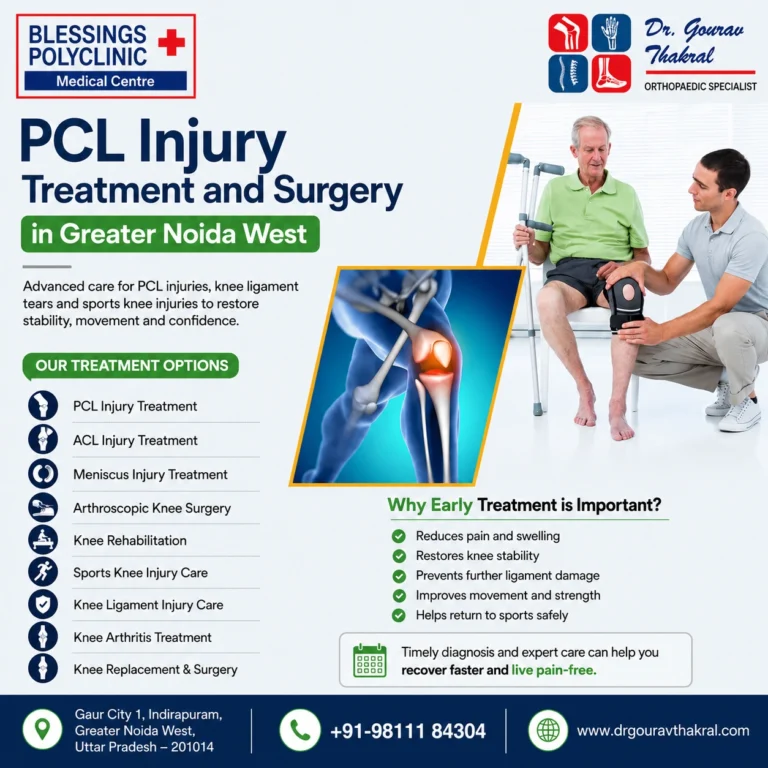
- ACL injury
- Ligament strain
- Sports injury
- Kneecap pain
- Joint stiffness
- Knee swelling
- Cartilage damage
- Fracture
Common symptoms include:
- Pain while walking
- Pain while standing
- Difficulty climbing stairs
- Swelling
- Stiffness
- Knee locking
- Clicking
- Knee giving way
Treatment depends on the exact cause and level of joint damage.
Arthritis Treatment
Arthritis is a common reason for long-term joint pain and stiffness.
It may affect the:
- Knees
- Hips
- Shoulders
- Spine
- Hands
- Ankles
Symptoms may include pain, swelling, morning stiffness, reduced movement, and difficulty with daily activities.
Treatment may include medicines, physiotherapy, weight management, exercises, injections, and joint replacement in advanced cases.
Sports Injury Treatment
Sports injuries can affect muscles, ligaments, tendons, cartilage, and bones.
Common sports injuries include:
- ACL injury
- Meniscus tear
- Ankle sprain
- Shoulder injury
- Tennis elbow
- Muscle strain
- Ligament tear
- Stress fracture
Treatment may include:
- Pain control
- Physiotherapy
- Strengthening
- Balance exercises
- Sports-specific rehabilitation
- Return-to-play guidance
Returning to sports too early may increase the risk of repeated injury.
Fracture Treatment in Greater Noida West
Fracture treatment in Greater Noida West is important after a fall, accident, sports injury, or direct impact.
Common fracture symptoms include:
- Severe pain
- Swelling
- Bruising
- Difficulty moving
- Inability to put weight on the limb
- Visible deformity
- Tenderness
Fracture treatment may include:
- X-ray evaluation
- Splinting
- Plaster
- Bracing
- Pain management
- Surgical fixation when required
- Physiotherapy after healing
The treatment depends on the fracture location, type, displacement, and patient’s age.
When Is a Digital X-Ray Needed?
A digital X-ray may be advised when the doctor suspects:
- Fracture
- Arthritis
- Bone deformity
- Joint-space narrowing
- Bone spur
- Alignment problem
- Old injury
X-rays are useful for evaluating bones and joint alignment.
When Is an MRI Needed?
An MRI may be advised when a soft-tissue or internal joint problem is suspected.
It may help detect:
- Ligament injury
- Meniscus tear
- Tendon injury
- Cartilage damage
- Slip disc
- Nerve pressure
- Muscle injury
However, an MRI is not required for every patient.
Non-Surgical Orthopaedic Treatment
Many orthopaedic conditions improve without surgery.
Non-surgical care may include:
Medicines
Pain-relief or anti-inflammatory medicines may be prescribed when required.
Long-term self-medication should be avoided.
Physiotherapy
Physiotherapy may help:
- Reduce pain
- Improve movement
- Strengthen muscles
- Improve balance
- Restore joint stability
- Improve posture
- Support recovery
Activity Modification
Activities that increase pain may need to be reduced temporarily.
However, complete rest for too long can increase stiffness and weakness.
Braces and Supports
A brace or support may help protect the injured joint in selected cases.
Weight Management
Weight management may reduce pressure on the knees, hips, ankles, and spine.
Injection Treatment
Injection treatment may be considered for selected joint or tendon problems.
The decision depends on the diagnosis.
When Is Surgery Required?
Most orthopaedic problems do not require surgery.
However, surgery may be considered when:
- A fracture is displaced
- A ligament is completely torn
- Advanced arthritis affects daily life
- A joint repeatedly dislocates
- Severe cartilage damage is present
- Pain continues despite proper treatment
- Nerve pressure causes increasing weakness
- Movement is badly restricted
The decision depends on symptoms, examination, imaging, age, and activity needs.
Role of an Orthopaedic Specialist in Greater Noida West
An Orthopaedic Specialist in Greater Noida West can provide complete evaluation for bone, joint, muscle, ligament, tendon, and spine conditions.
The specialist may:
- Examine the painful area
- Check joint movement
- Assess muscle strength
- Review X-rays or MRI
- Identify injury or arthritis
- Plan physiotherapy
- Guide pain management
- Provide fracture care
- Recommend surgery only when required
Correct diagnosis helps avoid delayed treatment and unnecessary procedures.
When Should You Visit an Orthopaedic Doctor?
Consult an orthopaedic doctor if:
- Pain continues for several days
- Swelling is increasing
- Walking becomes difficult
- Joint movement reduces
- Pain affects sleep
- A joint locks or gives way
- Weakness develops
- Numbness or tingling appears
- Pain starts after a fall
- You suspect a fracture
- Sports injuries keep returning
Early care may help prevent long-term movement problems.
Tips to Protect Bone and Joint Health
Helpful habits include:
- Maintain a healthy body weight
- Exercise regularly
- Strengthen muscles
- Warm up before sports
- Use correct lifting techniques
- Wear supportive footwear
- Maintain good posture
- Take breaks from long sitting
- Treat injuries early
- Follow physiotherapy properly
These habits can support better movement and joint health.
Why Choose Dr. Gourav Thakral?
Dr. Gourav Thakral provides orthopaedic care for joint pain, knee pain, fractures, sports injuries, arthritis, spine conditions, and movement-related problems.
Patients looking for an Orthopaedic Specialist in Greater Noida West can consult him for detailed evaluation and personalised treatment guidance.
His approach focuses on:
- Correct diagnosis
- Pain relief
- Better movement
- Improved strength
- Joint protection
- Safe rehabilitation
- Fracture care
- Surgery only when required
Conclusion
Bone, joint, muscle, ligament, tendon, and spine problems can affect walking, exercise, work, sleep, and everyday movement.
For an Orthopaedic Specialist in Greater Noida West, consult Dr. Gourav Thakral for orthopaedic treatment, joint pain care, knee pain treatment, fracture management, sports injury care, and personalised rehabilitation.
Early diagnosis can help reduce pain, improve mobility, and support better long-term bone and joint health.
FAQs
What does an orthopaedic specialist treat?
An orthopaedic specialist treats problems involving bones, joints, muscles, ligaments, tendons, cartilage, fractures, sports injuries, and the spine.
When should I visit an orthopaedic doctor?
Visit an orthopaedic doctor if pain continues, swelling increases, movement becomes difficult, weakness develops, or an injury affects daily activities.
Can joint pain be treated without surgery?
Yes. Many joint problems improve with medicines, physiotherapy, exercises, weight management, and activity changes.
What conditions can cause knee pain?
Knee pain may be caused by arthritis, ligament injuries, meniscus problems, sports injuries, cartilage damage, or fractures.
When is an X-ray needed?
An X-ray may be required when a fracture, arthritis, bone deformity, or joint-alignment problem is suspected.
Is physiotherapy useful for orthopaedic problems?
Yes. Physiotherapy can improve movement, muscle strength, balance, posture, and joint stability.
When is fracture surgery required?
Surgery may be required when a fracture is significantly displaced, unstable, or cannot heal properly with plaster or bracing alone.
Where can I consult an Orthopaedic Specialist in Greater Noida West?
You can consult Dr. Gourav Thakral for orthopaedic treatment in Greater Noida West, joint pain, knee pain, fractures, sports injuries, and spine-related problems.