Shoulder Pain While Lifting Arm: Causes and Treatment
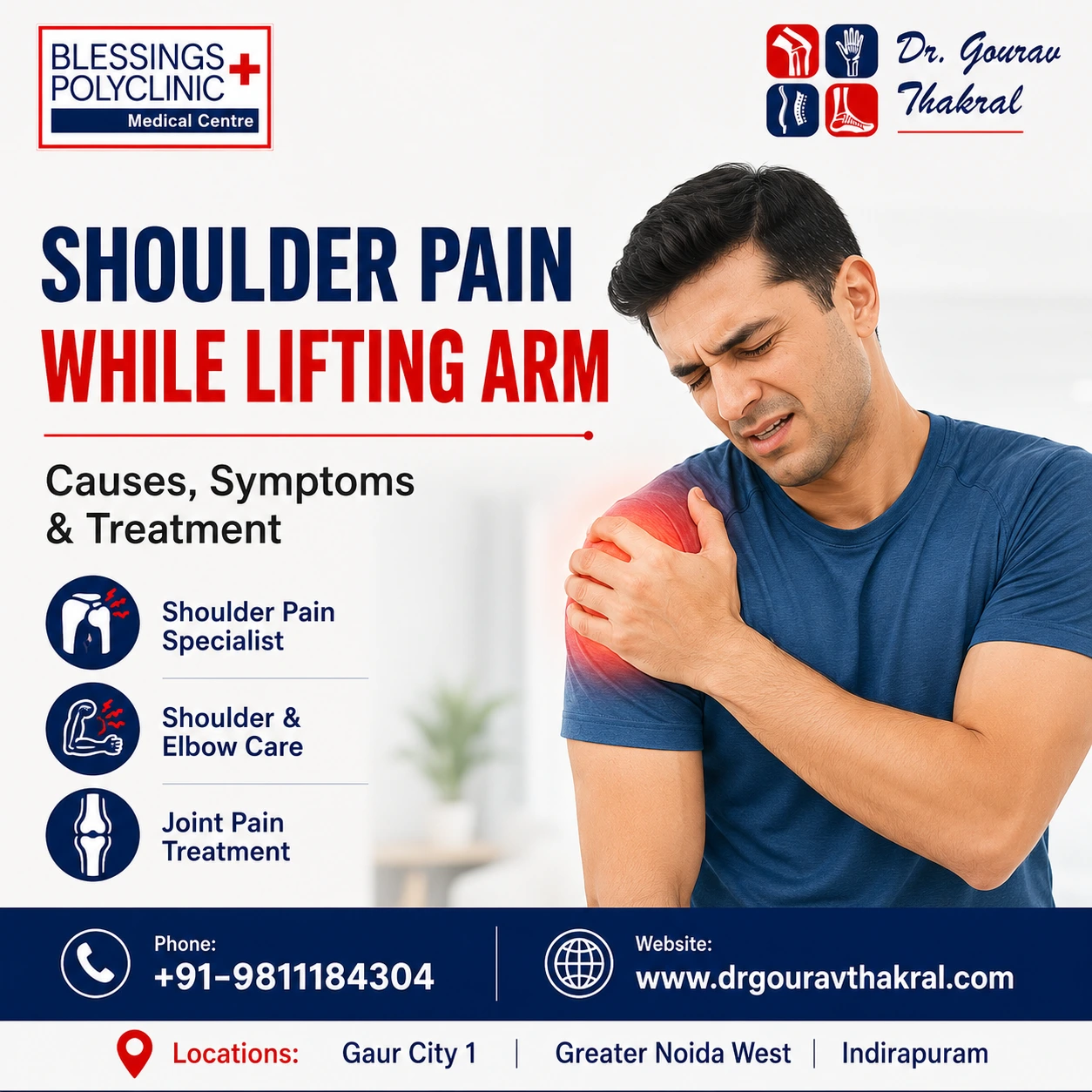
Shoulder pain while lifting arm can make dressing, combing hair, reaching overhead, exercising, driving, and lifting everyday objects difficult. The pain may develop suddenly after an injury or gradually due to repeated movement, poor posture, or age-related changes.
At first, mild shoulder pain may settle with rest. However, ongoing pain, weakness, stiffness, or reduced movement should not be ignored.
A qualified shoulder pain specialist can examine the joint and determine whether the problem is related to the rotator cuff, tendons, ligaments, muscles, cartilage, or nearby nerves.
Timely treatment can help reduce pain, restore shoulder movement, improve strength, and prevent the condition from becoming long-term.
Why Does the Shoulder Hurt While Lifting the Arm?
The shoulder is a highly flexible joint. It allows the arm to move forward, backward, sideways, and overhead.
Several muscles, tendons, ligaments, bones, and soft tissues work together during these movements. Therefore, pain may develop when any of these structures becomes inflamed, strained, weak, or injured.
Pain while lifting the arm may occur due to:
- Rotator cuff injury
- Shoulder impingement
- Tendon inflammation
- Frozen shoulder
- Muscle strain
- Ligament injury
- Shoulder arthritis
- Bursitis
- Labral injury
- Sports injury
- Shoulder instability
- Neck nerve pressure
- Previous fracture or dislocation
The exact cause should be identified before starting treatment.
Common Symptoms
Shoulder problems may cause pain during specific movements or even while resting.
Common symptoms include:
- Pain while lifting the arm
- Pain during overhead movement
- Shoulder stiffness
- Weakness
- Reduced range of motion
- Clicking or cracking
- Pain while sleeping on one side
- Difficulty wearing clothes
- Pain while reaching behind the back
- Swelling
- Tenderness
- Shoulder instability
- Pain after gym exercise
- Pain travelling into the upper arm
- Difficulty carrying objects
Persistent symptoms may require evaluation by an Orthopaedic doctor.
Common Causes of Shoulder Pain While Lifting the Arm
Different shoulder conditions can cause similar symptoms. Therefore, a detailed examination is important.
Rotator Cuff Injury
The rotator cuff is a group of muscles and tendons that stabilise the shoulder joint.
A rotator cuff injury may occur because of:
- Repeated overhead activity
- Gym workouts
- Sports
- Heavy lifting
- Falls
- Age-related tendon wear
- Sudden pulling movement
Common symptoms include:
- Pain while raising the arm
- Shoulder weakness
- Night pain
- Difficulty carrying objects
- Pain while reaching overhead
- Reduced arm strength
Minor injuries may improve with rest, medicines, and physiotherapy. However, a large tear may need further evaluation.
Shoulder Impingement
Shoulder impingement occurs when a tendon or soft tissue becomes pinched during arm movement.
The pain often becomes worse while lifting the arm between shoulder level and overhead.
Common symptoms include:
- Pain during arm elevation
- Night pain
- Weakness
- Tenderness
- Pain during sports
- Difficulty reaching overhead
Treatment may include activity changes, physiotherapy, posture correction, and pain management.
Tendonitis
Tendonitis means inflammation or irritation of a tendon.
It may develop due to overuse, poor technique, repeated lifting, or sudden increases in activity.
Symptoms may include:
- Pain during movement
- Tenderness
- Mild swelling
- Weakness
- Pain after exercise
- Reduced shoulder movement
Early care can help prevent repeated irritation.
Frozen Shoulder
Frozen shoulder causes pain and increasing stiffness.
Over time, daily movements may become difficult.
Common symptoms include:
- Pain while lifting the arm
- Reduced shoulder movement
- Difficulty dressing
- Pain at night
- Difficulty reaching behind the back
- Stiffness while combing hair
Frozen shoulder is more common among people with diabetes. It may also occur after surgery, injury, or prolonged reduced movement.
Treatment may include medicines, stretching, physiotherapy, and injections in selected cases.
Shoulder Bursitis
A bursa is a small fluid-filled sac that reduces friction between tissues.
When the shoulder bursa becomes inflamed, lifting the arm may become painful.
Symptoms may include:
- Pain on the outer shoulder
- Tenderness
- Pain while lying on the affected side
- Pain during overhead movement
- Mild swelling
Treatment usually focuses on reducing inflammation and restoring normal movement.
Shoulder Arthritis
Shoulder arthritis develops when the cartilage inside the joint becomes damaged or worn.
Common symptoms include:
- Deep joint pain
- Stiffness
- Grinding sounds
- Reduced movement
- Pain during lifting
- Difficulty sleeping
- Weakness
Treatment may include medicines, physiotherapy, exercises, injections, or surgery in advanced cases.
Ligament Injury
Ligaments help stabilise the shoulder joint.
A ligament injury may occur after a fall, sudden pull, sports accident, or shoulder dislocation.
Symptoms may include:
- Pain
- Swelling
- Instability
- Weakness
- Difficulty lifting the arm
- A feeling that the shoulder may slip
Ligament injury treatment depends on the ligament involved and the severity of the damage.
Mild injuries may improve with rest, support, medicines, and physiotherapy. Severe instability may need surgical evaluation.
Sports Injury
Sports that involve throwing, lifting, pushing, or overhead movement may increase the risk of shoulder injury.
Common examples include:
- Cricket
- Badminton
- Swimming
- Tennis
- Volleyball
- Basketball
- Weight training
- Gym workouts
Sports injury treatment should focus on both recovery and prevention.
A complete plan may include:
- Pain control
- Strengthening
- Mobility exercises
- Posture correction
- Shoulder stability training
- Sports-specific rehabilitation
- Return-to-play guidance
Returning to sports too early may increase the risk of repeated injury.
Shoulder Pain After Gym Exercise
Shoulder pain after gym exercise may occur due to:
- Poor lifting technique
- Excessive weight
- Overhead presses
- Weak rotator cuff muscles
- Lack of warm-up
- Sudden increase in training
- Poor shoulder-blade control
- Muscle strain
Mild soreness may improve with rest. However, sharp pain, weakness, swelling, or reduced movement should be checked.
Neck-Related Shoulder Pain
Sometimes, shoulder pain starts from the neck.
Pressure on a cervical nerve may cause:
- Shoulder pain
- Arm pain
- Numbness
- Tingling
- Weakness
- Reduced grip strength
Neck movement may also increase the symptoms.
A clinical examination helps determine whether the pain is coming from the shoulder or cervical spine.
Diagnosis of Shoulder Pain
Diagnosis begins with a discussion about the symptoms and daily activities.
The doctor may ask:
- When did the pain start?
- Was there an injury?
- Which movement causes pain?
- Is weakness present?
- Does pain affect sleep?
- Can you lift the arm overhead?
- Do you play sports?
- Have you had a previous dislocation?
Next, the shoulder is examined.
The assessment may include:
- Shoulder movement
- Rotator cuff strength
- Tenderness
- Joint stability
- Shoulder-blade movement
- Neck movement
- Arm strength
- Nerve function
Further tests may be advised when required.
Digital X-Ray
An X-ray may help identify:
- Arthritis
- Fracture
- Bone spurs
- Joint alignment
- Dislocation
- Age-related changes
However, tendons and ligaments are not clearly visible on an X-ray.
MRI Scan
An MRI may help detect:
- Rotator cuff tear
- Ligament damage
- Labral injury
- Tendon inflammation
- Cartilage damage
- Bursitis
- Hidden fracture
Still, an MRI is not required for every patient.
Shoulder Pain Specialist Evaluation
A shoulder pain specialist assesses pain, stiffness, weakness, instability, and reduced movement.
The specialist may identify whether the symptoms are caused by:
- Rotator cuff injury
- Frozen shoulder
- Shoulder arthritis
- Tendonitis
- Bursitis
- Ligament injury
- Sports injury
- Shoulder dislocation
- Neck nerve pressure
After diagnosis, treatment is planned according to the patient’s age, symptoms, activity level, and daily needs.
Shoulder & Elbow Care
Complete shoulder & elbow care includes evaluation and treatment of bones, joints, muscles, tendons, ligaments, and nerves.
Common conditions may include:
- Frozen shoulder
- Rotator cuff injury
- Shoulder impingement
- Shoulder arthritis
- Dislocation
- Tennis elbow
- Golfer’s elbow
- Ligament injury
- Tendonitis
- Sports injury
The treatment goal is to reduce pain, improve movement, restore strength, and help patients return safely to daily activities.
Non-Surgical Shoulder Pain Treatment
Many shoulder conditions can improve without surgery.
Non-surgical care may include the following options.
Activity Modification
Movements that increase pain may need to be reduced temporarily.
These may include:
- Heavy lifting
- Overhead exercise
- Throwing
- Repeated pushing
- Sleeping on the painful side
However, complete rest for too long may increase stiffness.
Medicines
Pain-relief or anti-inflammatory medicines may be prescribed when required.
Patients should avoid long-term self-medication.
Ice or Heat
Ice may help after an acute injury or when swelling is present.
Heat may help reduce stiffness and muscle tightness in some long-term conditions.
Physiotherapy
Physiotherapy may help:
- Improve shoulder movement
- Reduce stiffness
- Strengthen the rotator cuff
- Improve shoulder-blade control
- Correct posture
- Restore stability
- Support sports recovery
- Prevent repeated pain
Exercises should match the diagnosis.
Injection Treatment
Injection treatment may be considered in selected conditions.
However, it is not suitable for every patient. The decision depends on the cause, severity, and duration of symptoms.
Joint Pain Treatment
Shoulder pain is a type of joint pain. However, the same symptoms may arise from muscles, tendons, ligaments, or nerves.
Effective joint pain treatment starts with identifying the exact source of discomfort.
Treatment may include:
- Clinical examination
- X-ray or MRI
- Medicines
- Physiotherapy
- Strengthening exercises
- Activity modification
- Injection therapy
- Surgery in selected cases
The goal is to reduce pain and restore normal function.
Ligament Injury Treatment
Ligament injury treatment depends on the severity of the injury and level of shoulder instability.
Treatment may include:
- Rest
- Ice application
- Shoulder support
- Pain management
- Physiotherapy
- Stability exercises
- Strengthening
- Activity guidance
- Surgery in severe cases
Rehabilitation is important because untreated instability may lead to repeated shoulder problems.
Sports Injury Treatment
Sports injury treatment for shoulder pain should include careful assessment and gradual rehabilitation.
The treatment plan may involve:
- Pain and swelling control
- Shoulder movement exercises
- Rotator cuff strengthening
- Shoulder-blade exercises
- Balance and coordination
- Throwing or overhead training
- Sports-specific drills
- Return-to-play testing
Athletes should return only after strength and movement have improved.
Exercises for Shoulder Pain
The correct exercises can improve shoulder movement and strength.
Common exercises may include:
- Pendulum exercises
- Shoulder-blade squeezes
- Wall-assisted arm raises
- Rotator cuff exercises
- Gentle stretching
- Posture exercises
- Resistance-band exercises
However, the exercise plan should be selected after diagnosis.
Stop an exercise if pain, weakness, or instability becomes worse.
When Is Surgery Required?
Most shoulder problems do not require surgery.
However, surgery may be considered when:
- A large rotator cuff tear is present
- The shoulder repeatedly dislocates
- Severe ligament damage causes instability
- A fracture is displaced
- Advanced arthritis affects daily activities
- Pain continues despite proper treatment
- Shoulder strength does not improve
- A labral tear causes repeated instability
The decision depends on symptoms, examination, imaging, age, and activity needs.
When Should You Visit an Orthopaedic Doctor?
Consult an Orthopaedic doctor if shoulder pain continues or affects normal movement.
Seek early care if you have:
- Severe shoulder pain
- Inability to lift the arm
- Sudden weakness
- Visible deformity
- Pain after a fall
- Shoulder instability
- Increasing stiffness
- Numbness or tingling
- Pain that affects sleep
- Repeated sports-related pain
Urgent care may be required after a fracture or shoulder dislocation.
Tips to Prevent Shoulder Pain
Simple habits can reduce shoulder strain.
Helpful tips include:
- Warm up before exercise
- Use correct lifting technique
- Avoid sudden heavy lifting
- Strengthen the rotator cuff
- Improve posture
- Take breaks from desk work
- Increase training gradually
- Avoid repeated painful movements
- Treat sports injuries early
- Follow physiotherapy properly
These steps can support better shoulder movement and reduce the risk of repeated injury.
Why Choose Dr. Gourav Thakral?
Dr. Gourav Thakral provides orthopaedic care for shoulder pain, rotator cuff injuries, frozen shoulder, ligament injuries, joint pain, and sports-related conditions.
Patients experiencing shoulder pain while lifting arm can consult him for detailed evaluation and personalised treatment guidance.
His treatment approach focuses on:
- Correct diagnosis
- Pain relief
- Better shoulder movement
- Improved muscle strength
- Joint stability
- Sports rehabilitation
- Prevention of repeated injury
- Surgery only when required
Conclusion
Shoulder pain while lifting the arm can affect dressing, exercise, work, sleep, driving, and daily activities. Therefore, repeated pain, weakness, stiffness, or instability should not be ignored.
Consult Dr. Gourav Thakral for shoulder evaluation, shoulder & elbow care, joint pain treatment, sports injury treatment, and ligament injury treatment.
Early diagnosis can help reduce pain, improve movement, and support a safer return to normal activities.
FAQs
Why does my shoulder hurt when I lift my arm?
Pain may occur due to rotator cuff injury, shoulder impingement, tendonitis, bursitis, arthritis, frozen shoulder, or ligament damage.
Can shoulder pain improve without surgery?
Yes. Many conditions improve with medicines, physiotherapy, exercises, posture correction, and activity changes.
What are the symptoms of a rotator cuff injury?
Common symptoms include pain while lifting the arm, weakness, night pain, and difficulty carrying objects.
Is physiotherapy helpful for shoulder pain?
Yes. Physiotherapy can improve movement, strength, posture, and shoulder stability.
Can sports injuries cause shoulder pain?
Yes. Throwing, lifting, contact sports, gym exercises, and overhead movements may injure the shoulder.
When is an MRI required?
An MRI may be advised when a tendon tear, ligament injury, labral damage, or persistent weakness is suspected.
When should I consult a shoulder pain specialist?
Consult a specialist if pain continues, weakness increases, movement becomes difficult, or pain affects sleep.
When may shoulder surgery be required?
Surgery may be considered for large tendon tears, repeated dislocation, severe ligament damage, displaced fractures, or advanced arthritis.
Medical Disclaimer: This article is for general information only. It does not replace personal medical consultation, diagnosis, or treatment.