Sports Injury Treatment in Greater Noida
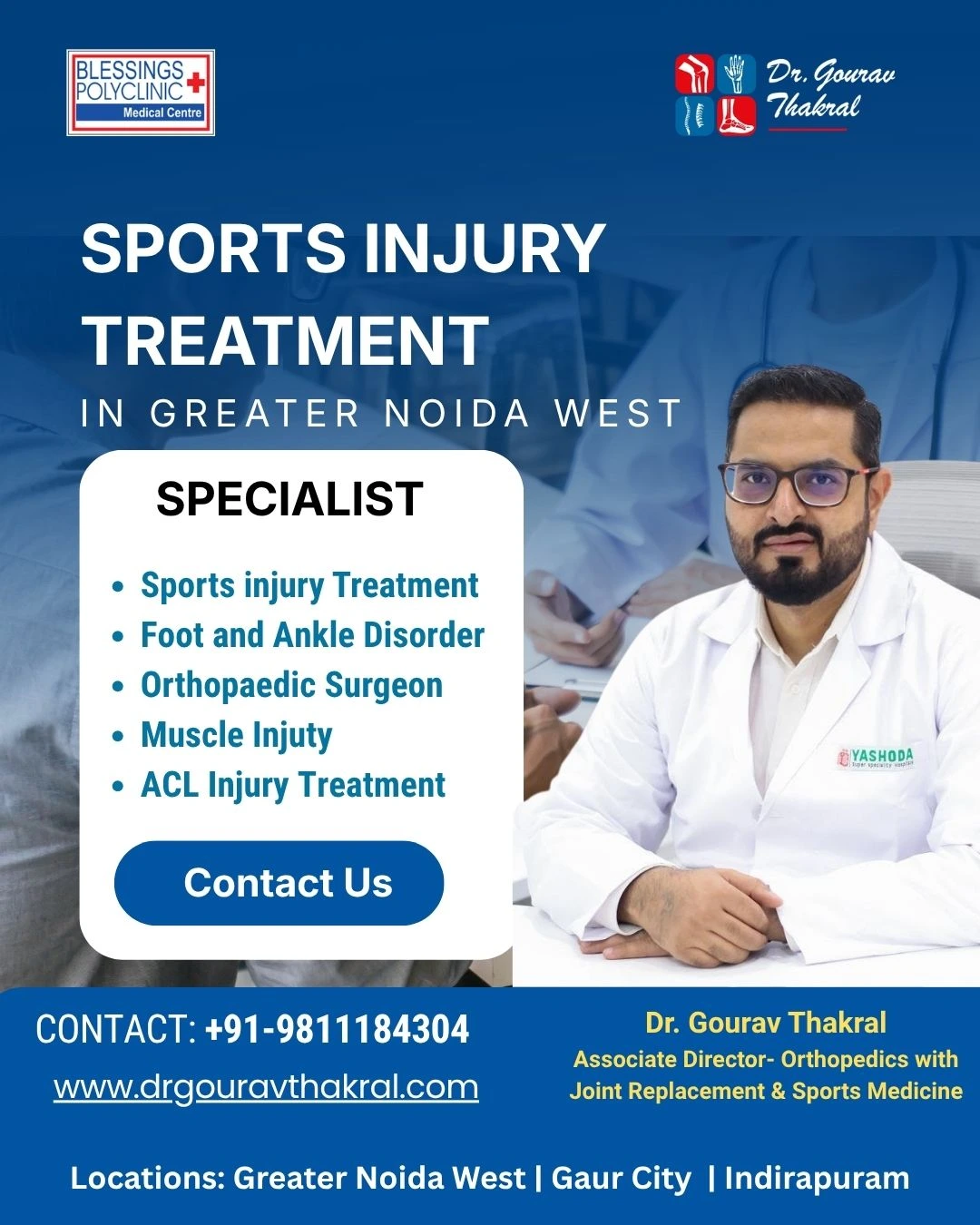
Sports Injury Treatment in Greater Noida West is important for people who face pain, swelling, stiffness, weakness, or movement difficulty after sports, gym workouts, running, cricket, football, badminton, cycling, or daily physical activity. Sports injuries can affect the knee, shoulder, ankle, wrist, elbow, hip, muscles, ligaments, tendons, and joints.
Many sports injuries look small at first. However, untreated pain can become a long-term problem. It can also affect walking, training, office work, fitness, and daily comfort. So, timely diagnosis and guided care are very important.
Dr. Gourav Thakral provides expert orthopaedic evaluation and treatment guidance for sports injuries, knee pain treatment, foot & ankle disorders, knee ligament injury, muscle injury treatment, and mobility-related problems in Greater Noida West.
What Are Sports Injuries?
Sports injuries are injuries that happen during exercise, sports, gym activity, running, jumping, or sudden body movement. These injuries may happen due to overuse, poor technique, weak muscles, lack of warm-up, sudden twisting, direct impact, or accidental fall.
Some sports injuries happen suddenly. These are called acute injuries. Examples include ankle sprain, knee ligament injury, shoulder dislocation, muscle pull, or fracture.
Other injuries develop slowly because of repeated stress. These are called overuse injuries. Examples include tendon pain, shin pain, runner’s knee, tennis elbow, and muscle strain.
Common Sports Injuries
Sports injuries can affect different body parts. Common problems include knee injury, shoulder injury, ankle sprain, ligament injury, ACL injury, PCL injury, meniscus injury, muscle strain, tendon injury, tennis elbow, golfer’s elbow, sports fracture, joint dislocation, rotator cuff injury, wrist injury, hamstring injury, runner’s knee, and overuse injury.
If pain continues after rest, proper Sports Injury Treatment in Greater Noida West can help find the exact cause. It also helps plan the right recovery path.
Common Symptoms
Sports injury symptoms may be mild or severe. Some symptoms appear immediately after injury. Others increase slowly over time.
Common symptoms include pain after sports activity, swelling around the joint, difficulty walking, stiffness, weakness, clicking, locking, pain while running, pain while jumping, reduced flexibility, repeated injury, bruising, or joint instability.
Severe pain, swelling, or inability to move the injured part should not be ignored.
Causes of Sports Injuries
Sports injuries may happen due to many reasons. In many patients, more than one factor may be involved.
Common causes include poor warm-up, weak muscles, overtraining, sudden twisting, wrong exercise technique, running on hard surfaces, poor footwear, direct sports impact, previous untreated injury, poor flexibility, lack of recovery time, and sudden increase in training intensity.
Correct diagnosis helps decide whether the injury is minor, moderate, or severe.
Knee Pain Treatment After Sports Injury
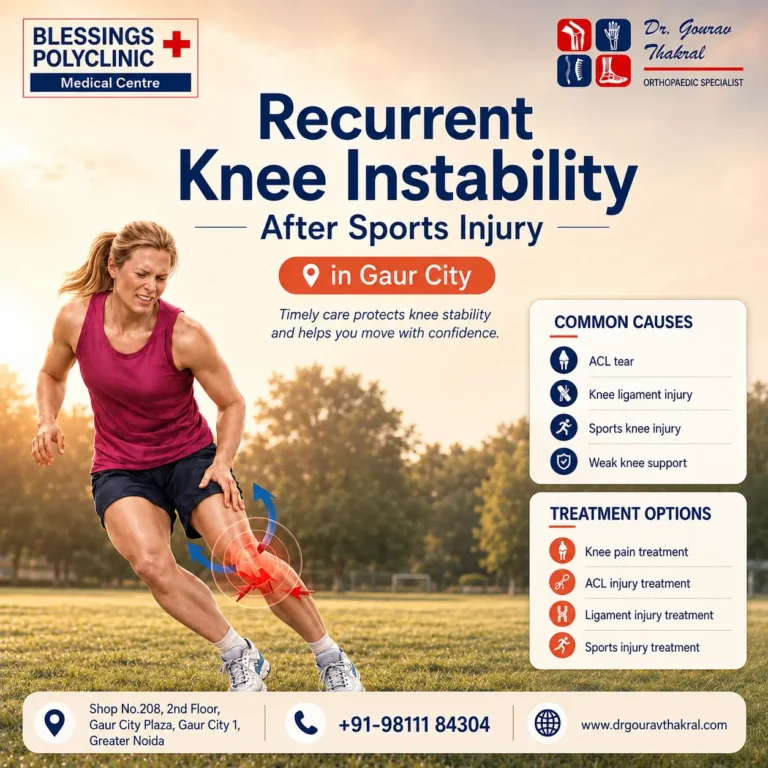
Knee injuries are common during running, football, cricket, gym workouts, badminton, and jumping activities. Knee pain may happen due to ligament injury, meniscus tear, cartilage damage, muscle strain, overuse, or direct trauma.
Common symptoms include knee pain, swelling, locking, clicking, instability, and difficulty climbing stairs.
Knee pain treatment starts with finding the real cause of pain. Treatment may include clinical examination, digital X-ray advice, MRI advice when needed, medicines, physiotherapy, bracing, strengthening exercises, and rehabilitation.
Early care can help protect knee movement and reduce the risk of repeated injury.
Knee Ligament Injury
A knee ligament injury can happen due to sudden twisting, landing, running, jumping, or direct impact. It is common in cricket, football, basketball, badminton, and gym training.
Ligaments help keep the knee stable. When a ligament is stretched or torn, the knee may feel unstable. Patients may also feel a popping sound during injury.
Common symptoms include pain, swelling, instability, difficulty walking, weakness, and reduced knee movement.
Treatment depends on the severity. Mild injuries may improve with bracing, rest, physiotherapy, and rehabilitation. Complete tears may need advanced orthopaedic treatment or surgical evaluation.
Muscle Injury Treatment
Muscle injuries are common during gym workouts, running, football, cricket, cycling, and sudden stretching movements. A muscle injury may include muscle strain, pull, tear, spasm, or overuse pain.
Symptoms may include sharp pain, tightness, swelling, weakness, bruising, and difficulty moving the affected area.
Muscle injury treatment may include rest, ice advice, pain management, medicines when required, physiotherapy, stretching, gradual strengthening, activity changes, and return-to-activity guidance.
Proper rehabilitation is important. Returning too early can increase the risk of repeat injury.
Foot & Ankle Disorders After Sports
Foot and ankle problems are also common in sports. These may happen due to ankle sprain, heel pain, tendon injury, flat foot, plantar fasciitis, stress injury, or overuse.
Foot & ankle disorders can cause pain while walking, running, jumping, or standing for long hours. Symptoms may include ankle swelling, heel pain, foot pain, stiffness, bruising, and instability.
Treatment may include rest, support brace, digital X-ray advice, physiotherapy, footwear guidance, stretching, strengthening, and rehabilitation.
Repeated ankle sprain should not be ignored. It may lead to long-term ankle instability.
Role of an Orthopaedic Specialist
An orthopaedic specialist helps diagnose and treat bone, joint, muscle, ligament, tendon, and sports-related injuries. Proper evaluation is important because many injuries look similar in the early stage.
For example, knee pain may be due to ligament injury, meniscus tear, cartilage damage, muscle strain, or fracture. Ankle pain may be due to sprain, tendon injury, or bone injury.
Dr. Gourav Thakral focuses on accurate diagnosis, patient-specific treatment, pain relief, mobility improvement, and safe recovery.
Diagnosis of Sports Injuries
Diagnosis starts with a clinical examination. Dr. Gourav Thakral may check the injured area, swelling, movement, joint stability, muscle strength, pain points, and injury history.
Depending on symptoms, digital X-ray, MRI, ultrasound, or other tests may be advised. X-ray can help rule out fracture. MRI may help detect ligament, tendon, cartilage, or muscle injuries.
Correct diagnosis is the base of effective Sports Injury Treatment in Greater Noida West.
Treatment Options
Treatment depends on the type and severity of injury. Many sports injuries improve with non-surgical treatment when managed early.
Treatment may include rest from painful activity, swelling control, pain management, medicines when required, brace or support, physiotherapy, strengthening exercises, mobility improvement, rehabilitation, activity modification, return-to-sports guidance, injection therapy in selected cases, and surgical care when needed.
The goal is to reduce pain, restore movement, improve strength, and prevent repeat injury.
Why Rehabilitation Matters
Rehabilitation is one of the most important parts of recovery. It helps reduce stiffness, improve flexibility, restore strength, and build joint stability.
Rehab may include range-of-motion exercises, strength training, balance training, stretching, walking correction, running correction, and sport-specific training.
A guided return-to-sports plan helps reduce the risk of another injury.
When Should You Visit a Doctor?
You should consult an orthopaedic specialist if pain is severe, swelling increases, walking becomes difficult, the joint feels unstable, movement becomes restricted, bruising appears, or the same injury happens again.
You should also seek care if pain does not improve with rest or if you cannot return to sports comfortably.
Timely Sports Injury Treatment in Greater Noida West can help prevent long-term pain and repeated injury.
Prevention Tips
Although every injury cannot be prevented, good habits can reduce risk.
Warm up before activity
Use proper footwear
Increase workout intensity slowly
Do stretching and strengthening
Avoid playing through pain
Take proper rest between sessions
Use correct sports technique
Treat minor injuries early
Follow rehabilitation after injury
These steps can support better performance and safer movement.
Why Choose Dr. Gourav Thakral?
Dr. Gourav Thakral provides expert orthopaedic care for sports injuries, knee pain, knee ligament injury, muscle injury treatment, foot & ankle disorders, fracture care, and mobility-related problems.
Patients looking for Sports Injury Treatment in Greater Noida West can consult Dr. Gourav Thakral for proper diagnosis, pain management, rehabilitation guidance, and advanced orthopaedic treatment when needed.
His approach focuses on safe recovery, better movement, and long-term injury prevention.
Conclusion
Sports injuries can affect fitness, work, walking, and daily life. Pain, swelling, stiffness, weakness, instability, or repeated injury should not be ignored.
For expert Sports Injury Treatment in Greater Noida West, consult Dr. Gourav Thakral for knee pain treatment, knee ligament injury care, muscle injury treatment, foot & ankle disorders, and complete orthopaedic guidance.
FAQs
What is Sports Injury Treatment in Greater Noida West?
Sports injury treatment includes diagnosis, pain relief, swelling control, physiotherapy, rehabilitation, bracing, activity guidance, and advanced treatment when needed.
What are common sports injuries?
Common sports injuries include ankle sprain, knee injury, shoulder injury, ligament tear, muscle strain, tendon pain, sports fracture, and joint dislocation.
What are signs of knee ligament injury?
Signs include knee pain, swelling, instability, popping sensation, walking difficulty, weakness, and reduced knee movement.
Can muscle injury heal without surgery?
Yes, many muscle injuries improve with rest, pain management, physiotherapy, stretching, and gradual strengthening. Severe tears may need advanced care.
Are foot & ankle disorders common in sports?
Yes, ankle sprains, heel pain, tendon injury, plantar fasciitis, and foot pain are common in sports and running activities.
Where can I get Sports Injury Treatment in Greater Noida West?
You can consult Dr. Gourav Thakral for Sports Injury Treatment in Greater Noida West, knee pain treatment, muscle injury treatment, knee ligament injury care, and orthopaedic evaluation.