Ankle Pain Without Injury Treatment in Indirapuram
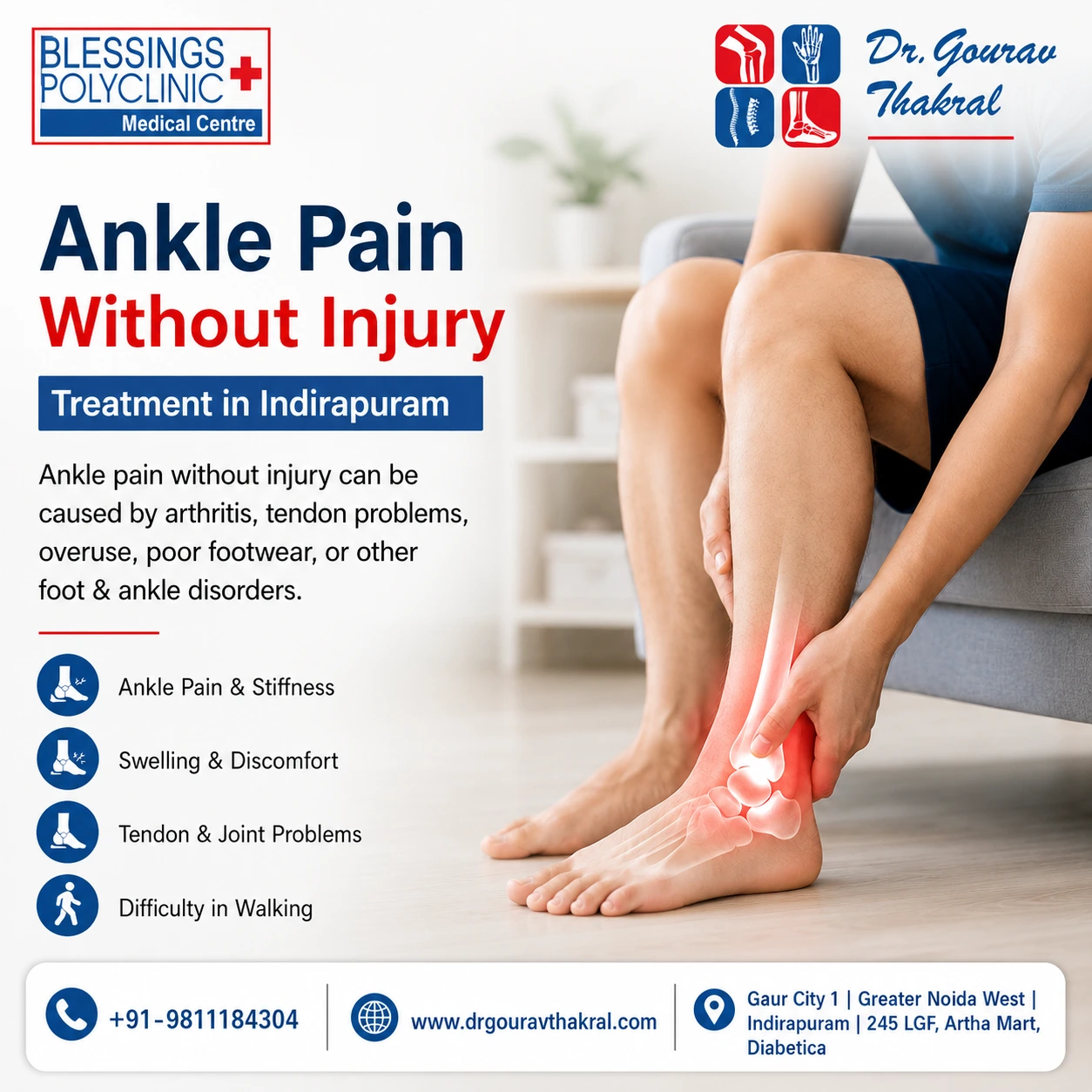
Ankle Pain Without Injury Treatment in Indirapuram may be needed when pain, swelling, stiffness, or difficulty walking starts even though there has been no fall, twist, or accident.
In many people, ankle pain without injury develops slowly. The cause may be arthritis, tendon irritation, overuse, poor footwear, nerve problems, flat feet, or long periods of standing.
People looking for ankle pain treatment in Indirapuram can consult Dr. Gourav Thakral for a detailed orthopaedic evaluation and personalised treatment guidance.
Early care may help reduce pain, improve ankle movement, restore walking comfort, and prevent the condition from getting worse.
Why Can Ankle Pain Start Without an Injury?
The ankle is made up of bones, joints, ligaments, tendons, muscles, and nerves. These structures work together during standing, walking, running, and climbing stairs.
Pain can develop even without a clear injury.
Common causes include:
- Arthritis
- Tendon irritation
- Overuse
- Flat feet
- Poor footwear
- Nerve irritation
- Long standing
- Sudden increase in walking
- Weak ankle muscles
- Gout
- Joint stiffness
- Previous old injury
Finding the exact cause is important before starting treatment.
Common Symptoms of Ankle Pain Without Injury
Symptoms can vary from mild discomfort to severe pain.
Common signs include:
- Ankle pain while walking
- Swelling
- Stiffness
- Tenderness
- Pain while standing
- Pain after long sitting
- Morning stiffness
- Burning sensation
- Tingling
- Reduced ankle movement
- Pain while climbing stairs
- Weakness
- Difficulty wearing shoes
If symptoms continue, proper Ankle Pain Without Injury Treatment in Indirapuram may help identify the source of pain.
Arthritis and Ankle Pain
Arthritis can cause ankle pain even without a recent injury.
Symptoms may include:
- Stiffness
- Swelling
- Pain while walking
- Reduced movement
- Pain after rest
- Difficulty climbing stairs
People looking for arthritis treatment in Indirapuram may need a detailed joint examination to understand the type and severity of arthritis.
Treatment may include medicines, physiotherapy, activity changes, weight management, and advanced care when required.
Tendon Problems
Tendons help move and support the ankle.
Repeated use or overuse can irritate these tendons.
Symptoms may include:
- Pain during walking
- Tenderness
- Swelling
- Stiffness
- Pain after exercise
- Weakness
Treatment may include activity modification, physiotherapy, stretching, and medicines.
Flat Feet
Flat feet can change the way pressure moves through the ankle.
Some people have no symptoms, while others may develop:
- Ankle pain
- Arch pain
- Tired feet
- Heel pain
- Difficulty standing for long periods
Supportive footwear and strengthening may help in selected cases.
Overuse and Long Standing
Ankle pain can also develop because of repeated stress.
This is common in people who:
- Stand for many hours
- Walk long distances
- Work in retail
- Exercise regularly
- Suddenly increase activity
The tissues around the ankle may become irritated even without a clear injury.
Gout and Ankle Pain
Gout can affect the ankle joint and cause sudden pain.
Symptoms may include:
- Severe pain
- Redness
- Warmth
- Swelling
- Tenderness
Because other joint problems can cause similar symptoms, proper diagnosis is important.
Nerve-Related Ankle Pain
Nerve irritation may cause pain around the ankle and foot.
Symptoms can include:
- Burning
- Tingling
- Numbness
- Electric-like pain
- Weakness
The source of nerve pain may be in the ankle, foot, or sometimes the lower back.
Foot & Ankle Disorders in Indirapuram
People with foot & ankle disorders in Indirapuram may experience pain in the ankle, heel, arch, or toes.
Common problems include:
- Plantar fasciitis
- Heel pain
- Tendon problems
- Flat feet
- Ankle stiffness
- Arthritis
- Gout
- Toe pain
- Nerve irritation
Since the foot and ankle work together, pain in one area can affect movement in another.
Ankle Pain Treatment in Indirapuram
Ankle pain treatment in Indirapuram starts with identifying where the pain is coming from.
During consultation, the doctor may ask:
- When did the pain start?
- Is swelling present?
- Does walking increase pain?
- Is morning stiffness present?
- Does pain improve with rest?
- Is there numbness?
- Do certain shoes increase pain?
- Is the pain in one ankle or both?
The ankle, foot, walking pattern, joint movement, and muscle strength may then be examined.
Diagnosis of Ankle Pain
A clinical examination may include:
- Ankle movement
- Tenderness
- Swelling
- Joint stiffness
- Muscle strength
- Foot alignment
- Walking pattern
- Nerve sensation
Further tests may be advised if needed.
X-Ray
An X-ray may help identify:
- Arthritis
- Bone changes
- Joint damage
- Old injury
- Alignment problems
Not every patient needs an X-ray.
MRI Scan
MRI may be advised when more detail is needed about:
- Tendons
- Ligaments
- Cartilage
- Soft tissues
- Stress-related problems
The need for MRI depends on symptoms and examination findings.
Non-Surgical Ankle Pain Treatment
Many ankle problems can be treated without surgery.
Treatment may include:
- Activity modification
- Medicines
- Physiotherapy
- Stretching
- Strengthening
- Footwear changes
- Ankle support
- Ice or heat
- Weight management
- Injection treatment in selected cases
The goal is to reduce pain and improve movement.
Activity Modification
Painful activities may need to be reduced temporarily.
These may include:
- Long walks
- Running
- Jumping
- High-impact exercise
- Long standing
Complete rest is not always needed. Gentle movement may be encouraged when comfortable.
Footwear Changes
Footwear can play an important role in ankle pain.
Helpful shoes should provide:
- Good support
- Stable sole
- Comfortable cushioning
- Correct fit
Worn-out or very flat footwear may increase stress on the ankle.
Physiotherapy for Ankle Pain
Physiotherapy may help:
- Improve ankle movement
- Reduce stiffness
- Strengthen muscles
- Improve balance
- Improve walking pattern
- Support long-term recovery
Exercises should be selected according to the cause of pain.
Arthritis Treatment in Indirapuram
Arthritis treatment in Indirapuram may be required when ankle pain is caused by joint wear or inflammation.
Treatment may include:
- Medicines
- Physiotherapy
- Activity changes
- Joint strengthening
- Weight management
- Injection treatment
- Surgery in selected cases
The aim is to reduce pain and maintain mobility.
Role of an Orthopaedic Doctor in Indirapuram
An Orthopaedic doctor in Indirapuram can evaluate problems involving the bones, joints, tendons, muscles, ligaments, and nerves of the ankle.
The doctor may:
- Check ankle movement
- Assess swelling
- Test strength
- Review X-rays or MRI
- Identify arthritis
- Evaluate tendon problems
- Plan physiotherapy
- Recommend advanced treatment when needed
Correct diagnosis helps avoid unnecessary treatment.
Can Ankle Pain Affect the Knee or Back?
Yes. Ankle pain can change the way a person walks.
This may place extra stress on the:
- Knee
- Hip
- Lower back
For this reason, persistent ankle pain should not be ignored.
When Is Surgery Required?
Most ankle pain does not need surgery.
Surgery may be considered when:
- Joint damage is severe
- A tendon problem requires repair
- Pain continues despite proper treatment
- Walking is badly affected
- Structural problems are present
The decision depends on the diagnosis and severity.
Warning Signs You Should Not Ignore
Seek medical care if you have:
- Severe swelling
- Sudden intense pain
- Inability to walk
- Redness with fever
- Increasing numbness
- Weakness
- Severe night pain
- Pain that keeps worsening
These symptoms may need early medical attention.
When Should You Visit a Doctor?
Consider an orthopaedic evaluation when:
- Pain continues for several days
- Symptoms keep returning
- Walking becomes difficult
- Swelling does not improve
- Morning stiffness becomes worse
- Numbness develops
- Pain affects work or exercise
- Home care does not help
Early assessment can make treatment simpler.
Tips to Prevent Ankle Pain Without Injury
Helpful habits include:
- Wear supportive footwear
- Avoid sudden increases in walking
- Warm up before exercise
- Strengthen ankle muscles
- Maintain a healthy body weight
- Take breaks from long standing
- Stretch when advised
- Replace worn-out shoes
- Avoid exercising through sharp pain
- Treat symptoms early
These habits can support better ankle health.
Why Choose Dr. Gourav Thakral for Ankle Pain Treatment in Indirapuram?
Dr. Gourav Thakral provides orthopaedic care for ankle pain, foot problems, arthritis, joint pain, and movement-related conditions.
Patients looking for Ankle Pain Without Injury Treatment in Indirapuram can consult him for a detailed evaluation and personalised treatment plan.
The treatment approach focuses on:
- Finding the cause of pain
- Reducing swelling
- Improving ankle movement
- Restoring walking comfort
- Improving strength
- Preventing repeated symptoms
- Considering surgery only when required
Conclusion
Ankle pain without injury may develop because of arthritis, tendon problems, flat feet, overuse, nerve irritation, gout, or poor footwear.
For Ankle Pain Without Injury Treatment in Indirapuram, consult Dr. Gourav Thakral for ankle evaluation, arthritis care, physiotherapy guidance, and personalised orthopaedic treatment.
Early diagnosis can help reduce pain, restore movement, and make walking and standing more comfortable.
FAQs
1. Why does my ankle hurt even though I did not injure it?
Possible causes include arthritis, tendon irritation, flat feet, overuse, nerve problems, gout, and poor footwear.
2. Can long standing cause ankle pain?
Yes. Standing for many hours can place extra pressure on the ankle joints, tendons, and muscles.
3. Can arthritis cause ankle pain without injury?
Yes. Arthritis can cause pain, swelling, stiffness, and reduced ankle movement even without a recent injury.
4. Can ankle pain improve without surgery?
Yes. Many cases improve with activity changes, medicines, physiotherapy, footwear support, and strengthening.
5. When should I get an X-ray?
An X-ray may be advised when arthritis, bone changes, alignment problems, or an old injury is suspected.
6. Can ankle pain affect my walking?
Yes. Pain can change your walking pattern and place extra stress on the knee, hip, or lower back.