Slip Disc Treatment in Greater Noida West
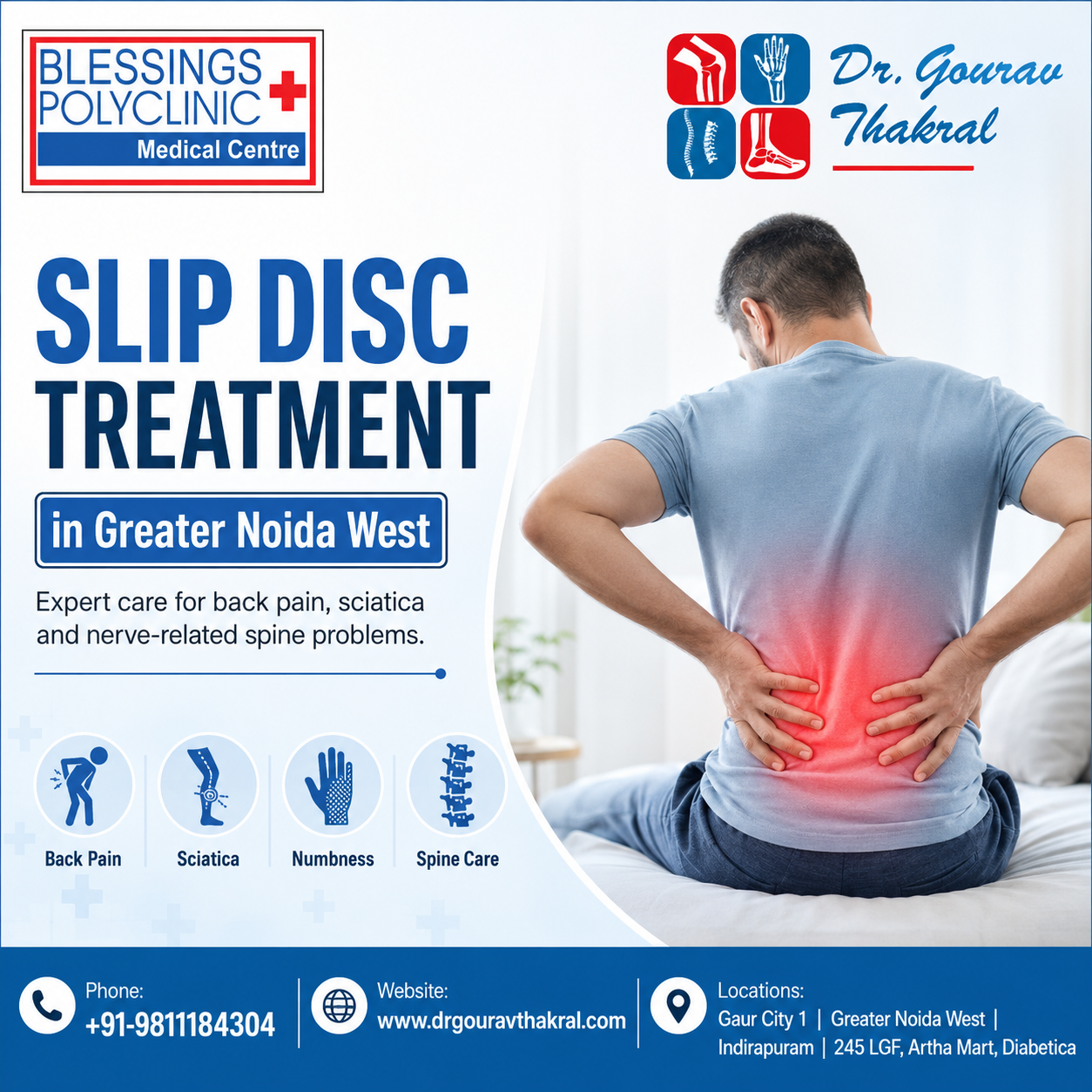
Slip Disc Treatment in Greater Noida West may be needed when back pain comes with leg pain, tingling, numbness, stiffness, or weakness. These symptoms can make sitting, standing, walking, bending, sleeping, and working difficult.
Sometimes, the pain starts slowly. However, it may also begin after lifting a heavy object, bending suddenly, sitting for long hours, or doing a hard gym workout.
People looking for back pain treatment in Greater Noida West can consult Dr. Gourav Thakral for a detailed spine check-up.
Early diagnosis can reduce pain, improve movement, protect the nerves, and help you return to daily activities safely.
What Is a Slip Disc?
The spine is made of small bones called vertebrae. Soft discs sit between these bones and work like cushions.
When part of a disc bulges outward, it may press on a nearby nerve. As a result, pain, tingling, or weakness can develop.
A slip disc may also be called:
- Bulging disc
- Herniated disc
- Prolapsed disc
Not every disc problem causes severe symptoms. Therefore, treatment depends on how much pain or nerve pressure is present.
Common Symptoms of a Slip Disc
Symptoms can vary from mild back pain to strong leg pain.
For example, one person may only have stiffness, while another may feel numbness or weakness.
Common symptoms include:
- Lower back pain
- Back stiffness
- Pain while bending
- Pain after sitting
- Buttock pain
- Leg pain
- Tingling
- Numbness
- Burning feeling
- Weakness
- Difficulty walking
- Pain while coughing or sneezing
If pain travels from the lower back into the leg, sciatica may also be present.
What Causes a Slip Disc?
Several factors can put extra pressure on the spinal discs.
Common causes include:
- Heavy lifting
- Sudden bending
- Poor lifting technique
- Long sitting
- Weak core muscles
- Poor posture
- Repeated twisting
- Gym injuries
- Age-related changes
- Extra body weight
- Lack of exercise
- Previous back injury
In addition, repeated stress over many months can slowly affect the discs.
Slip Disc and Back Pain
A disc problem can irritate nearby tissues and lead to back pain.
Because of this, you may feel:
- Constant aching
- Pain during movement
- Stiffness
- Difficulty bending
- Pain after sitting
If the pain keeps returning, back pain treatment in Greater Noida West may help identify the cause early.
Slip Disc and Sciatica
Sciatica happens when the sciatic nerve becomes irritated.
A slip disc can press on this nerve. Therefore, pain may travel from the back into the buttock, thigh, leg, or foot.
Common signs include:
- Shooting leg pain
- Buttock pain
- Tingling
- Numbness
- Burning feeling
- Leg weakness
For this reason, sciatica treatment in Greater Noida West should focus on both pain relief and the cause of nerve pressure.
Can a Slip Disc Cause Numbness?
Yes. A pressed nerve may cause numbness in different parts of the lower body.
For example, you may feel numbness in the:
- Buttock
- Thigh
- Leg
- Foot
- Toes
The affected area depends on which nerve is involved.
If numbness is increasing, medical advice should be taken early.
Slip Disc Treatment in Greater Noida West
Slip Disc Treatment in Greater Noida West begins with finding the exact cause of pain.
First, the doctor may ask when the pain started and which activities make it worse. Next, symptoms such as leg pain, numbness, tingling, or weakness are discussed.
Questions may include:
- Does pain travel into the leg?
- Is numbness present?
- Is tingling present?
- Is weakness increasing?
- Does sitting increase pain?
- Does coughing make pain worse?
- Was there a lifting injury?
- Is walking difficult?
After that, the back, legs, reflexes, strength, and nerve function may be checked.
How Is a Slip Disc Diagnosed?
A physical examination can provide useful information.
During the check-up, the doctor may assess:
- Back movement
- Leg strength
- Reflexes
- Skin sensation
- Walking pattern
- Nerve stretch
- Muscle tenderness
- Hip movement
If needed, imaging may be advised.
X-Ray for Back Pain
An X-ray can show:
- Bone alignment
- Arthritis
- Reduced disc space
- Old injury
- Bone changes
However, an X-ray does not show the spinal discs clearly.
Therefore, another scan may be required when nerve pressure is suspected.
MRI for Slip Disc
MRI provides a clearer view of the discs and nerves.
It may show:
- Disc bulge
- Herniated disc
- Nerve pressure
- Spinal canal
- Soft tissues
For this reason, MRI may be advised when pain continues, weakness develops, or numbness becomes worse.
Non-Surgical Slip Disc Treatment
Many people improve without surgery.
Depending on the condition, treatment may include:
- Activity changes
- Medicines
- Physiotherapy
- Posture correction
- Core strengthening
- Gentle stretching
- Nerve exercises
- Heat or ice
- Pain management
- Injections in selected cases
Most importantly, treatment should match the cause of the pain.
Rest and Daily Activity
Some painful activities may need to be reduced for a short time.
For example, you may need to avoid:
- Heavy lifting
- Repeated bending
- High-impact exercise
- Long sitting
- Sudden twisting
However, complete bed rest for many days is usually not helpful.
Instead, gentle movement can help prevent extra stiffness.
Physiotherapy for Slip Disc
Physiotherapy can play an important role in recovery.
It may help:
- Reduce stiffness
- Improve back movement
- Strengthen core muscles
- Improve posture
- Reduce repeated strain
- Improve nerve movement
- Support daily activity
In addition, the exercises can be changed as your symptoms improve.
Posture Correction for Slip Disc
Poor posture can place more pressure on the lower back.
Therefore, small daily changes may help.
Try to:
- Sit with back support
- Keep both feet on the floor
- Avoid slouching
- Keep the screen at a good height
- Take regular walking breaks
- Avoid working from bed
- Lift objects with correct technique
As a result, these habits can support better spine care in Greater Noida West.
Pain Management in Greater Noida West
Pain management in Greater Noida West may be useful when pain affects sleep, work, walking, or daily life.
Depending on the symptoms, pain management may include:
- Medicines
- Physiotherapy
- Heat or ice
- Activity changes
- Posture correction
- Guided exercises
- Injections in selected cases
However, pain relief alone is not enough. The cause of the problem should also be treated.
Spine Care in Greater Noida West
Spine care in Greater Noida West focuses on improving movement and reducing repeated strain.
A treatment plan may include:
- Clinical examination
- Physiotherapy
- Core strengthening
- Weight management
- Posture advice
- Workstation changes
- Activity guidance
- Pain control
Because every patient is different, the treatment plan should be personalised.
Role of a Spine Specialist in Greater Noida West
A Spine specialist in Greater Noida West can check problems involving the discs, nerves, bones, joints, and muscles.
During the visit, the specialist may:
- Check back movement
- Test leg strength
- Check numbness
- Test reflexes
- Review MRI scans
- Look for nerve pressure
- Plan physiotherapy
- Suggest further treatment if needed
Therefore, early evaluation can help avoid unnecessary treatment.
Role of an Orthopaedic Specialist in Greater Noida West
An Orthopaedic specialist in Greater Noida West can assess back pain, slip disc, sciatica, muscle strain, and movement problems.
The check-up may include:
- Pain location
- Back movement
- Leg strength
- Walking pattern
- Nerve symptoms
- Reflexes
After the examination, the treatment plan is chosen according to the cause.
Sciatica Treatment in Greater Noida West
Sciatica treatment in Greater Noida West may be needed when pain travels from the lower back into the leg.
Treatment can include:
- Medicines
- Physiotherapy
- Nerve exercises
- Core strengthening
- Posture correction
- Activity changes
- Injections in selected cases
Fortunately, many people improve without surgery.
Can Slip Disc Improve Without Surgery?
Yes. Many slip disc cases improve with non-surgical care.
For example, a treatment plan may include physiotherapy, posture correction, medicines, and regular movement.
In addition, strengthening the back and core muscles can help reduce repeated strain.
Recovery time varies. Therefore, treatment should be adjusted according to symptoms.
Can Walking Help a Slip Disc?
Gentle walking can be helpful for many people.
First, start with short walks. Then, increase the time slowly if symptoms remain comfortable.
However, stop and seek medical advice if walking causes more leg pain, numbness, or weakness.
Can You Exercise With a Slip Disc?
Yes, but the right exercise is important.
Safe activities may include:
- Gentle walking
- Core activation
- Light mobility exercises
- Guided stretching
On the other hand, exercises that increase pain should be avoided.
A physiotherapist can help choose safer movements.
Can Gym Workouts Cause a Slip Disc?
Heavy lifting with poor technique can increase pressure on the spine.
For example, risk may increase with:
- Heavy deadlifts
- Poor squatting technique
- Sudden twisting
- Lifting with a rounded back
Therefore, use correct form and increase weight slowly.
When Is Surgery Needed?
Most people do not need surgery.
However, surgery may be considered when:
- Leg weakness is increasing
- Severe nerve pressure is present
- Pain continues despite treatment
- Walking becomes difficult
- Bladder control is affected
- Bowel control is affected
In such cases, the decision is based on symptoms, examination, and MRI findings.
Warning Signs You Should Not Ignore
Some symptoms need quick medical attention.
Seek urgent care if you have:
- Increasing leg weakness
- Severe numbness
- Numbness around the groin
- Loss of bladder control
- Loss of bowel control
- Difficulty walking
- Severe pain after an accident
- Rapidly worsening symptoms
These signs may point to serious nerve pressure.
How to Prevent Slip Disc Problems
Simple habits can help protect the back.
For example:
- Maintain good posture
- Lift objects correctly
- Strengthen core muscles
- Stay physically active
- Maintain a healthy weight
- Avoid sitting for many hours
- Take regular movement breaks
- Warm up before exercise
- Avoid sudden heavy lifting
- Treat back pain early
In addition, proper exercise technique can reduce future strain.
Why Choose Dr. Gourav Thakral for Slip Disc Treatment in Greater Noida West?
Dr. Gourav Thakral provides orthopaedic and spine care for slip disc, back pain, sciatica, weakness, numbness, and other movement problems.
Patients looking for Slip Disc Treatment in Greater Noida West can consult him for a detailed check-up and personalised treatment plan.
The treatment approach focuses on finding the cause first. After that, care may include pain relief, physiotherapy, posture correction, strengthening, and nerve care.
Whenever possible, non-surgical treatment is considered first. However, advanced treatment may be advised when symptoms are severe.
Conclusion
A slip disc can cause back pain, leg pain, tingling, numbness, stiffness, and weakness.
However, many people improve with proper diagnosis and non-surgical treatment.
For Slip Disc Treatment in Greater Noida West, consult Dr. Gourav Thakral for back pain evaluation, sciatica care, physiotherapy, spine care in Greater Noida West, and personalised pain management.
Early treatment can reduce pain, improve movement, and help you return to normal activities safely.
FAQs
1. What is a slip disc?
A slip disc happens when part of a spinal disc bulges outward and may press on a nearby nerve.
2. Can a slip disc cause leg pain?
Yes. If a nerve is irritated, pain may travel from the lower back into the buttock or leg.
3. Can a slip disc improve without surgery?
Yes. In many cases, physiotherapy, medicines, posture correction, and activity changes can help.
4. When is an MRI needed?
MRI may be advised when pain continues or when numbness, tingling, or weakness is present.
5. Is walking helpful for a slip disc?
Gentle walking may help. However, reduce activity if leg pain or numbness becomes worse.
6. Can a slip disc cause numbness?
Yes. Nerve pressure can cause numbness or tingling in the leg, foot, or toes.