Best Musculoskeletal Disorders Treatment In Greater Noida West
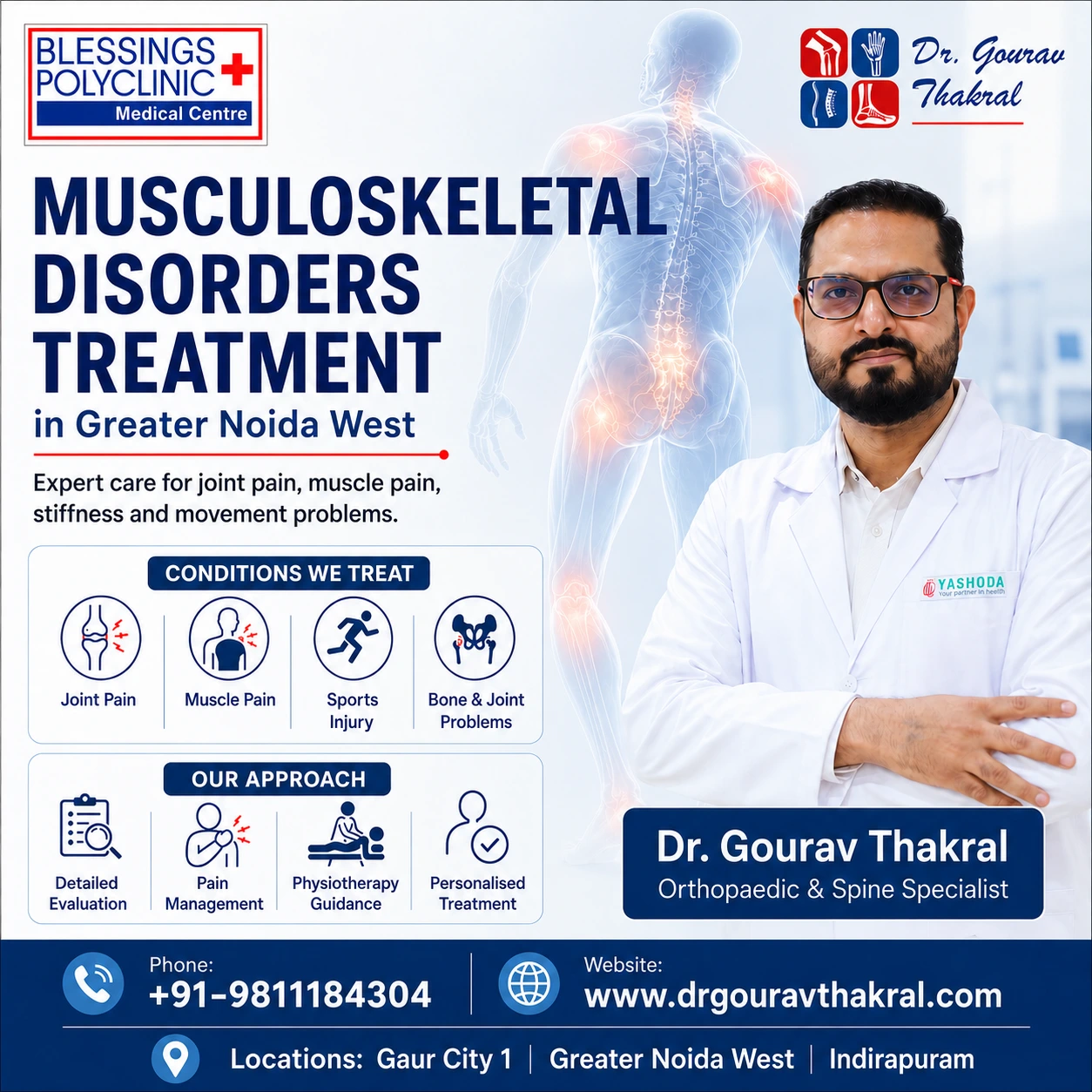
Musculoskeletal disorders treatment in Greater Noida West is important for people who experience joint pain, muscle pain, stiffness, swelling, weakness, or difficulty moving. These problems may affect the bones, joints, muscles, ligaments, tendons, nerves, and other soft tissues.
At first, mild discomfort may not seem serious. However, repeated pain can affect walking, lifting, working, exercising, sleeping, and other daily activities. Therefore, early diagnosis is important.
Dr. Gourav Thakral provides orthopaedic evaluation and personalised treatment guidance for joint pain, muscle injuries, sports injuries, fractures, arthritis, spine problems, and movement-related conditions.
Timely care can help reduce pain, improve movement, restore strength, and prevent the condition from becoming long-term.
What Are Musculoskeletal Disorders?
The musculoskeletal system supports the body and helps it move. It includes:
- Bones
- Joints
- Muscles
- Ligaments
- Tendons
- Cartilage
- Nerves
- Soft tissues
A musculoskeletal disorder develops when one or more of these structures becomes injured, inflamed, weak, strained, or worn out.
Some conditions begin after a fall, accident, or sports injury. On the other hand, others develop slowly because of poor posture, overuse, age-related changes, or repeated stress.
A proper assessment helps identify the exact structure causing the symptoms.
Common Symptoms of Musculoskeletal Disorders
Symptoms may appear suddenly or develop over time.
Common symptoms include:
- Joint pain
- Muscle pain
- Swelling
- Stiffness
- Weakness
- Reduced movement
- Difficulty walking
- Pain while lifting
- Pain after exercise
- Morning stiffness
- Clicking or locking in a joint
- Numbness or tingling
- Muscle tightness
- Difficulty climbing stairs
- Pain that affects sleep
- Difficulty performing daily activities
If these symptoms continue, timely treatment can help prevent further weakness or movement problems.
Common Causes of Joint and Muscle Problems
Joint and muscle problems in Greater Noida West may occur due to several reasons.
Common causes include:
- Arthritis
- Sports injury
- Muscle strain
- Ligament injury
- Tendon inflammation
- Poor posture
- Repeated overuse
- Old injury
- Fracture
- Joint dislocation
- Weak muscles
- Age-related joint wear
- Poor lifting technique
- Lack of exercise
- Excess body weight
- Work-related strain
Sometimes, more than one cause is involved. For example, a knee injury may affect the ligament, meniscus, and surrounding muscles.
Therefore, treatment should begin only after the cause has been identified.
Best Musculoskeletal Disorders Treatment in Greater Noida West
The best musculoskeletal disorders treatment in Greater Noida West focuses on finding the exact cause of pain instead of providing only temporary relief.
The treatment plan depends on:
- Area affected
- Type of injury
- Severity of pain
- Duration of symptoms
- Age of the patient
- Daily activity level
- Previous injuries
- Joint stability
- Muscle strength
- Test results
Treatment may include medicines, physiotherapy, exercises, activity changes, braces, injections, or surgery in selected cases.
However, the same treatment is not suitable for every patient. A personalised approach supports safer recovery.
Diagnosis of Musculoskeletal Disorders
Diagnosis begins with a detailed discussion about the symptoms.
The doctor may ask:
- When did the pain start?
- Was there an injury?
- Which movement increases pain?
- Is swelling present?
- Does the joint lock or give way?
- Is numbness or weakness present?
- Does pain affect sleep?
- Have you had a previous fracture or surgery?
Next, the affected area is examined.
The examination may include:
- Joint movement
- Muscle strength
- Swelling
- Tenderness
- Joint stability
- Walking pattern
- Posture
- Nerve function
- Balance
- Range of motion
Depending on the symptoms, imaging or blood tests may also be advised.
Digital X-Ray
A digital X-ray may help identify:
- Fractures
- Arthritis
- Joint-space reduction
- Bone deformity
- Bone spurs
- Alignment problems
- Old injury changes
However, an X-ray does not show muscles, ligaments, or tendons clearly.
MRI Scan
An MRI may be advised when a soft-tissue injury is suspected.
It can help detect:
- Ligament tears
- Meniscus injuries
- Muscle injuries
- Tendon damage
- Cartilage problems
- Nerve pressure
- Rotator cuff tears
- Hidden fractures
Still, an MRI is not required in every case.
Blood Tests
Blood tests may be advised when inflammatory arthritis, infection, vitamin deficiency, or another medical condition is suspected.
The results are considered along with the physical examination and symptoms.
Joint Pain Treatment in Greater Noida West
Joint pain treatment in Greater Noida West begins with identifying the cause of pain.
Joint pain may affect the:
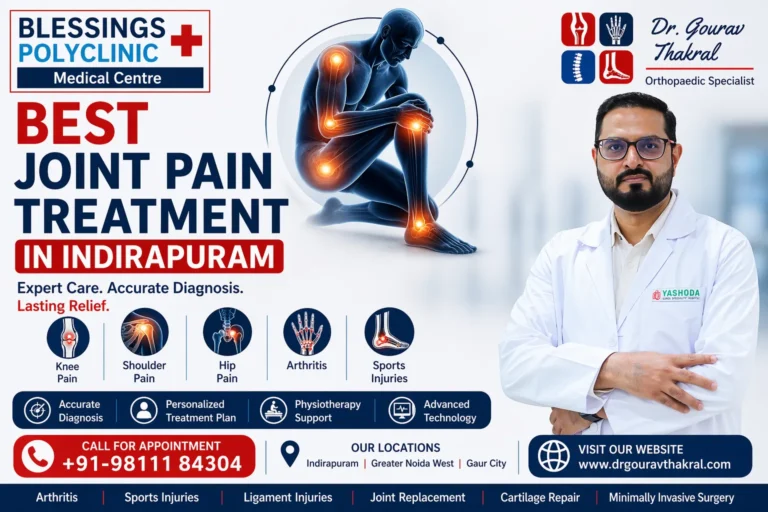
- Knee
- Shoulder
- Hip
- Ankle
- Elbow
- Wrist
- Spine
- Fingers
Common causes include arthritis, ligament injury, cartilage damage, sports injury, fracture, tendon pain, and overuse.
Treatment may include:
- Medicines
- Physiotherapy
- Joint exercises
- Bracing
- Weight-management advice
- Activity modification
- Injection treatment
- Surgery in advanced cases
The aim is to reduce pain, improve movement, and protect long-term joint health.
Muscle Pain Treatment in Greater Noida West
Muscle pain treatment in Greater Noida West may be helpful for pain caused by strain, overuse, gym workouts, sports activity, poor posture, or sudden movement.
Muscle pain may affect the:
- Neck
- Back
- Shoulder
- Arm
- Thigh
- Calf
- Hip
- Chest wall
Common symptoms include:
- Tenderness
- Tightness
- Weakness
- Swelling
- Bruising
- Pain during movement
- Muscle cramps
- Reduced strength
Treatment may include rest, medicines, physiotherapy, stretching, strengthening, posture correction, and activity guidance.
However, severe pain with bruising or weakness should be checked early.
Arthritis and Joint Stiffness
Arthritis is a common cause of long-term joint pain and stiffness.
It often affects the knees, hips, shoulders, hands, or spine.
Common symptoms include:
- Pain during movement
- Morning stiffness
- Swelling
- Reduced flexibility
- Joint sounds
- Difficulty walking
- Weakness around the joint
Treatment may include medicines, physiotherapy, exercise, weight control, injections, and surgery in advanced cases.
Early care can help maintain movement and reduce the effect of arthritis on daily life.
Sports-Related Musculoskeletal Injuries
Sports injuries can affect bones, joints, muscles, ligaments, tendons, and cartilage.
Common sports injuries include:
- ACL injury
- Meniscus tear
- Ankle sprain
- Shoulder dislocation
- Muscle strain
- Tennis elbow
- Tendon injury
- Stress fracture
- Rotator cuff injury
- Ligament sprain
Treatment should focus on both recovery and prevention.
A complete sports rehabilitation plan may include:
- Pain control
- Strength training
- Balance exercises
- Movement correction
- Joint stability work
- Sports-specific exercises
- Return-to-play testing
Returning to sports too early may increase the risk of another injury.
Back and Neck Musculoskeletal Problems
Musculoskeletal disorders may also affect the spine.
Common causes of back and neck pain include:
- Muscle strain
- Poor posture
- Weak core muscles
- Slip disc
- Nerve pressure
- Age-related changes
- Long sitting
- Incorrect lifting
- Sports injury
Treatment may include medicines, physiotherapy, posture correction, ergonomic advice, and guided exercises.
However, pain travelling into the arm or leg may indicate nerve involvement.
Shoulder and Upper-Limb Problems
Shoulder, elbow, wrist, and hand problems may affect lifting, writing, driving, sleeping, and office work.
Common conditions include:
- Frozen shoulder
- Rotator cuff injury
- Tennis elbow
- Golfer’s elbow
- Wrist fracture
- Tendonitis
- Nerve compression
- Shoulder arthritis
Treatment depends on the cause and severity.
In many cases, non-surgical care can improve movement and reduce pain.
Knee and Lower-Limb Problems
The knee, hip, ankle, and foot carry body weight during standing and walking.
Common problems include:
- Knee arthritis
- ACL injury
- Meniscus tear
- Hip arthritis
- Ankle sprain
- Plantar fasciitis
- Heel pain
- Ligament injury
- Fracture
Treatment may include medicines, physiotherapy, strengthening, braces, injections, or surgery when required.
Orthopaedic Treatment in Greater Noida West
Orthopaedic treatment in Greater Noida West includes diagnosis, pain control, rehabilitation, injury prevention, and surgical care when needed.
It may cover:
- Bone injuries
- Joint pain
- Muscle problems
- Ligament injuries
- Tendon disorders
- Spine conditions
- Sports injuries
- Fractures
- Arthritis
- Joint replacement
The goal is to reduce pain and help the patient return safely to daily activities.
Non-Surgical Musculoskeletal Treatment
Many musculoskeletal disorders can improve without surgery.
Non-surgical care may include:
Rest and Activity Changes
Activities that increase pain may need to be reduced for a short period.
However, complete rest for too long may cause stiffness and weakness.
Medicines
Pain-relief or anti-inflammatory medicines may be prescribed when required.
Patients should avoid long-term self-medication.
Ice or Heat
Ice may help after an acute injury or when swelling is present.
Heat may reduce stiffness in some long-term conditions.
Physiotherapy
Physiotherapy may help:
- Reduce pain
- Restore movement
- Improve strength
- Correct posture
- Improve balance
- Increase joint stability
- Prevent repeated injury
Braces and Supports
A brace, splint, or support may protect the injured area during recovery.
However, it should be used according to medical guidance.
Injection Treatment
Injections may be considered for selected joint or tendon conditions.
The decision depends on the diagnosis and symptoms.
Physiotherapy for Joint and Muscle Problems
Physiotherapy is an important part of musculoskeletal care.
A rehabilitation plan may include:
- Range-of-motion exercises
- Muscle strengthening
- Stretching
- Balance training
- Walking correction
- Posture correction
- Joint stability exercises
- Functional training
At first, treatment may focus on pain and movement. Later, strengthening and activity-based exercises are added.
Regular participation can support better recovery.
When Is Surgery Required?
Most joint and muscle problems do not require surgery.
However, surgery may be considered when:
- A fracture is displaced
- A ligament is completely torn
- A tendon has ruptured
- Joint damage is severe
- Pain continues despite treatment
- Movement is badly restricted
- The joint repeatedly dislocates
- Advanced arthritis affects daily life
- Nerve pressure causes severe weakness
The decision depends on symptoms, examination findings, imaging, age, and activity needs.
Role of an Orthopaedic Specialist in Greater Noida West
An orthopaedic specialist in Greater Noida West evaluates problems involving bones, joints, muscles, ligaments, tendons, and the spine.
During the consultation, the specialist may:
- Examine the painful area
- Check joint movement
- Test muscle strength
- Review X-rays or MRI
- Identify instability
- Plan physiotherapy
- Prescribe medicines
- Advise surgery when needed
- Guide recovery
Correct diagnosis helps prevent unnecessary treatment and delayed recovery.
Role of a Bone Specialist in Greater Noida West
A bone specialist in Greater Noida West can assess fractures, bone pain, weak bones, joint injuries, and trauma-related conditions.
The specialist may help with:
- Fracture diagnosis
- Plaster or brace care
- Bone alignment
- Surgical planning
- Osteoporosis assessment
- Bone-strength guidance
- Follow-up imaging
- Rehabilitation
Bone health may also need evaluation when fractures happen after minor falls.
When Should You Consult an Orthopaedic Doctor?
Consult a doctor if pain continues for several days or affects your normal routine.
Seek early care if you have:
- Severe joint pain
- Sudden swelling
- Muscle pain after injury
- Difficulty walking
- Reduced movement
- Joint instability
- Numbness or tingling
- Visible deformity
- Pain after a fall
- Repeated stiffness
- Pain that affects sleep
- Weakness that is getting worse
Urgent care may be needed after a major accident, severe deformity, or loss of sensation.
Prevention Tips
Some musculoskeletal problems can be reduced through simple habits.
Helpful tips include:
- Maintain good posture
- Exercise regularly
- Strengthen the muscles
- Warm up before sports
- Use proper lifting techniques
- Wear supportive footwear
- Take breaks from long sitting
- Avoid sudden increases in exercise
- Maintain a healthy body weight
- Treat minor injuries early
- Follow physiotherapy properly
- Avoid repeated self-medication
These habits can support better joint, muscle, and bone health.
Why Choose Dr. Gourav Thakral?
Dr. Gourav Thakral provides orthopaedic care for musculoskeletal disorders, joint pain, muscle injuries, fractures, arthritis, sports injuries, and movement-related conditions.
Patients looking for the best musculoskeletal disorders treatment in Greater Noida West can consult him for diagnosis and personalised treatment guidance.
His approach focuses on:
- Correct diagnosis
- Pain relief
- Better movement
- Improved strength
- Joint stability
- Safe rehabilitation
- Injury prevention
- Surgery only when required
Conclusion
Musculoskeletal disorders can affect walking, exercise, work, sleep, and daily movement. Therefore, joint pain, muscle pain, stiffness, swelling, or weakness should not be ignored.
For musculoskeletal disorders treatment in Greater Noida West, consult Dr. Gourav Thakral for joint pain treatment, muscle pain care, sports injury management, fracture treatment, and complete orthopaedic guidance.
FAQs
1. What are musculoskeletal disorders?
Musculoskeletal disorders are conditions affecting bones, joints, muscles, ligaments, tendons, cartilage, nerves, or soft tissues.
2. What causes joint and muscle pain?
Common causes include arthritis, injury, muscle strain, ligament damage, poor posture, overuse, sports activity, and age-related changes.
3. Can musculoskeletal problems improve without surgery?
Yes. Many conditions improve with medicines, physiotherapy, exercises, braces, and activity changes.
4. When should I consult an orthopaedic specialist?
Consult a specialist when pain continues, swelling increases, movement becomes difficult, or weakness affects daily activities.
5. Is physiotherapy useful for joint and muscle problems?
Yes. Physiotherapy can improve movement, strength, balance, posture, and joint stability.