Joints and Musculoskeletal Disorders Noida Extension: Symptoms, Causes and Treatment
Joints and Musculoskeletal Disorders in Noida Extension can affect your movement, posture, strength, flexibility, and daily comfort. These problems may involve bones, joints, muscles, ligaments, tendons, nerves, and spine. Pain may start mildly, but if it continues or affects daily activity, it should not be ignored.
Many people experience knee pain, shoulder pain, hip pain, back pain, neck pain, muscle pain, stiffness, swelling, weakness, or difficulty walking. These symptoms may happen due to arthritis, injury, sports activity, overuse, fracture, poor posture, age-related joint wear, or muscle strain.
Dr. Gourav Thakral provides expert orthopaedic evaluation and treatment guidance for joints and musculoskeletal disorders, muscle pain, sports injury, joint pain, and mobility-related problems in Noida Extension.
What Are Joints and Musculoskeletal Disorders?
Joints and musculoskeletal disorders are conditions that affect the body’s movement system. This system includes bones, joints, cartilage, muscles, ligaments, tendons, nerves, and soft tissues.
These disorders can affect any age group. Young patients may develop problems due to sports injuries, gym injuries, muscle strain, or accidents. Adults may face posture-related pain, joint stiffness, or overuse problems. Elderly patients may develop arthritis, weak bones, joint degeneration, or mobility issues.
A proper diagnosis helps understand the exact cause and decide the right treatment plan.
Common Symptoms
Symptoms depend on the condition and body part involved. Some symptoms appear suddenly after injury. Others develop slowly over time.
Common symptoms include:
- Joint pain
- Muscle pain
- Swelling
- Stiffness
- Weakness
- Reduced movement
- Difficulty walking
- Pain after activity
- Clicking or locking in joints
- Numbness or tingling
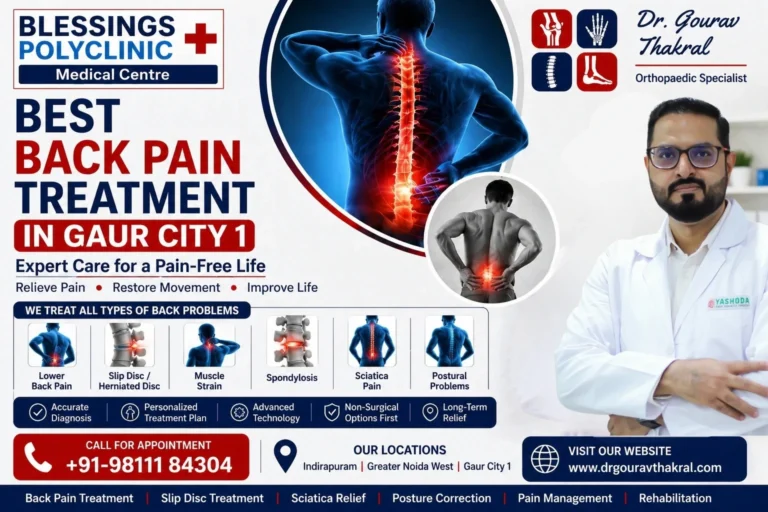
- Back or neck pain
- Repeated injury
- Difficulty climbing stairs
If these symptoms continue, consult an Orthopaedic Surgeon in Noida Extension for proper evaluation.
Common Causes
Joints and musculoskeletal disorders may happen due to many reasons. In many patients, more than one factor may be responsible.
Common causes include:
- Sports injury
- Muscle strain
- Ligament injury
- Arthritis
- Cartilage damage
- Fracture
- Overuse
- Poor posture
- Weak muscles
- Age-related joint wear
- Obesity
- Repetitive work
- Previous untreated injury
Early diagnosis can prevent worsening and support better recovery.
Muscle Pain Treatment in Noida Extension
Muscle pain can happen due to strain, overuse, poor posture, sports injury, gym workout, sudden movement, or weakness. It may affect the back, neck, shoulder, thigh, calf, arm, or hip area.
Muscle pain treatment in Noida Extension may include clinical examination, pain management, medicines when required, rest guidance, physiotherapy, stretching, strengthening exercises, posture correction, and activity modification.
If muscle pain comes with swelling, bruising, weakness, or movement restriction, proper orthopaedic evaluation is important.
Sports Injury Treatment
Sports injuries are common in people who do gym workouts, running, cricket, football, badminton, cycling, or regular physical activity. These injuries can affect muscles, ligaments, tendons, bones, and joints.
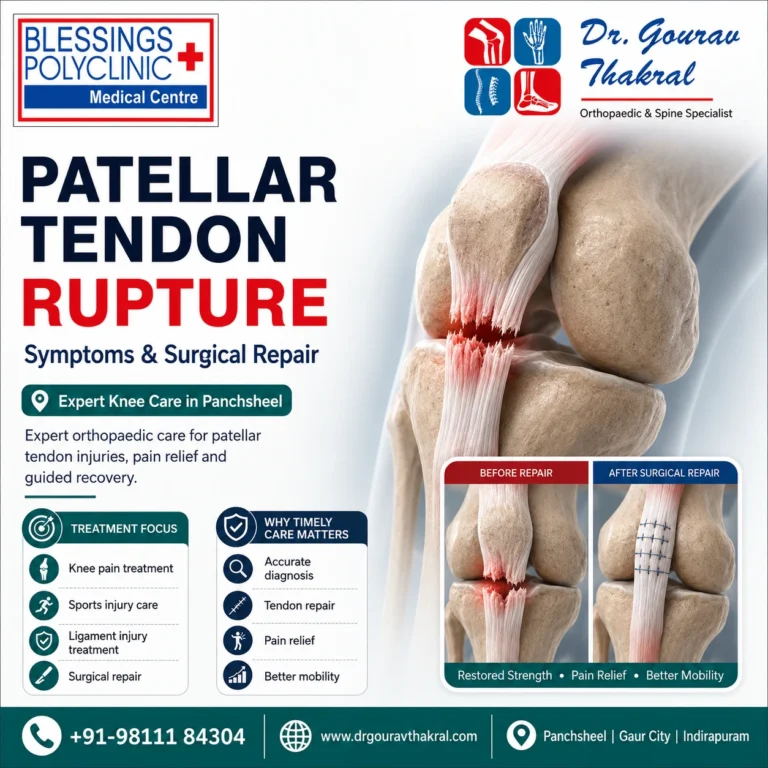
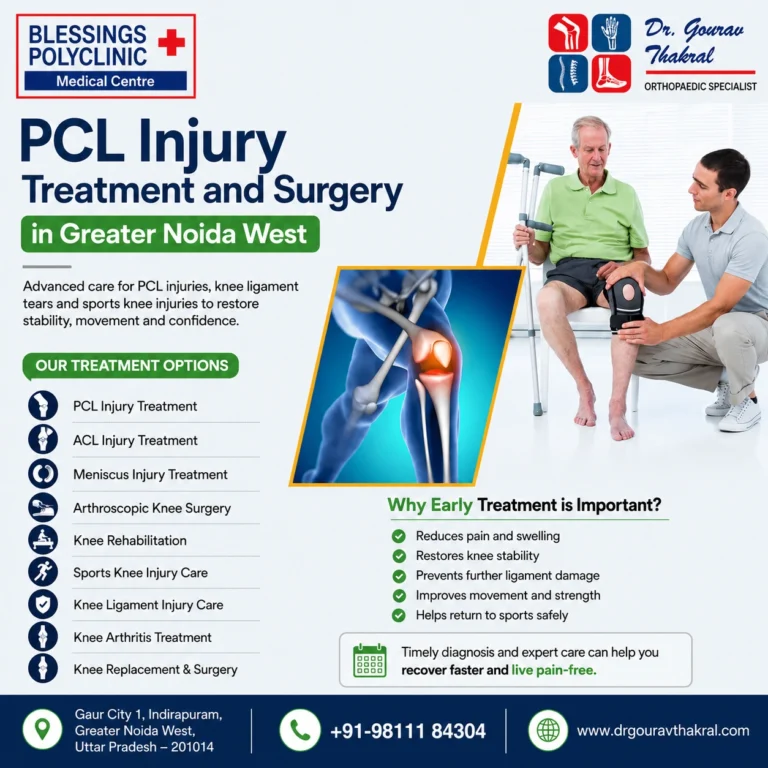
Common sports injuries include ankle sprain, knee injury, shoulder injury, muscle strain, ligament tear, tendon pain, meniscus injury, rotator cuff injury, sports fracture, and joint dislocation.
Sports injury treatment may include diagnosis, pain control, swelling management, bracing, physiotherapy, rehabilitation, strength training, mobility improvement, and surgical care in selected severe cases.
The aim is to reduce pain, restore movement, and help the patient return to activity safely.
Joint Pain and Stiffness
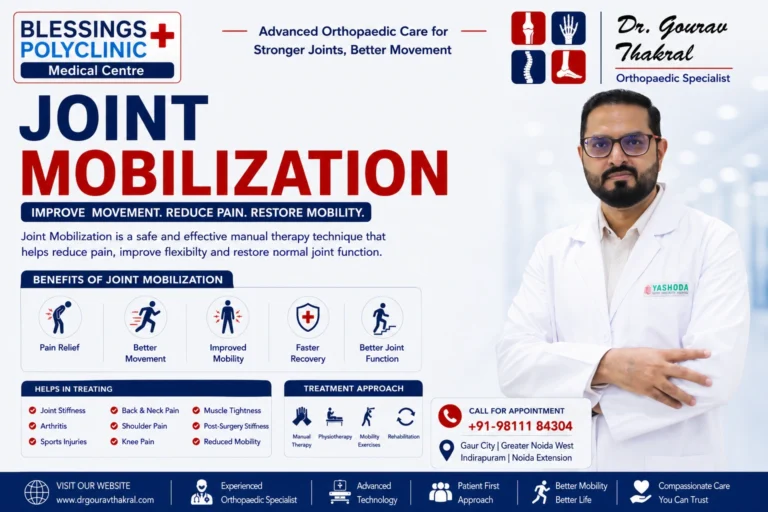
Joint pain may affect the knee, shoulder, hip, ankle, wrist, elbow, or spine. It can happen due to arthritis, cartilage damage, inflammation, ligament injury, tendon problems, overuse, or trauma.
Joint stiffness may be worse in the morning, after sitting, or after long rest. It may also affect walking, climbing stairs, lifting objects, or daily routine.
Treatment may include medicines, exercises, physiotherapy, weight guidance, injection therapy, bracing, lifestyle correction, or advanced orthopaedic treatment when needed.
Joint Replacement Surgery
Joint replacement surgery may be advised when joint damage is severe and non-surgical treatment no longer provides enough relief. It is commonly considered for advanced arthritis, severe knee pain, hip pain, joint deformity, and reduced mobility.
The goal of joint replacement surgery is to reduce pain, improve movement, and help the patient return to daily activities with better comfort.
Not every patient with joint pain needs surgery. Many conditions improve with medicines, physiotherapy, exercises, bracing, lifestyle changes, and pain management. Surgery is considered only after proper evaluation.
Role of an Orthopaedic Surgeon in Noida Extension
An Orthopaedic Surgeon in Noida Extension helps diagnose and treat bone, joint, muscle, ligament, tendon, spine, and injury-related problems.
The role includes:
- Clinical evaluation
- Diagnosis of pain source
- X-ray or MRI advice when needed
- Non-surgical treatment planning
- Surgical evaluation when required
- Rehabilitation guidance
- Long-term prevention advice
Dr. Gourav Thakral focuses on accurate diagnosis, patient-specific treatment, pain relief, mobility improvement, and safe recovery.
When Should You Visit a Doctor?
You should visit an orthopaedic specialist if pain continues for many days or affects your daily routine.
Seek early care if you have:
- Severe joint pain
- Muscle pain after injury
- Swelling or bruising
- Difficulty walking
- Reduced movement
- Pain after sports injury
- Repeated stiffness
- Joint instability
- Pain that affects sleep
- Weakness or numbness
- Deformity after injury
Timely care can help prevent long-term complications.
Diagnosis and Treatment Approach
Diagnosis starts with medical history and physical examination. Dr. Gourav Thakral may assess pain location, movement, swelling, muscle strength, joint stability, posture, walking pattern, and injury history.
Depending on symptoms, digital X-ray, MRI, blood tests, or other investigations may be advised.
Treatment may include medicines, physiotherapy, rehabilitation, exercise guidance, posture correction, bracing, injection therapy, fracture care, sports injury treatment, pain management, or surgery in selected cases.
Prevention Tips
Some musculoskeletal problems can be reduced with better habits.
Helpful tips include:
- Maintain proper posture
- Avoid long sitting without breaks
- Warm up before sports
- Use proper footwear
- Do strengthening exercises
- Avoid sudden overload
- Treat minor injuries early
- Maintain healthy weight
- Follow rehabilitation properly
- Avoid self-medication for repeated pain
These steps can support better bone, joint, and muscle health.
Why Choose Dr. Gourav Thakral?
Dr. Gourav Thakral provides expert orthopaedic care for joints and musculoskeletal disorders in Noida Extension. Patients can consult him for joint pain, muscle pain, sports injuries, fracture care, arthritis, stiffness, spine-related pain, and mobility problems.
His approach focuses on proper diagnosis, patient-specific treatment, pain relief, movement improvement, and safe recovery planning.
Conclusion
Joints and musculoskeletal disorders can affect daily life if ignored. Pain, stiffness, swelling, weakness, injury, or walking difficulty should be evaluated on time.
For expert care for Joints and Musculoskeletal Disorders in Noida Extension, consult Dr. Gourav Thakral for orthopaedic evaluation, muscle pain treatment, sports injury treatment, joint pain care, and joint replacement surgery guidance when needed.
FAQs
What are joints and musculoskeletal disorders?
They are conditions that affect bones, joints, muscles, ligaments, tendons, nerves, and spine. They may cause pain, swelling, stiffness, weakness, or movement difficulty.
When should I consult an orthopaedic surgeon in Noida Extension?
You should consult if pain continues, swelling increases, walking becomes difficult, or injury affects movement.
What causes muscle pain?
Muscle pain may happen due to strain, overuse, sports injury, poor posture, gym workouts, sudden movement, or weakness.
Is sports injury treatment always surgical?
No. Many sports injuries improve with rest, medicines, physiotherapy, bracing, and rehabilitation. Surgery is needed only in selected severe cases.
When is joint replacement surgery needed?
Joint replacement surgery may be considered when joint damage is severe and non-surgical treatment does not provide enough relief.
Where can I get treatment in Noida Extension?
You can consult Dr. Gourav Thakral for joints and musculoskeletal disorders, muscle pain treatment, sports injury treatment, and orthopaedic care in Noida Extension.