Shoulder Labral Tear Surgery in Gaur City: Symptoms and Arthroscopic Treatment
Shoulder Labral Tear Surgery in Gaur City may become necessary when a torn shoulder labrum causes pain, clicking, weakness, instability, or difficulty using the arm. The shoulder labrum is a ring of cartilage around the shoulder socket. It helps keep the ball of the upper arm bone stable inside the socket.
A shoulder labrum tear can happen after a sports injury, fall, lifting injury, shoulder dislocation, or repeated overhead activity. Athletes, gym users, swimmers, throwers, and people who do heavy shoulder work may face this problem more often. AAOS explains that a SLAP tear is an injury to part of the shoulder labrum, which is the ring of cartilage around the shoulder socket.
For patients looking for Shoulder pain treatment, Sports injury treatment, and Ligament injury treatment in Gaur City, Dr. Gourav Thakral provides expert orthopaedic evaluation and treatment guidance. As an experienced Orthopaedic specialist and Bone specialist, he helps patients understand whether physiotherapy, medicines, injections, activity changes, or arthroscopic surgery may be suitable.
What Is a Shoulder Labral Tear?
A shoulder labral tear means the cartilage rim around the shoulder socket has torn. This tear can affect shoulder stability, comfort, and movement. The labrum also helps attach important shoulder structures, including ligaments and the biceps tendon.
Some labral tears cause mild symptoms. Others create repeated pain, catching, popping, or a feeling that the shoulder may slip out. If the tear happens with shoulder instability, the patient may feel unsafe during throwing, lifting, gym training, or sports activity.
A Joint specialist checks shoulder movement, strength, stability, pain pattern, and injury history before planning treatment.
Common Symptoms of Shoulder Labral Tear
Symptoms may vary from person to person. Some patients feel deep shoulder pain. Others feel clicking or catching inside the shoulder.
Common symptoms include:
Shoulder pain during lifting or overhead movement
Clicking, popping, or catching sensation
Pain during gym or sports activity
Shoulder weakness
Reduced throwing power
Feeling of shoulder instability
Pain after shoulder dislocation
Difficulty sleeping on the affected side
Reduced range of motion
Joint pain during daily work
If these symptoms continue, proper Joint pain treatment can help identify the cause and prevent further shoulder problems.
Causes of Shoulder Labrum Tear
A shoulder labrum tear can occur due to sudden injury or repeated stress. A fall on an outstretched hand, direct hit, shoulder dislocation, sudden pull, heavy lifting, or sports injury can damage the labrum.
Repetitive overhead sports can also create labral injury over time. This includes cricket, badminton, tennis, swimming, volleyball, weight training, and throwing sports.
Mayo Clinic Sports Medicine notes that shoulder instability can cause labrum tears, cartilage injuries, rotator cuff tears, and even fractures after a traumatic accident such as a fall or collision.
When Should You Consult an Orthopaedic Specialist?
You should consult an Orthopaedic specialist if shoulder pain keeps coming back, the shoulder clicks painfully, or the arm feels weak during lifting. You should also seek care if the shoulder slips, feels unstable, or pain starts after a dislocation.
Medical evaluation becomes important when shoulder pain affects sports, gym, sleep, work, or daily activity. Ignoring repeated instability may increase the risk of further soft tissue damage.
Patients searching for the Best orthopaedic doctor in Gaur City can consult Dr. Gourav Thakral for accurate diagnosis and treatment planning.
Diagnosis of Shoulder Labral Tear
Diagnosis starts with a detailed history and physical examination. The doctor checks pain location, shoulder movement, strength, instability, clicking, and special shoulder tests.
X-rays may help rule out fracture, arthritis, or bone injury. MRI or MR arthrogram may help show labral damage more clearly. In some cases, the doctor may confirm the tear during arthroscopy.
A correct diagnosis matters because shoulder pain can also come from rotator cuff injury, frozen shoulder, arthritis, ligament injury, biceps tendon problems, or neck-related nerve pain.
Non-Surgical Treatment for Shoulder Labral Tear
Not every shoulder labral tear needs surgery. Mild tears or low-demand cases may improve with non-surgical care. Treatment may include rest, activity changes, medicines, physiotherapy, shoulder strengthening, and pain management.
Cleveland Clinic states that treatment for SLAP tears may include rest, anti-inflammatory medicines, cortisone shots, physical therapy, debridement, arthroscopic labral repair, or biceps tenodesis depending on the case.
Physiotherapy focuses on rotator cuff strength, shoulder blade control, posture, mobility, and stability. If symptoms improve, surgery may not be needed.
When Is Shoulder Labral Tear Surgery Needed?
Shoulder labral tear surgery may be considered when pain, instability, weakness, or clicking continues despite proper non-surgical care. Surgery may also help athletes or active patients who need stable shoulder movement for sports or heavy activity.
Your doctor may suggest surgery when:
Shoulder instability keeps returning
Pain continues despite physiotherapy
The labrum tear is large
The shoulder catches or locks
Sports performance reduces
The shoulder dislocates repeatedly
Daily activity becomes difficult
MRI shows significant labral injury
Johns Hopkins Medicine explains that if a large labral tear exists, doctors may trim or repair the torn part depending on the tear size and location.
What Is Arthroscopic Shoulder Labral Tear Surgery?
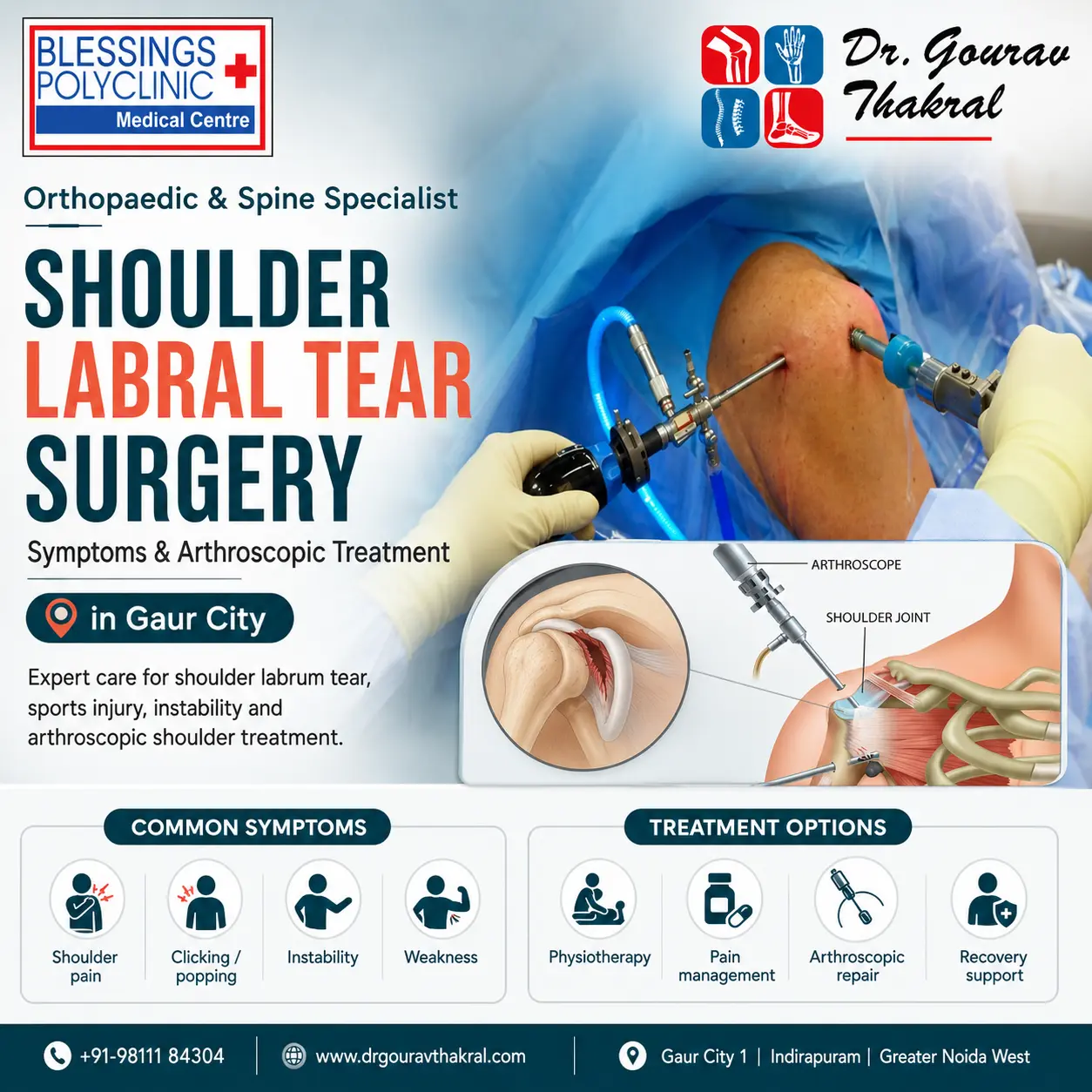
Arthroscopic treatment uses a small camera and small instruments to repair shoulder damage through tiny cuts. The surgeon views the joint on a screen and treats the torn labrum with special instruments.
During labral repair, the surgeon may use small anchors and sutures to attach the torn labrum back to the socket. In some cases, the surgeon may trim frayed tissue instead of repairing it. The choice depends on tear type, age, activity level, instability, and shoulder condition.
AAOS explains that shoulder arthroscopy can relieve painful symptoms from problems that damage the labrum, rotator cuff tendons, cartilage, and other soft tissues around the shoulder joint.
Recovery After Shoulder Labral Tear Surgery
Recovery depends on the tear type, repair method, patient age, sports goals, and rehabilitation. The shoulder may need a sling for some time. Physiotherapy helps restore movement, strength, and stability.
Recovery usually includes:
Sling support
Pain and swelling control
Gentle movement exercises
Physiotherapy
Rotator cuff strengthening
Shoulder stability training
Gradual return to daily work
Sports-specific training when advised
AAOS highlights that regular exercises to restore shoulder motion and flexibility, followed by gradual return to daily activity, play an important role after shoulder surgery.
Why Early Treatment Matters
A shoulder labral tear can affect strength, stability, and confidence during movement. If instability continues, the shoulder may remain at risk during sports and daily activity.
Early diagnosis helps identify the tear type and plan the right treatment. Some patients recover with physiotherapy. Others need arthroscopic repair when symptoms continue or the shoulder remains unstable.
For athletes and active people, timely Sports injury treatment can help protect shoulder function and support a safer return to activity.
Shoulder Labral Tear Surgery in Gaur City by Dr. Gourav Thakral
If you have shoulder pain, clicking, instability, weakness, or repeated dislocation symptoms, Dr. Gourav Thakral can help with proper diagnosis and treatment planning in Gaur City. He evaluates shoulder movement, labrum injury, sports goals, pain level, MRI findings, and daily activity needs before suggesting treatment.
Patients searching for Shoulder pain treatment, Joint pain treatment, Ligament injury treatment, or arthroscopic shoulder treatment can consult Dr. Gourav Thakral for expert orthopaedic care.
Final Thoughts
A shoulder labral tear can affect sports, gym training, lifting, sleep, and daily movement. Not every tear needs surgery, but large tears, repeated instability, and persistent pain may need arthroscopic treatment.
For Shoulder Labral Tear Surgery in Gaur City, consult Dr. Gourav Thakral, an experienced Orthopaedic specialist, Joint specialist, and Bone specialist, for proper evaluation and recovery guidance.
FAQs
1. What is a shoulder labral tear?
A shoulder labral tear means the cartilage rim around the shoulder socket has torn. It can cause pain, clicking, weakness, or instability.
2. What causes a shoulder labrum tear?
It may happen due to sports injury, shoulder dislocation, fall, heavy lifting, sudden pull, or repeated overhead movement.
3. Does every shoulder labral tear need surgery?
No. Many cases improve with medicines, activity changes, physiotherapy, strengthening, and pain management. Surgery may help selected patients.
4. What is arthroscopic labral repair?
It is a minimally invasive shoulder surgery where the surgeon uses a small camera and instruments to repair the torn labrum.
5. Can a labral tear cause shoulder clicking?
Yes. A torn labrum can cause clicking, catching, popping, or deep shoulder pain during movement.