Rotator Cuff Tear Surgery in Gaur City: When Shoulder Pain Needs Repair
Rotator Cuff Tear Surgery in Gaur City may help when shoulder pain, weakness, night pain, or difficulty lifting the arm does not improve with regular treatment. The rotator cuff is a group of muscles and tendons around the shoulder joint. These tendons help lift, rotate, and stabilize the shoulder.
A rotator cuff tear can happen after a fall, sports injury, heavy lifting, sudden pull, repeated overhead work, or age-related tendon weakness. Mayo Clinic explains that rotator cuff injuries can cause a dull ache in the shoulder that often worsens at night. It also notes that these injuries become more common with age.
For patients looking for Shoulder pain treatment, Sports injury treatment, Ligament injury treatment, and Joint pain treatment in Gaur City, Dr. Gourav Thakral provides expert orthopaedic evaluation and treatment guidance. As an experienced Orthopaedic specialist and Joint specialist, he helps patients understand whether physiotherapy, medicines, injections, pain management, or surgery may be suitable.
What Is a Rotator Cuff Tear?
A rotator cuff tear means one or more shoulder tendons have torn. The tear may be partial or complete. In a partial tear, the tendon is damaged but not fully separated. In a complete tear, the tendon may detach from the bone.
The shoulder depends on the rotator cuff for smooth and stable movement. Therefore, a tear can make lifting, reaching, dressing, combing hair, sleeping, or working difficult. Some patients feel pain only during movement. However, others feel pain even at rest.
A Joint specialist checks shoulder strength, movement, pain pattern, and injury history before planning treatment.
Common Symptoms of Rotator Cuff Tear
Rotator cuff tear symptoms can develop suddenly or slowly. A sudden tear may happen after a fall or lifting injury. However, age-related tears may develop over time.
Common symptoms include:
Shoulder pain during lifting
Pain while reaching overhead
Night pain while sleeping
Weakness in the shoulder
Difficulty lifting the arm
Pain while wearing clothes
Clicking or catching sensation
Pain after sports or gym activity
Reduced shoulder movement
Difficulty sleeping on the painful side
If shoulder pain continues, proper Shoulder pain treatment can help find the cause and prevent further weakness.
Causes of Rotator Cuff Tear
A rotator cuff tear may happen due to injury or gradual wear and tear. Sports injuries, falls, road accidents, heavy lifting, sudden pulling, and repeated overhead movement can damage the tendon.
Some people develop rotator cuff problems because of age-related tendon changes. Repeated shoulder stress can also increase the risk. Sports like cricket, badminton, tennis, swimming, volleyball, and weight training may put extra load on the shoulder.
Mayo Clinic notes that conservative treatments like rest, ice, and physical therapy may help some people recover. However, severe injuries may need surgery.
When Should You Consult an Orthopaedic Specialist?
You should consult an Orthopaedic specialist if shoulder pain lasts for more than a few days, keeps coming back, or affects daily activity. Also, get medical advice if you cannot lift the arm properly after injury.
Consultation becomes important when shoulder pain affects sleep, work, sports, gym training, or routine tasks. Weakness after a fall or sudden injury should not be ignored.
Patients searching for the Best orthopaedic doctor in Gaur City can consult Dr. Gourav Thakral for shoulder pain, sports injury, and rotator cuff tear evaluation.
Diagnosis of Rotator Cuff Tear
Diagnosis starts with a physical examination. The doctor checks shoulder movement, strength, painful positions, tenderness, and functional limits. He may also perform special shoulder tests.
X-rays help rule out bone problems, arthritis, or shoulder alignment issues. Ultrasound or MRI can show tendon damage more clearly. These tests also help decide whether the tear is small, large, partial, or complete.
A correct diagnosis matters because shoulder pain can also come from frozen shoulder, arthritis, shoulder labrum tear, neck nerve compression, or ligament injury.
Non-Surgical Treatment for Rotator Cuff Tear
Not every rotator cuff tear needs surgery. Mild tears, partial tears, or low-demand cases may improve with non-surgical care. Treatment may include rest, activity modification, medicines, physiotherapy, injections, and pain management.
Physiotherapy plays an important role. It helps improve shoulder movement, rotator cuff strength, posture, and shoulder blade control. In addition, the doctor may advise avoiding heavy lifting or overhead stress for some time.
A good Joint pain treatment plan should reduce pain and improve function. However, if weakness continues or the tear is large, surgery may become necessary.
When Is Rotator Cuff Tear Surgery Needed?
Rotator Cuff Tear Surgery may be considered when pain, weakness, or poor movement continues despite proper non-surgical treatment. It may also help when a recent injury causes a full-thickness tear.
AAOS explains that surgery to repair a torn rotator cuff most often involves re-attaching the tendon to the head of the humerus. It also notes that surgery may be considered when the tear comes from a recent acute injury.
Your doctor may suggest surgery when:
Shoulder pain does not improve
Weakness affects lifting
Night pain disturbs sleep
The tear is large or complete
The tendon pulls away from bone
Sports or work activity becomes difficult
The shoulder loses strength after injury
Physiotherapy does not give enough relief
The final decision depends on tear size, age, activity level, pain, weakness, MRI findings, and daily needs.
What Is Arthroscopic Rotator Cuff Repair?
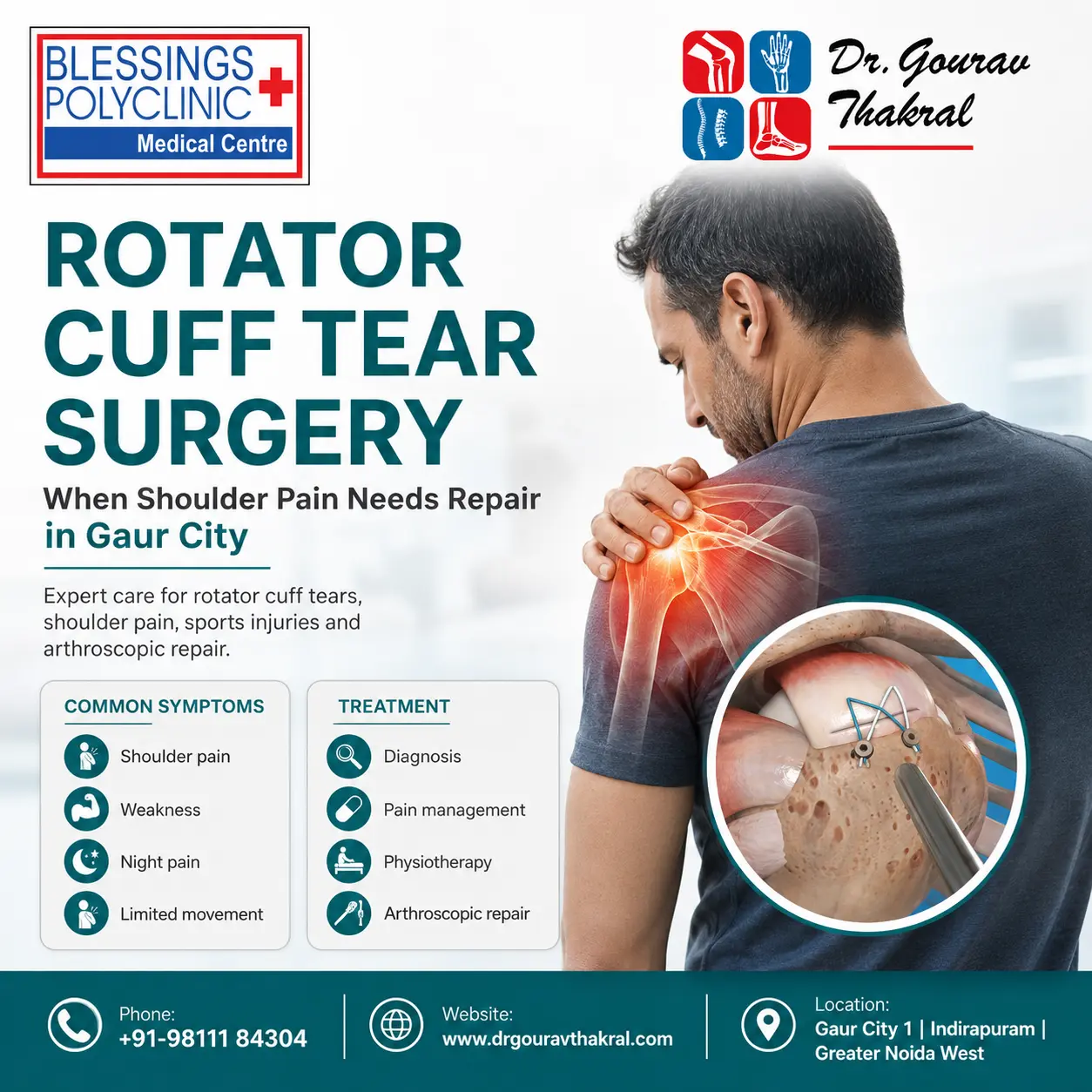
Arthroscopic rotator cuff repair is a minimally invasive shoulder surgery. The surgeon uses a small camera and small instruments through tiny cuts. This helps repair the torn tendon with less soft tissue disruption.
During surgery, the surgeon may clean damaged tissue and reattach the tendon to the bone using anchors and sutures. AAOS says arthroscopic repair is the least invasive method to repair a torn rotator cuff and doctors usually perform it as a same-day procedure.
Arthroscopic repair may help selected patients recover shoulder stability and strength. However, recovery still needs time, patience, and physiotherapy.
Recovery After Rotator Cuff Tear Surgery
Recovery after rotator cuff surgery takes time because the tendon needs to heal to the bone. The shoulder may need a sling for several weeks. The doctor and physiotherapist guide movement step by step.
Cleveland Clinic explains that many people wear a sling for four to six weeks after surgery. It also notes that many people regain function and strength within four to six months, while full recovery may take 12 to 18 months.
Recovery usually includes:
Sling support
Pain and swelling control
Wound care
Gentle shoulder movement
Physiotherapy
Strengthening exercises
Gradual return to work
Sports-specific rehab when advised
Patients should not rush recovery. Early heavy lifting can stress the repair and delay healing.
Why Physiotherapy Matters After Surgery
Physiotherapy is a key part of recovery. At first, therapy focuses on safe movement and stiffness prevention. Later, it works on strength, control, and shoulder function.
A proper rehab plan helps restore movement and reduce the risk of stiffness. It also helps patients return to routine work, gym activity, or sports safely.
For active patients, structured Sports injury treatment can support a safer return to sports after healing.
Rotator Cuff Tear Surgery in Gaur City by Dr. Gourav Thakral
If you have shoulder pain, weakness, night pain, or difficulty lifting the arm, Dr. Gourav Thakral can help with proper diagnosis and treatment planning in Gaur City. He checks shoulder movement, strength, pain level, injury history, MRI findings, and daily activity needs before suggesting treatment.
Patients searching for Shoulder pain treatment, Ligament injury treatment, Sports injury treatment, and Joint pain treatment can consult Dr. Gourav Thakral for expert orthopaedic care.
Final Thoughts
A rotator cuff tear can affect shoulder strength, sleep, work, sports, and daily movement. Many patients improve with physiotherapy, medicines, activity changes, and pain management. However, large tears, complete tears, recent injury-related tears, or ongoing weakness may need surgical repair.
For Rotator Cuff Tear Surgery in Gaur City, consult Dr. Gourav Thakral, an experienced Orthopaedic specialist and Joint specialist, for proper evaluation and recovery guidance.
FAQs
1. What is a rotator cuff tear?
A rotator cuff tear means one or more tendons around the shoulder joint have torn. It can cause pain, weakness, and difficulty lifting the arm.
2. Does every rotator cuff tear need surgery?
No. Many mild or partial tears improve with physiotherapy, medicines, rest, injections, and activity changes. Surgery may help selected patients.
3. When is rotator cuff tear surgery needed?
Surgery may be needed when pain, weakness, night pain, or poor shoulder function continues despite proper non-surgical treatment.
4. What is arthroscopic rotator cuff repair?
It is a minimally invasive shoulder surgery where the surgeon uses a camera and small instruments to repair the torn tendon.
5. Can sports injury cause rotator cuff tear?
Yes. Falls, sudden pulls, throwing, overhead sports, gym injuries, and heavy lifting can cause rotator cuff tears.