Bankart Repair Surgery in Gaur City: Treatment for Recurrent Shoulder Dislocation
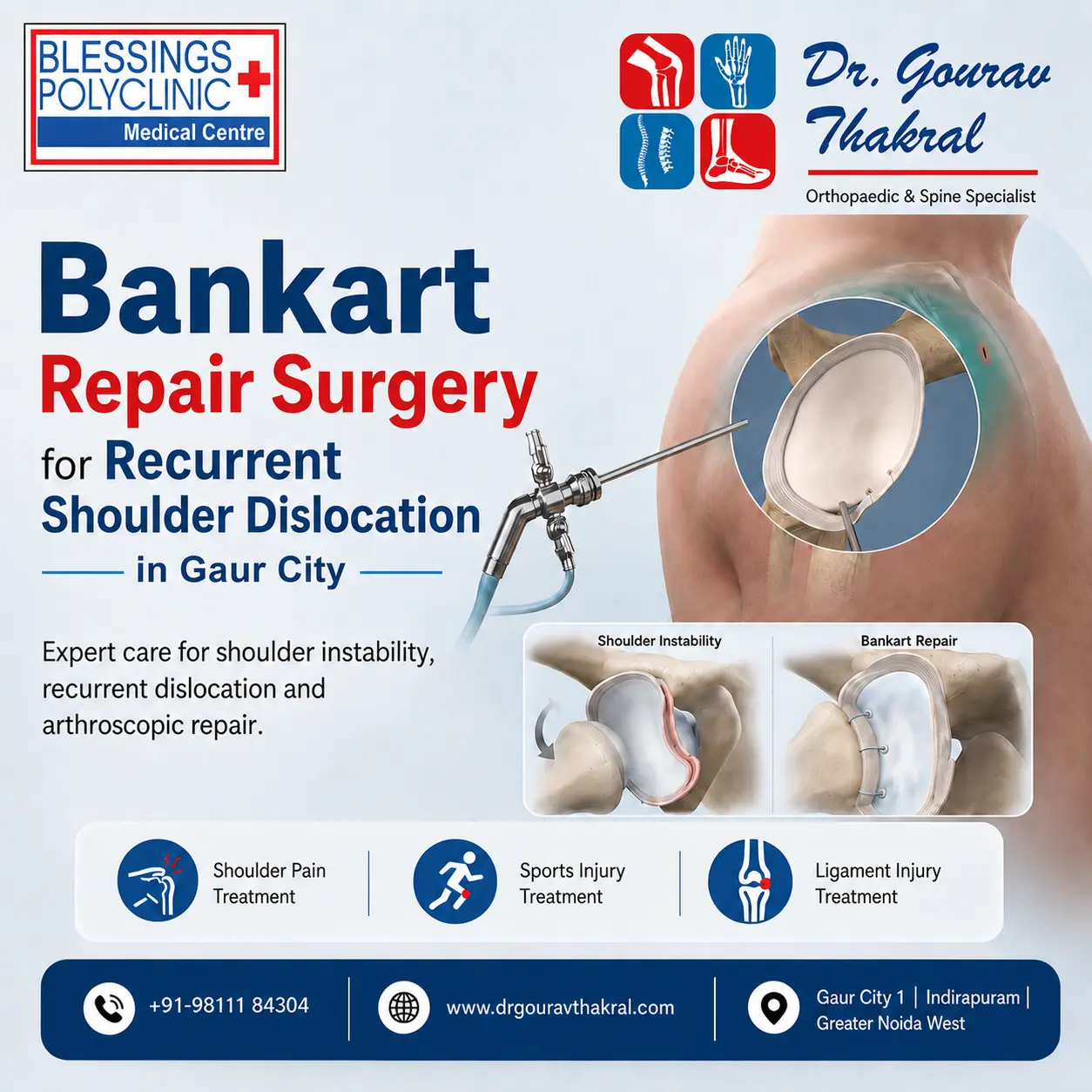
Bankart Repair Surgery in Gaur City may be needed when the shoulder keeps dislocating again and again after an injury. A shoulder dislocation happens when the upper arm bone comes out of the shoulder socket. In many cases, the labrum and ligament near the socket can tear. This injury is called a Bankart lesion.
A Bankart lesion can make the shoulder unstable. As a result, the shoulder may slip out during sports, gym activity, overhead movement, or even daily work. AAOS explains that Bankart lesions can be surgically repaired by using sutures and anchors to reattach the ligament to the bone.
For patients looking for Shoulder pain treatment, Sports injury treatment, Ligament injury treatment, and Joint pain treatment in Gaur City, Dr. Gourav Thakral provides expert orthopaedic evaluation and treatment guidance. As an experienced Orthopaedic specialist and Bone specialist, he helps patients understand whether physiotherapy, medicines, activity changes, or surgery may be suitable.
What Is a Bankart Lesion?
A Bankart lesion is a tear of the labrum in the front lower part of the shoulder socket. The labrum is a ring of cartilage that helps deepen the shoulder socket. It also helps keep the shoulder stable.
When the shoulder dislocates, the labrum can tear away from the socket. After that, the shoulder may become loose. This can lead to repeated dislocations or a feeling that the shoulder may slip out.
Cleveland Clinic notes that surgery may be needed when the glenoid labrum detaches from the bone, when there is a bony Bankart lesion, or when recurrent shoulder instability affects activity.
Common Symptoms of Bankart Lesion
Bankart injury symptoms can vary. Some patients feel pain only after dislocation. Others feel repeated instability during sports or overhead activity.
Common symptoms include:
Shoulder pain after dislocation
Feeling that the shoulder may slip out
Repeated shoulder dislocation
Clicking or catching inside the shoulder
Weakness during lifting
Pain during throwing or gym activity
Fear of moving the shoulder fully
Reduced confidence during sports
Difficulty sleeping on the affected side
Shoulder stiffness after injury
If these symptoms continue, proper Shoulder pain treatment is important.
Why Shoulder Dislocation Happens Again
The shoulder is the most mobile joint in the body. Because of this, it can become unstable after injury. When the labrum and ligaments tear, the shoulder may not stay centered in the socket.
Recurrent dislocation is more common in young active people, athletes, gym users, and people who play contact or overhead sports. Mayo Clinic explains that a shoulder dislocation can increase the risk of future dislocations, and strength and stability exercises help reduce recurrence risk.
Repeated dislocations can damage the labrum, bone, cartilage, and other soft tissues. Therefore, early evaluation is important.
Causes of Recurrent Shoulder Dislocation
Recurrent shoulder dislocation may happen due to one major injury or repeated stress on the shoulder.
Common causes include:
Sports injury
Fall on the shoulder
Road accident
Gym injury
Throwing injury
Contact sports
Previous shoulder dislocation
Loose shoulder ligaments
Bankart lesion
Bone loss around the socket
For active patients, timely Sports injury treatment can help protect shoulder stability and prevent further damage.
When Should You Consult an Orthopaedic Specialist?
You should consult an Orthopaedic specialist if your shoulder has dislocated more than once. You should also seek care if the shoulder feels unstable, slips during movement, or causes repeated pain.
Consultation becomes important when:
Shoulder dislocation happens again
The shoulder feels loose
Pain continues after injury
Sports activity becomes difficult
Gym movement feels unsafe
The shoulder slips while sleeping
MRI shows labrum tear
Daily movement causes fear
Patients searching for the Best orthopaedic doctor in Gaur City can consult Dr. Gourav Thakral for diagnosis and treatment planning.
Diagnosis of Bankart Injury
Diagnosis starts with a detailed history and shoulder examination. The doctor checks pain, movement, instability, strength, and previous dislocation history.
X-rays may help check bone injury or socket damage. MRI or MR arthrogram may help identify labrum tears. In some cases, CT scan may be needed to check bone loss.
A correct diagnosis matters because shoulder instability can also involve Hill-Sachs lesion, bony Bankart lesion, rotator cuff injury, or ligament damage.
Non-Surgical Treatment for Shoulder Instability
Not every patient needs surgery after the first dislocation. Some patients may improve with non-surgical care. Treatment may include rest, sling support for a short time, medicines, activity changes, and physiotherapy.
Physiotherapy focuses on:
Shoulder strength
Rotator cuff control
Shoulder blade stability
Range of motion
Posture correction
Safe return to activity
However, if the shoulder keeps dislocating, surgery may be needed to restore stability.
When Is Bankart Repair Surgery Needed?
Bankart repair surgery may be advised when the shoulder has repeated dislocations or persistent instability after a Bankart lesion. It may also be needed when the patient is young, active, or wants to return to sports.
Your doctor may suggest surgery when:
Shoulder dislocation happens repeatedly
The labrum is torn from the socket
Physiotherapy does not stop instability
The shoulder feels unsafe during sports
Daily activity becomes affected
There is a clear Bankart lesion on imaging
The patient wants stable shoulder movement
Ligament injury causes recurrent instability
AAOS explains that arthroscopy is a minimally invasive method used to repair soft tissues in the shoulder with a small camera and special thin instruments.
What Happens During Bankart Repair Surgery?
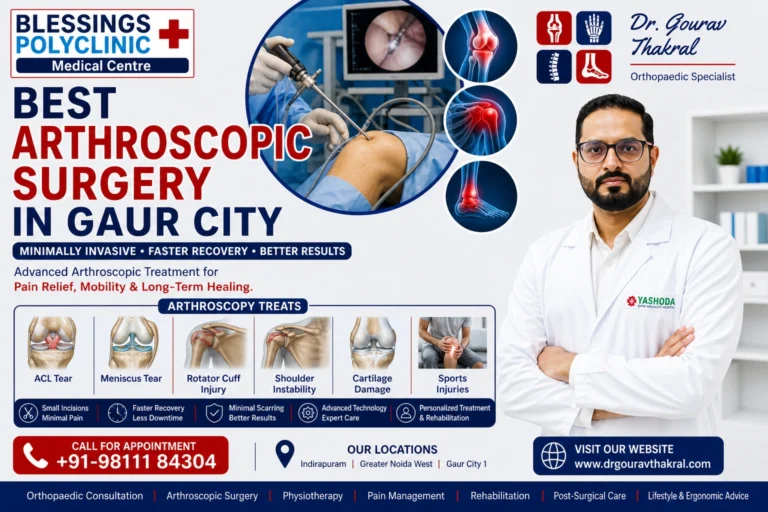
Bankart repair is usually done arthroscopically. The surgeon uses a small camera and fine instruments through tiny cuts around the shoulder.
During the procedure, the torn labrum and ligament are repaired back to the socket using anchors and sutures. This helps restore shoulder stability and reduce the chance of repeated dislocation.
The goal is not only pain relief. The main goal is to make the shoulder stable again.
Arthroscopic Bankart Repair Benefits
Arthroscopic Bankart repair is less invasive than open surgery. It uses smaller cuts and allows better viewing of the shoulder joint.
Possible benefits include:
Smaller incisions
Better joint visualization
Labrum repair with anchors
Improved shoulder stability
Reduced repeated dislocation risk
Structured return to activity
Better cosmetic result
Faster early wound healing
However, recovery still takes time. The repaired labrum and ligaments need proper healing.
When Bankart Repair May Not Be Enough
Bankart repair may not be suitable for every case. If there is major bone loss from the shoulder socket or humeral head, another procedure may be needed.
Research shows that patients with bone loss or shoulder hyperlaxity have a higher risk of recurrent instability after arthroscopic Bankart repair.
Therefore, imaging and expert planning are important before surgery. A Bone specialist checks whether the problem is only soft tissue injury or also involves bone damage.
Recovery After Bankart Repair Surgery
Recovery after Bankart repair needs patience and physiotherapy. The shoulder may need sling support for some time. After that, exercises begin step by step.
Recovery usually includes:
Sling support
Pain and swelling control
Gentle movement exercises
Physiotherapy
Shoulder strengthening
Stability training
Sports-specific rehab
Gradual return to activity
Patients should avoid sudden overhead movement, heavy lifting, and risky sports until the doctor allows.
Role of Physiotherapy After Surgery
Physiotherapy is very important after Bankart repair. Surgery repairs the torn labrum. However, rehab restores movement, strength, and stability.
Early exercises are gentle. Later, strengthening starts. Finally, sport-specific training may be added for athletes.
Skipping physiotherapy can delay recovery. On the other hand, doing too much too early can stress the repair. Therefore, guided rehab is important.
Bankart Repair Surgery in Gaur City by Dr. Gourav Thakral
If you have repeated shoulder dislocation, shoulder instability, pain after sports injury, or a diagnosed Bankart lesion, Dr. Gourav Thakral can help with proper evaluation in Gaur City.
He checks your shoulder movement, instability level, MRI findings, bone loss, sports activity, and daily needs before suggesting treatment. Patients searching for Bankart repair surgery, Shoulder pain treatment, Ligament injury treatment, Joint pain treatment, or the Best orthopaedic doctor in Gaur City can consult Dr. Gourav Thakral for expert guidance.
Final Thoughts
A repeated shoulder dislocation should not be ignored. It may point to a Bankart lesion or shoulder ligament injury. Early diagnosis can help prevent further shoulder damage.
For Bankart Repair Surgery in Gaur City, consult Dr. Gourav Thakral, an experienced Orthopaedic specialist and Bone specialist, for shoulder instability evaluation and treatment planning.
FAQs
1. What is Bankart repair surgery?
Bankart repair surgery is a shoulder procedure that repairs the torn labrum and ligament after shoulder dislocation.
2. When is Bankart repair needed?
It may be needed when the shoulder keeps dislocating or feels unstable after a Bankart lesion.
3. Can recurrent shoulder dislocation heal without surgery?
Some cases improve with physiotherapy. However, repeated dislocations often need surgical evaluation.
4. Is Bankart repair done arthroscopically?
Yes. In many cases, Bankart repair is done using a small camera and instruments through tiny cuts.
5. Can athletes return to sports after Bankart repair?
Many athletes return after proper healing and rehabilitation. However, timing depends on recovery and doctor guidance.