Sciatica Surgery in Gaur City: When Leg Pain Needs Spine Surgery
Sciatica Surgery in Gaur City may become necessary when leg pain caused by nerve compression does not improve with proper non-surgical treatment. Sciatica is not just normal back pain. It is nerve-related pain that can travel from the lower back to the buttock, thigh, calf, foot, or toes. Some patients also feel tingling, numbness, burning pain, weakness, or difficulty walking.
Sciatica often happens when a herniated disc, bone spur, or spinal narrowing puts pressure on part of the sciatic nerve. Mayo Clinic explains that sciatica can cause pain that travels from the lower back through the hips and buttocks and down each leg. It also notes that most cases affect only one side of the body.
For patients looking for Sciatica treatment, Back pain treatment, Slip disc treatment, and advanced Spine care in Gaur City, Dr. Gourav Thakral provides expert orthopaedic evaluation and treatment guidance. As an experienced Orthopaedic doctor and Orthopaedic specialist, he helps patients understand whether medicines, physiotherapy, injections, Pain management, or surgery is the right option.
What Is Sciatica?
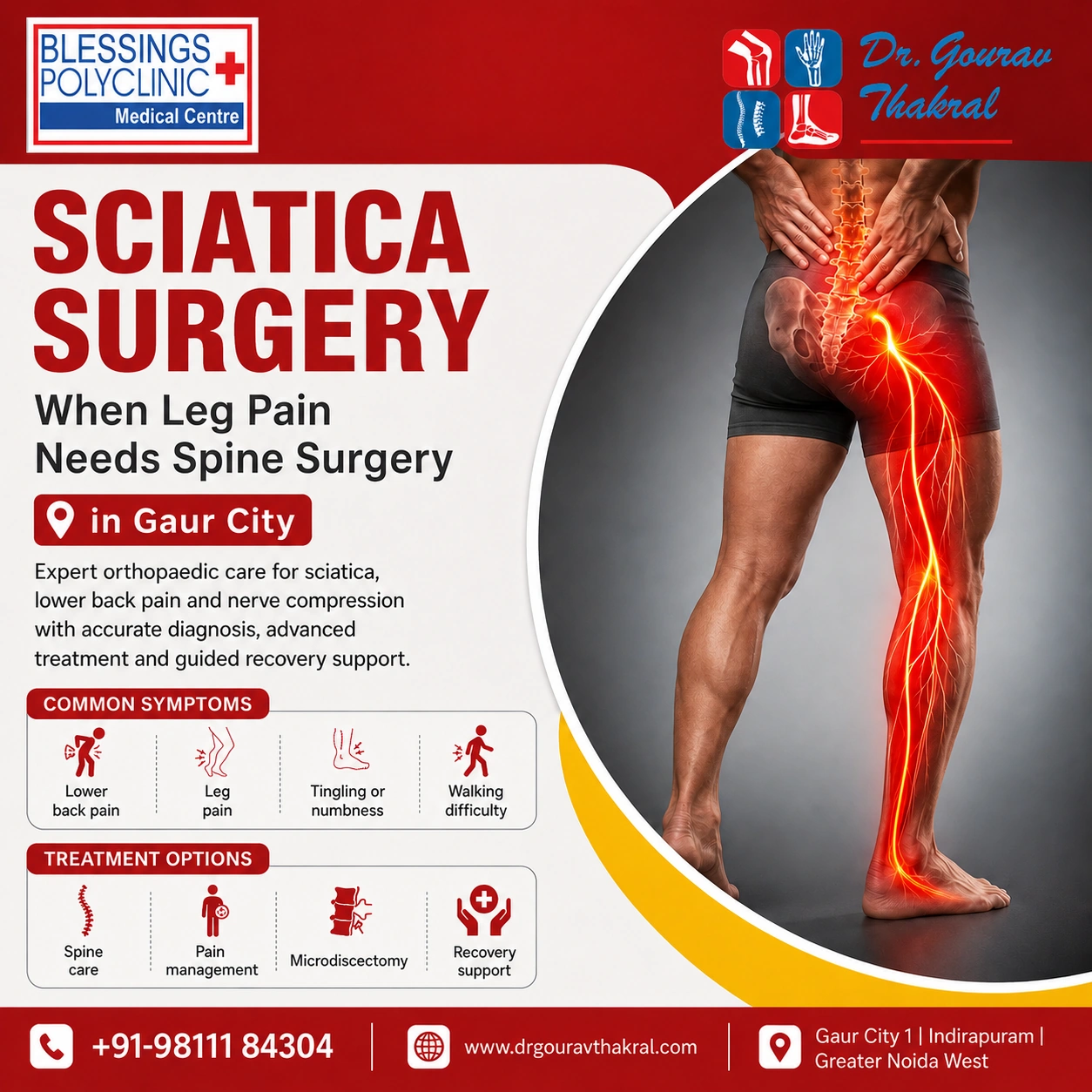
Sciatica refers to pain caused by irritation or compression of the sciatic nerve. The sciatic nerve is the largest nerve in the body. It starts from the lower spine and travels through the buttock, back of the thigh, calf, and foot.
When this nerve gets irritated, pain can travel along its path. This is why many patients feel leg pain more than back pain. Some people describe it as sharp, electric, burning, shooting, or stabbing pain. Others feel heaviness, numbness, or weakness in the leg.
A Spine specialist can identify whether the pain is due to slip disc, spinal stenosis, arthritis, piriformis-related irritation, or another spine problem.
Common Symptoms of Sciatica
Sciatica symptoms can vary from mild discomfort to severe disabling pain. In many patients, pain increases while sitting, bending, coughing, sneezing, standing, or walking for long periods.
Common symptoms include:
Pain going from lower back to leg
Pain in the buttock, thigh, calf, foot, or toes
Tingling or pins-and-needles sensation
Numbness in the leg or foot
Burning or electric shock-like pain
Weakness while walking
Difficulty standing for long periods
Pain that worsens while sitting
Reduced walking comfort
If the pain is mild, conservative care may help. However, persistent pain, weakness, or numbness should not be ignored.
What Causes Sciatica?
Sciatica usually happens because something presses on or irritates the nerve. The most common cause is a herniated disc in the lower back. A disc is a soft cushion between the spine bones. When it bulges or herniates, it can press on a nerve root and trigger sciatic pain.
Other causes may include spinal stenosis, bone spurs, degenerative disc disease, spondylolisthesis, spine injury, inflammation, or age-related changes in the spine. Cleveland Clinic describes sciatica as nerve pain from injury or irritation of the sciatic nerve, with pain that may radiate down the leg and symptoms that can include tingling or numbness.
Since causes can differ, proper diagnosis matters before planning treatment.
When Should You Consult a Doctor?
You should consult an Orthopaedic doctor if leg pain continues, keeps coming back, or affects walking, sleep, sitting, or work. Mild sciatica may settle with rest and care, but long-lasting symptoms need evaluation.
Medical consultation becomes important if pain travels below the knee, numbness develops, walking becomes difficult, or weakness starts in the leg or foot. You should also seek urgent care if symptoms worsen quickly.
Mayo Clinic advises immediate medical attention if sciatica causes loss of feeling in the affected leg, weakness in the affected leg, or loss of bowel or bladder control.
Diagnosis Before Sciatica Surgery
Diagnosis starts with a detailed history and physical examination. The doctor checks pain location, leg movement, muscle strength, reflexes, sensation, walking pattern, and spine movement.
MRI may help confirm whether a slipped disc, spinal stenosis, or another problem is pressing on the nerve. X-rays may show bone alignment, arthritis, or instability. In selected cases, nerve tests may help understand nerve function.
A proper diagnosis helps the Orthopaedic specialist decide whether the patient needs medicines, physiotherapy, injections, pain management, or surgery.
Non-Surgical Treatment for Sciatica
Most patients with sciatica do not need immediate surgery. Doctors usually start with non-surgical care unless there are serious nerve symptoms. The aim is to reduce inflammation, relieve nerve irritation, improve movement, and strengthen the spine-supporting muscles.
Non-surgical treatment may include medicines, rest for a short period, physiotherapy, posture correction, exercises, heat or cold therapy, activity modification, and guided Pain management. Some patients may need injections to reduce inflammation around the irritated nerve.
For Back pain treatment and Slip disc treatment, the plan should not focus only on painkillers. A complete care plan includes spine exercises, safe movement habits, posture correction, weight control, and proper follow-up.
When Is Sciatica Surgery Needed?
Sciatica surgery may be considered when pain remains severe despite proper non-surgical treatment or when nerve compression causes serious symptoms. Surgery aims to remove pressure from the affected nerve.
Mayo Clinic explains that surgeons can remove the bone spur or portion of the herniated disc pressing on the nerve, but surgery is usually done only when sciatica causes severe weakness, loss of bowel or bladder control, or pain that does not improve with other treatments.
Surgery may be needed when:
Leg pain remains severe for a long time
Sciatica affects walking, sleep, or work
Numbness or tingling continues
Weakness develops in the leg or foot
MRI shows nerve compression
Non-surgical treatment does not help
Pain keeps returning after conservative care
Bowel or bladder control symptoms appear
The final decision depends on symptoms, MRI findings, nerve function, overall health, and response to previous treatment.
What Surgery Is Done for Sciatica?
The type of surgery depends on the cause of nerve compression. If a herniated disc is pressing on the nerve, microdiscectomy may be advised. If spinal narrowing is causing compression, decompression surgery may be considered.
Microdiscectomy
Microdiscectomy is commonly used when a herniated disc presses on a nerve and causes sciatica. In this procedure, the surgeon removes the herniated part of the disc that is compressing the nerve.
AAOS explains that microdiscectomy is commonly used to treat a single herniated disc through a small incision, and the herniated disc portion that puts pressure on the spinal nerve is removed.
Decompression Surgery
Decompression surgery may help when spinal stenosis or bone overgrowth narrows the space around the nerve. The surgeon creates more space for the nerve by removing the structure causing pressure.
Fusion in Selected Cases
Fusion may be needed only in selected cases, especially when spine instability is present. It is not required for every sciatica patient.
Recovery After Sciatica Surgery
Recovery after sciatica surgery varies from patient to patient. Some patients feel leg pain relief early, while numbness or weakness may take longer because nerve healing is gradual. Recovery depends on the type of surgery, severity of nerve compression, age, fitness, lifestyle, and rehabilitation.
Recovery may include wound care, medicines, walking, posture correction, avoiding heavy lifting, physiotherapy, and follow-up visits. Patients should not rush back to heavy work, gym activity, or bending and twisting movements without medical advice.
A good Spine care routine helps support long-term recovery. This includes safe lifting habits, regular exercises, weight control, posture correction, and avoiding long sitting without breaks.
Can Sciatica Come Back After Surgery?
Sciatica can return in some patients, especially if the disc degenerates further, a new disc herniation develops, or spine stress continues. Surgery can remove current nerve pressure, but it cannot make the spine completely new again.
Patients can reduce risk by following spine care advice, strengthening core muscles, maintaining healthy weight, avoiding unsafe lifting, and taking breaks from long sitting. Regular follow-up can also help detect problems early.
Sciatica Surgery in Gaur City by Dr. Gourav Thakral
If you are dealing with severe leg pain, back pain, sciatica, numbness, tingling, or weakness, Dr. Gourav Thakral can help with proper diagnosis and treatment planning in Gaur City. He evaluates symptoms, MRI findings, nerve function, pain severity, walking ability, and previous treatment response before suggesting the next step.
Patients searching for Sciatica treatment, Slip disc treatment, Back pain treatment, or expert spine care can consult Dr. Gourav Thakral for guidance. As an experienced Orthopaedic doctor and Orthopaedic specialist, he focuses on patient-specific care, clear advice, and safe recovery planning.
Final Thoughts
Sciatica surgery is not needed for every patient. Many people improve with medicines, physiotherapy, exercises, injections, and pain management. However, surgery may help when sciatica causes severe leg pain, nerve compression, numbness, weakness, or symptoms that do not improve with proper care.
For Sciatica Surgery in Gaur City, consult Dr. Gourav Thakral for proper evaluation, treatment planning, and recovery guidance.
FAQs
1. What is sciatica?
Sciatica is nerve pain that travels from the lower back to the buttock, thigh, calf, foot, or toes due to irritation or compression of the sciatic nerve.
2. Does every sciatica patient need surgery?
No. Many patients improve with medicines, physiotherapy, exercises, injections, and pain management. Surgery is considered only in selected cases.
3. When is sciatica surgery needed?
Surgery may be needed when severe leg pain, numbness, weakness, or nerve compression does not improve with proper non-surgical treatment.
4. What is microdiscectomy for sciatica?
Microdiscectomy removes the herniated disc portion pressing on a spinal nerve. It is commonly used when a slip disc causes sciatica.
5. Can sciatica cause leg weakness?
Yes. Nerve compression can cause leg or foot weakness. Worsening weakness needs early medical evaluation.