Femur Fracture Surgery: Rod, Plate and Recovery Guide in Gaur City
Femur Fracture Surgery in Gaur City may become necessary when the thigh bone breaks after a road accident, fall, sports injury, workplace injury, or high-impact trauma. The femur is the strongest and longest bone in the body. So, when it breaks, the injury usually causes severe pain, swelling, deformity, and difficulty standing or walking.
A femur fracture needs urgent medical attention because the thigh bone supports body weight and plays a major role in walking, balance, and daily movement. Many femur fractures need surgery to bring the bone into proper alignment and hold it firmly while it heals. AAOS explains that most femoral shaft fractures need surgery, and surgeons commonly use an intramedullary nail placed inside the bone canal to treat these fractures.
For patients looking for Femur fracture surgery, Fracture treatment, and advanced Orthopaedic trauma treatment in Gaur City, Dr. Gourav Thakral provides expert orthopaedic evaluation and treatment guidance. As an experienced Orthopaedic specialist, Bone specialist, and Bone fracture specialist, he helps patients understand the fracture type, surgery option, and recovery plan.
What Is a Femur Fracture?
A femur fracture means the thigh bone has broken. The fracture may happen in the upper part of the femur, the shaft, or near the knee. Femur shaft fractures often occur after strong trauma because the bone is very strong.
The bone may break straight across, at an angle, in a spiral pattern, or into multiple pieces. In some cases, the broken bone may come out through the skin. Doctors call this an open fracture, and it needs urgent Trauma care.
The right treatment depends on the fracture location, fracture pattern, patient age, bone quality, soft tissue injury, and overall health.
Common Causes of Femur Fracture
Femur fractures often happen after high-energy injuries. Road traffic accidents are one of the common causes. Falls from height, sports injuries, direct impact, and workplace injuries can also break the femur.
In older adults, weak bones or osteoporosis can increase fracture risk after a simple fall. In younger patients, the injury usually needs stronger force.
Patients should not try to walk after a suspected femur fracture. The leg needs proper support, pain control, and urgent orthopaedic evaluation.
Symptoms of Femur Fracture
A femur fracture usually causes clear symptoms. The patient may feel severe thigh pain and may not be able to stand. The leg may look bent, shortened, rotated, or swollen.
Common symptoms include:
Severe thigh pain
Swelling and bruising
Unable to stand or walk
Visible deformity
Leg shortening or rotation
Pain during any movement
Tenderness around the thigh
Bleeding or wound in open fracture
Numbness or coldness in severe trauma cases
If a femur fracture happens after an accident or fall, immediate medical care is important.
How Does a Doctor Diagnose a Femur Fracture?
Diagnosis starts with emergency assessment and clinical examination. The doctor checks pain, swelling, deformity, skin wounds, blood flow, nerve function, and other injuries.
X-rays help confirm the fracture location and pattern. In complex cases, the doctor may advise CT scan. If the patient has multiple injuries, the medical team may also check the chest, pelvis, spine, and other body parts.
A Bone fracture specialist uses these findings to plan the safest treatment.
When Is Femur Fracture Surgery Needed?
Most femur shaft fractures need surgery because the thigh muscles can pull the broken bone out of position. Surgery helps restore alignment and stability. It also allows safer movement and better fracture healing.
Your doctor may suggest surgery when:
The femur is displaced
The bone has broken into multiple pieces
The leg looks shortened or rotated
The fracture is unstable
The fracture is open
The patient cannot walk or bear weight
The fracture is near the hip or knee joint
Non-surgical treatment cannot maintain alignment
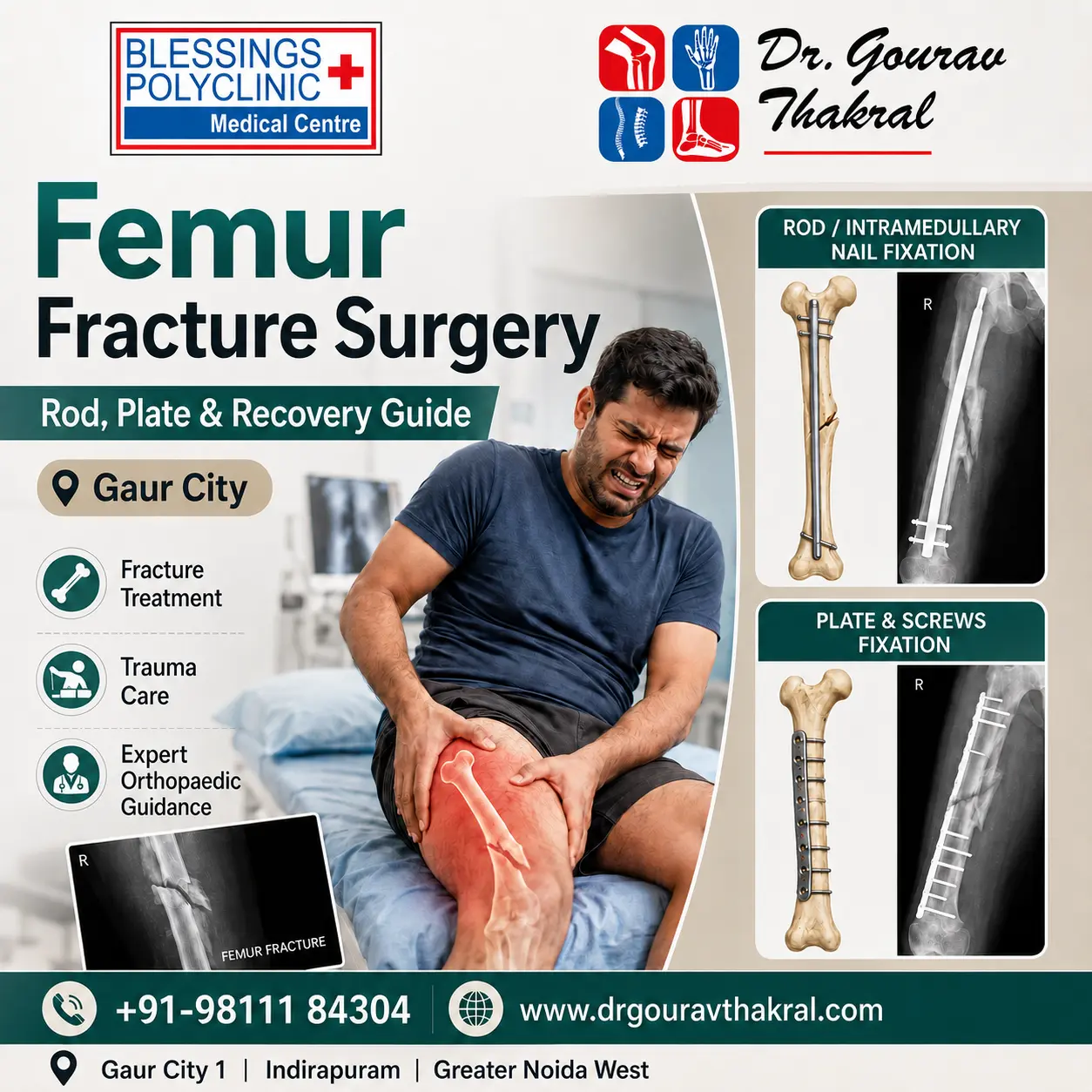
MedlinePlus notes that in the most common surgery to repair a femur fracture, the surgeon places a rod or large nail inside the center of the bone. The surgeon may also use a plate with screws next to the bone in some cases.
Rod Fixation for Femur Fracture
Rod fixation is also called intramedullary nailing. In this surgery, the surgeon places a metal rod inside the hollow canal of the femur. Screws at the top and bottom hold the rod in position.
Rod fixation often helps femur shaft fractures because it supports the bone from inside. It can provide strong stability and helps the bone heal in proper alignment.
The doctor decides the rod size and position based on the fracture pattern, bone size, and injury type. After surgery, the patient follows a guided recovery plan with walking support and physiotherapy.
Plate Fixation for Femur Fracture
Plate fixation uses a metal plate and screws to hold the broken bone in the correct position. Doctors may use plate fixation in selected femur fractures, especially near the hip, near the knee, in complex fracture patterns, or when rod fixation is not suitable.
Plate surgery helps align the bone fragments and maintain stability during healing. Sometimes, the surgeon may use a combination of fixation methods depending on the injury.
The goal of both rod and plate surgery is the same: restore alignment, support healing, reduce pain, and help the patient return to movement safely.
Recovery After Femur Fracture Surgery
Recovery after femur fracture surgery takes time. The patient needs wound care, medicines, walking support, physiotherapy, follow-up X-rays, and gradual strengthening. AAOS states that most femoral shaft fractures take 3 to 6 months to heal completely, and some take longer, especially open fractures, fractures with multiple pieces, or in patients who use tobacco products.
Cleveland Clinic also notes that full recovery from surgery can take around four to six months. Healing speed depends on injury severity, age, nutrition, diabetes control, smoking, implant type, and rehabilitation.
Your recovery plan may include:
Pain and swelling control
Wound care
Walker or crutches
Protected weight-bearing
Physiotherapy
Knee and hip movement exercises
Muscle strengthening
Follow-up X-rays
Gradual return to daily work
Patients should follow the doctor’s advice carefully. Rushing walking or weight-bearing can affect healing.
Role of Physiotherapy After Femur Surgery
Physiotherapy plays a major role in recovery. After femur surgery, muscles around the hip, thigh, and knee can become weak. The knee may also become stiff if movement starts late.
Physiotherapy helps improve knee bending, hip movement, walking pattern, balance, and muscle strength. The exercise plan changes over time as the fracture heals.
Patients should not perform heavy exercises without medical advice. The doctor and physiotherapist guide safe movement based on X-rays and healing progress.
Why Early Trauma Care Matters
Femur fractures can happen with other serious injuries, especially after road accidents. Early Trauma care helps control pain, bleeding, shock, soft tissue injury, and fracture instability.
A delay in treatment may increase complications, pain, stiffness, blood loss, and recovery time. Early orthopaedic evaluation also helps decide whether rod fixation, plate fixation, external support, or another method is best.
Proper Orthopaedic trauma treatment focuses on both bone healing and safe return to movement.
Femur Fracture Surgery in Gaur City by Dr. Gourav Thakral
If you or someone in your family has a suspected thigh bone fracture, Dr. Gourav Thakral can help with proper diagnosis and treatment planning in Gaur City. He evaluates the fracture pattern, injury severity, X-ray findings, soft tissue condition, pain level, and patient health before suggesting treatment.
Patients searching for the Best orthopaedic doctor in Gaur City can consult Dr. Gourav Thakral for femur fracture care, trauma-related injuries, rod fixation, plate fixation, and recovery guidance.
His treatment approach focuses on accurate diagnosis, stable fixation, safe healing, pain relief, and better mobility.
Final Thoughts
A femur fracture is a serious injury that needs timely medical care. Surgery may involve rod fixation, plate fixation, or another method depending on the fracture type. With proper treatment, guided physiotherapy, and follow-up care, many patients gradually return to walking and daily activities.
For Femur Fracture Surgery in Gaur City, consult Dr. Gourav Thakral, an experienced Orthopaedic specialist and Bone specialist, for proper evaluation and treatment guidance.
FAQs
1. What is femur fracture surgery?
Femur fracture surgery fixes a broken thigh bone using a rod, plate, screws, or other fixation method. The goal is to restore alignment and support healing.
2. Does every femur fracture need surgery?
Many femur shaft fractures need surgery because the bone is large and weight-bearing. The final decision depends on fracture type, location, and patient condition.
3. What is rod fixation in femur fracture?
Rod fixation places a metal rod inside the femur bone canal. Screws hold the rod in place while the bone heals.
4. When does a doctor use a plate for femur fracture?
A doctor may use a plate when the fracture pattern, location, or bone condition makes plate fixation more suitable than rod fixation.
5. How long does femur fracture recovery take?
Many femur fractures take around 3 to 6 months to heal, but recovery may take longer in complex or open fractures.