Achilles Tendon Rupture Surgery in Gaur City: Symptoms, Treatment and Recovery
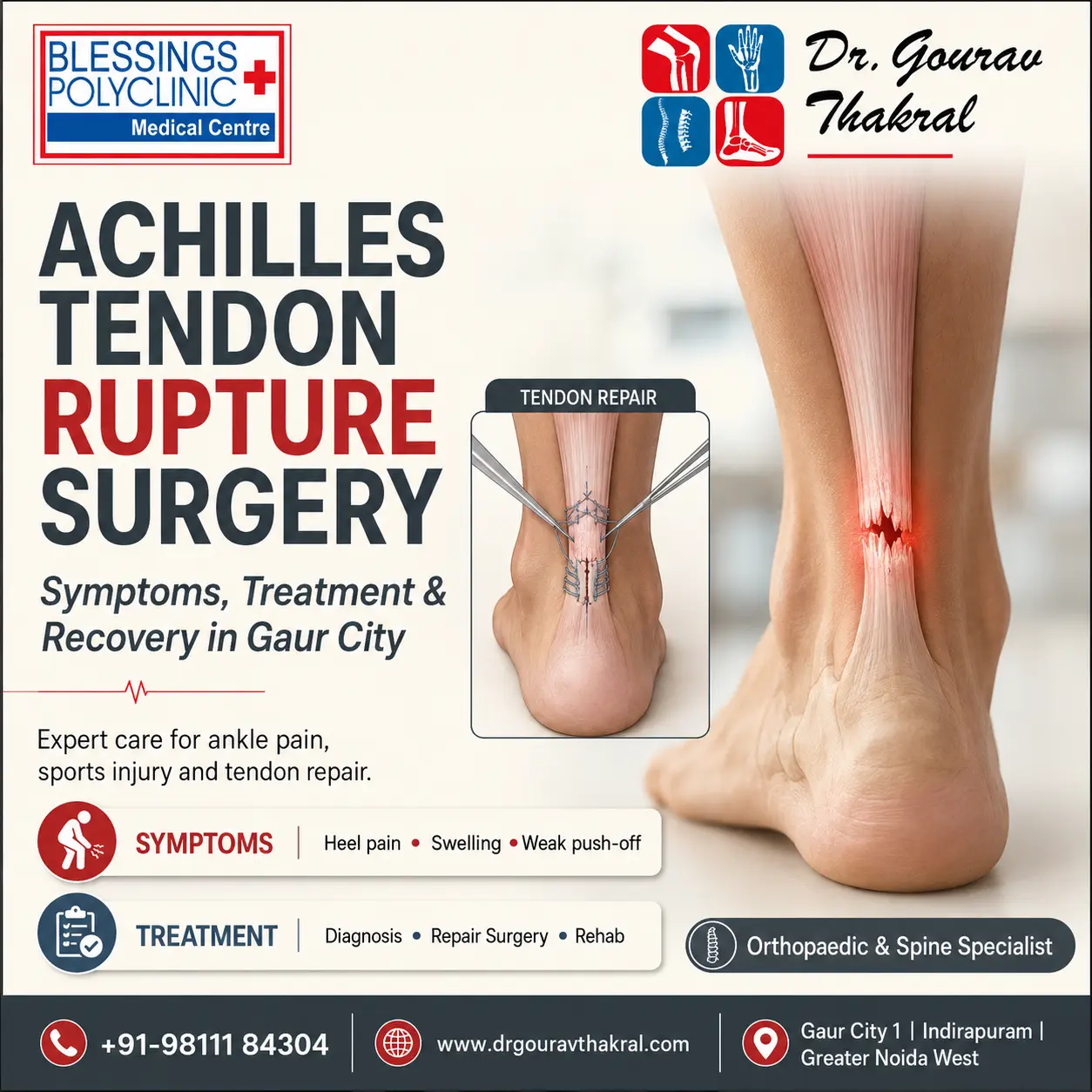
Achilles Tendon Surgery in Gaur City may help when the strong tendon at the back of the ankle tears and causes sudden pain, swelling, weakness, or difficulty walking. The Achilles tendon connects the calf muscles to the heel bone. It helps you walk, run, jump, climb stairs, and push off the foot during movement.
An Achilles tendon rupture often happens during sports, sudden jumping, quick direction change, or a fall. Many patients feel a sudden pop or snap near the back of the ankle, followed by sharp pain and difficulty walking. Mayo Clinic explains that an Achilles tendon rupture can cause a pop, sharp pain in the back of the ankle and lower leg, and walking difficulty.
For patients looking for Ankle pain treatment, Sports injury treatment, and expert tendon injury care in Gaur City, Dr. Gourav Thakral provides proper orthopaedic evaluation and treatment guidance. As an experienced Orthopaedic specialist, Bone specialist, and foot and ankle care expert, he helps patients understand whether they need bracing, medicines, physiotherapy, or surgery.
What Is an Achilles Tendon Rupture?
An Achilles tendon rupture means the tendon at the back of the ankle has torn partly or completely. A partial tear may cause pain and weakness, but a complete rupture can make walking very difficult.
The injury usually affects the area above the heel. Some patients describe it as feeling like someone kicked them from behind. Others hear or feel a pop during sports or sudden movement.
A Foot & ankle treatment checks the injury, ankle strength, walking ability, swelling, and tendon gap before planning treatment.
Common Symptoms of Achilles Tendon Rupture
Symptoms often start suddenly. The pain may feel sharp at first, then swelling and weakness may follow.
Common symptoms include:
Sudden pain at the back of the ankle
A popping or snapping feeling
Swelling near the heel or lower calf
Difficulty walking normally
Weak push-off while walking
Unable to stand on toes
Tenderness along the tendon
Bruising around the ankle
Weakness during stairs or running
If these symptoms appear after a sports injury or sudden movement, consult an Orthopaedic specialist early.
Causes of Achilles Tendon Rupture
Achilles tendon rupture often happens when sudden force stretches the tendon beyond its limit. Mayo Clinic lists jumping, sharp cutting, pivoting during sports, falling from a height, landing from a jump, or stepping into a hole as common causes.
Common risk factors include sports activity, sudden increase in exercise, poor warm-up, tight calf muscles, previous tendon pain, weak conditioning, and age-related tendon changes.
This injury comes under common Foot & ankle disorders and sports-related tendon injuries. It needs careful diagnosis because ankle pain can also come from ligament injury, fracture, tendonitis, or calf muscle injury.
When Should You See a Doctor?
You should see an Orthopaedic doctor if you feel a pop behind the ankle, sudden pain, swelling, or difficulty walking. Early diagnosis helps choose the right treatment and protects long-term ankle strength.
Do not ignore the injury if you cannot push off the foot, cannot stand on toes, or feel weakness while walking. Delayed treatment can make tendon healing more difficult.
Diagnosis of Achilles Tendon Rupture
Diagnosis starts with a clinical examination. The doctor checks swelling, tenderness, ankle movement, calf strength, walking pattern, and tendon continuity. The doctor may perform special tests to check whether the tendon has torn.
Ultrasound or MRI may help confirm the tear and show whether it is partial or complete. Imaging also helps plan treatment when surgery is needed.
A Bone specialist may also check for associated ankle injury, fracture, or other trauma-related problems.
Non-Surgical Treatment Options
Not every Achilles tendon rupture needs surgery. Some patients may improve with non-surgical treatment, especially when the tear position and patient condition support healing.
Non-surgical care may include a cast, walking boot, heel wedge, crutches, medicines, swelling control, and guided physiotherapy. Mayo Clinic explains that non-surgical care often involves keeping the ankle still for a few weeks, using a walking boot or cast, keeping weight off the tendon with crutches, ice, and pain relievers.
A doctor decides this plan after checking age, activity level, tear gap, tendon position, and healing needs.
When Is Achilles Tendon Surgery Needed?
Achilles tendon rupture surgery may help active patients, athletes, complete tears, large tendon gaps, or cases where the doctor expects better stability with repair. Surgery aims to join the torn tendon ends and restore tendon strength.
Your doctor may suggest surgery when:
The tendon has fully ruptured
The tear gap is large
The patient wants to return to sports
Non-surgical care may not provide enough stability
The injury affects walking strongly
The tendon ends do not come together well
Repeated rupture risk seems high
Daily movement needs strong push-off power
Mayo Clinic notes that many people undergo surgery to repair the tear, although non-surgical treatment may work well for many people too.
What Happens During Achilles Tendon Surgery?
During surgery, the surgeon brings the torn tendon ends together and repairs them with strong sutures. The exact method depends on tear location, tendon quality, patient health, and surgeon assessment.
Some cases need open repair. Others may suit a smaller incision technique. The goal stays the same: restore tendon continuity, improve strength, and support safe recovery.
This treatment is different from Ligament injury treatment, but both involve soft-tissue healing, protection, and guided rehabilitation.
Recovery After Achilles Tendon Surgery
Recovery takes time because the tendon needs protection while it heals. The early phase usually includes a splint, cast, or boot. The doctor may advise limited weight-bearing at first. Later, physiotherapy helps restore ankle movement, calf strength, balance, and walking confidence.
Recovery may include:
Wound care
Swelling control
Boot or cast support
Protected walking
Physiotherapy
Ankle movement exercises
Calf strengthening
Balance training
Gradual return to activity
Mayo Clinic notes that rehabilitation after either surgical or non-surgical treatment helps strengthen the leg muscles and Achilles tendon. Many people return to their former activity level within 18 to 24 months after injury.
Why Physiotherapy Matters
Physiotherapy plays a major role in recovery. It helps regain ankle flexibility, calf strength, balance, and walking control. However, patients should not rush exercises without medical advice.
Early overloading can affect tendon healing. At the same time, proper guided movement at the right stage can support better function.
A safe Sports injury treatment plan focuses on healing, strength, balance, and gradual return to sports.
Achilles Tendon Rupture Surgery in Gaur City by Dr. Gourav Thakral
If you have sudden ankle pain, swelling, weakness, or difficulty walking after a sports injury or fall, Dr. Gourav Thakral can help with proper diagnosis and treatment planning in Gaur City.
He evaluates the injury, tendon tear severity, activity level, walking ability, and recovery goals before suggesting treatment. Patients searching for the Best orthopaedic doctor in Gaur City can consult Dr. Gourav Thakral for Achilles tendon rupture, ankle pain, sports injuries, and foot and ankle disorders.
Final Thoughts
An Achilles tendon rupture can affect walking, sports, and daily movement. Early diagnosis helps decide whether the patient needs non-surgical care or surgery. With proper treatment, physiotherapy, and follow-up, many patients regain strength and return to routine activity.
For Achilles Tendon Surgery in Gaur City, consult Dr. Gourav Thakral, an experienced Orthopaedic specialist and Bone specialist, for proper evaluation and recovery guidance.
FAQs
1. What is an Achilles tendon rupture?
An Achilles tendon rupture means the tendon at the back of the ankle has torn partly or completely.
2. What are the symptoms of Achilles tendon rupture?
Common symptoms include sudden ankle pain, a popping feeling, swelling, bruising, weakness, and difficulty walking.
3. Does every Achilles tendon rupture need surgery?
No. Some patients may improve with a cast, boot, heel wedge, crutches, and physiotherapy. Surgery may help selected patients.
4. When is Achilles tendon surgery needed?
Surgery may help when the tendon fully ruptures, the tear gap is large, walking is difficult, or the patient wants to return to sports.
5. Can Achilles tendon rupture happen during sports?
Yes. Sudden jumping, pivoting, landing, running, or direction changes can cause rupture.