Big Toe Pain Treatment in Gaur City
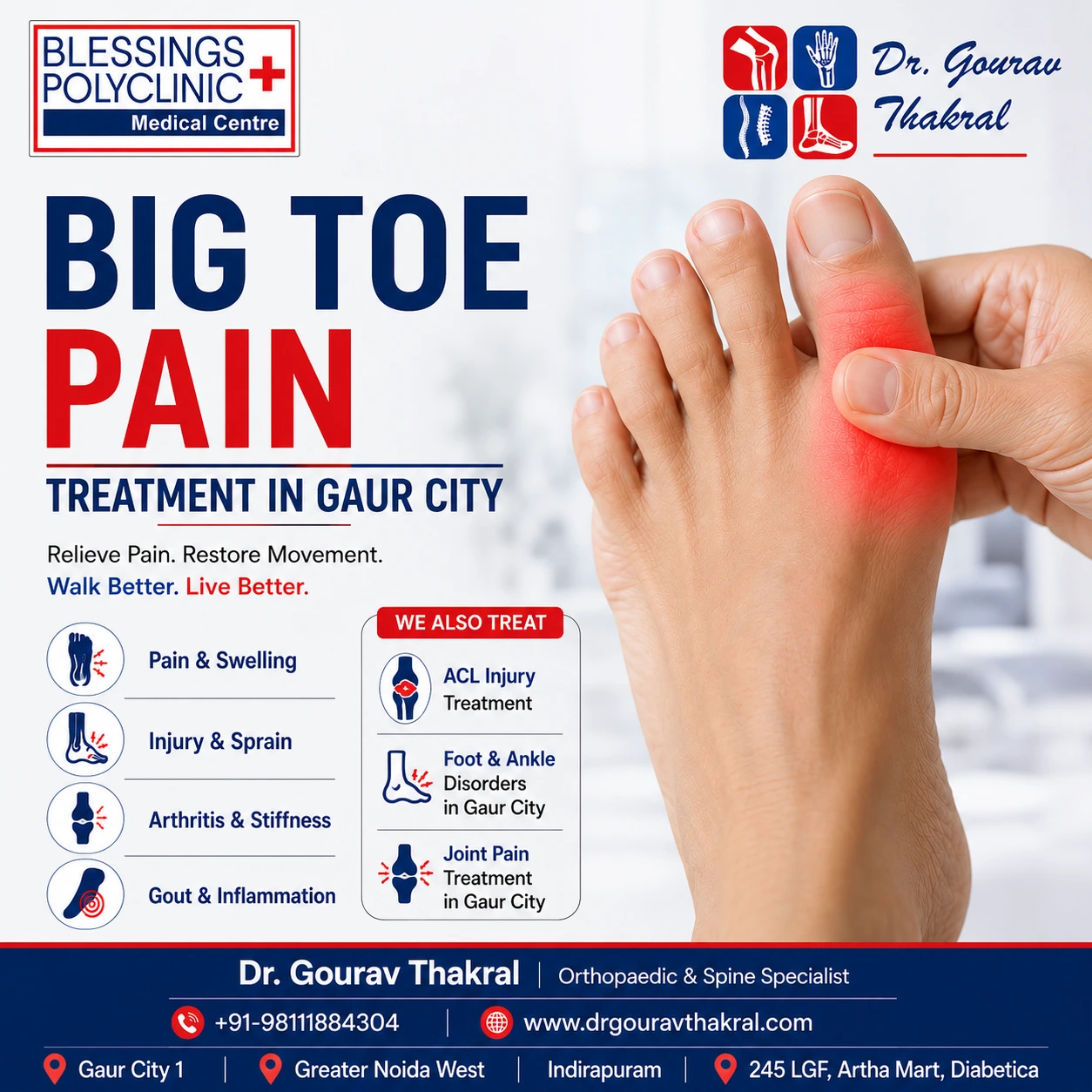
Big Toe Pain Treatment in Gaur City may be needed when pain, swelling, stiffness, redness, or difficulty walking starts affecting your normal routine. The big toe plays an important role in balance, walking, running, climbing stairs, and pushing the body forward with every step.
Pain in this small joint can make even simple activities uncomfortable. In some people, the problem begins after an injury. In others, it can develop because of arthritis, gout, footwear pressure, tendon strain, or another foot condition.
People looking for Big toe pain treatment in Gaur City can consult Dr. Gourav Thakral for an orthopaedic evaluation and a treatment plan based on the exact cause of pain.
Early care may help reduce discomfort, improve movement, and prevent the problem from getting worse.
Why Does the Big Toe Hurt?
The big toe contains bones, joints, tendons, ligaments, and soft tissues that work together during movement.
Pain can develop when any of these structures becomes injured, irritated, or inflamed.
Common causes include:
- Toe sprain
- Gout
- Arthritis
- Bunions
- Sports injury
- Fracture
- Tendon irritation
- Ingrown toenail
- Tight footwear
- Repeated pressure
- Sesamoid problems
- Joint stiffness
The right treatment depends on identifying which structure is causing the pain.
Common Symptoms That May Need Big Toe Pain Treatment in Gaur City
Symptoms can vary depending on the cause.
You may experience:
- Pain while walking
- Swelling around the toe
- Redness
- Stiffness
- Difficulty bending the big toe
- Pain while running
- Tenderness
- Warmth around the joint
- Pain while wearing shoes
- Sudden severe pain
- Difficulty standing on the foot
- Clicking or reduced movement
Persistent symptoms should not be ignored, especially when they affect walking or daily activity.
Big Toe Sprain
A big toe sprain can happen when the toe bends too far during sports, running, a fall, or sudden movement.
This type of injury may affect the ligaments around the joint.
Common symptoms include:
- Pain
- Swelling
- Tenderness
- Difficulty pushing off while walking
- Reduced movement
- Pain during sports
Mild injuries may improve with rest and support. However, severe swelling or difficulty walking may require medical evaluation.
Gout and Sudden Big Toe Pain
Gout is a common cause of sudden and severe pain in the big toe joint.
A gout attack may cause:
- Intense pain
- Redness
- Swelling
- Warmth
- Tenderness
The pain can sometimes start suddenly, even at night.
Because other joint problems may cause similar symptoms, proper diagnosis is important before starting treatment.
Big Toe Arthritis
Arthritis can affect the joint at the base of the big toe.
Over time, the joint may become stiff and painful.
Symptoms may include:
- Pain while walking
- Stiffness
- Reduced movement
- Swelling
- Pain while climbing stairs
- Difficulty wearing certain shoes
When stiffness becomes severe, pushing off the ground during walking can become difficult.
Bunion-Related Big Toe Pain
A bunion is a bony bump that develops near the base of the big toe.
It can cause the toe to move toward the other toes.
Symptoms may include:
- Pain around the joint
- Redness
- Shoe pressure
- Swelling
- Difficulty walking
- Change in toe position
Wide and comfortable footwear may help in mild cases. More advanced problems may need further treatment.
Big Toe Fracture
A fracture can occur after:
- Dropping a heavy object
- Sports injury
- Direct impact
- Fall
- Accident
Possible symptoms include:
- Severe pain
- Swelling
- Bruising
- Difficulty walking
- Tenderness
- Limited toe movement
An X-ray may be required if a fracture is suspected.
Sports-Related Big Toe Pain
Running, football, cricket, badminton, gym training, and other sports may put extra stress on the toes.
Sports-related big toe pain can happen because of:
- Sprain
- Repeated impact
- Tight footwear
- Joint irritation
- Tendon strain
- Fracture
Continuing intense exercise through pain may delay recovery.
Foot & Ankle Disorders in Gaur City
People with Foot & ankle disorders in Gaur City may experience pain not only in the big toe but also in the heel, ankle, arch, or other parts of the foot.
Common foot and ankle problems include:
- Ankle sprain
- Heel pain
- Plantar fasciitis
- Tendon injury
- Toe pain
- Flat feet
- Arthritis
- Sports injuries
- Fractures
Because the foot works as one connected unit, pain in one area can sometimes change the way you walk and put extra pressure on another joint.
How Is Big Toe Pain Diagnosed?
Diagnosis begins with a clinical examination.
The doctor may ask:
- When did the pain start?
- Was there an injury?
- Is the joint swollen?
- Is redness present?
- Does walking increase pain?
- Is the toe stiff?
- Is pain worse at night?
- Are you able to wear normal shoes?
- Has the pain happened before?
Afterward, the toe, foot, ankle, and walking pattern may be examined.
Physical Examination
During the examination, the doctor may check:
- Swelling
- Tenderness
- Toe movement
- Joint stiffness
- Foot alignment
- Walking pattern
- Pain during pressure
- Strength
- Signs of injury
These findings help guide further testing.
X-Ray for Big Toe Pain
An X-ray may be advised when the doctor suspects:
- Fracture
- Arthritis
- Joint damage
- Bone alignment changes
- Bunion deformity
Not every patient needs an X-ray.
Blood Tests
If gout or another inflammatory condition is suspected, blood tests may sometimes be advised.
The decision depends on symptoms and examination findings.
Big Toe Pain Treatment in Gaur City
Big Toe Pain Treatment in Gaur City depends on the cause, severity, and duration of symptoms.
Treatment may include:
- Rest from painful activity
- Ice
- Medicines
- Footwear changes
- Toe support
- Physiotherapy
- Joint exercises
- Activity modification
- Injection treatment in selected cases
- Surgery when required
The goal is not only to reduce pain but also to restore normal movement.
Rest and Activity Modification
Painful activities may need to be reduced for a short time.
These can include:
- Running
- Jumping
- Long walks
- Sports
- Heavy gym exercise
- Repeated stair climbing
Complete inactivity is not always required. Safe movement may be encouraged depending on the condition.
Ice for Swelling
Ice may help after an injury or when swelling is present.
It should be wrapped in a cloth rather than placed directly on the skin.
Your doctor may advise how often to use it.
Footwear Changes
Shoes can play a major role in big toe pain.
Helpful footwear may include:
- Wide toe-box shoes
- Soft footwear
- Shoes with good support
- Comfortable soles
Tight or narrow shoes can increase pressure on the painful joint.
Medicines
Pain-relief or anti-inflammatory medicines may be prescribed when appropriate.
Patients should avoid taking medicines for long periods without medical advice.
Physiotherapy for Big Toe and Foot Pain
Physiotherapy may help improve:
- Toe movement
- Foot strength
- Balance
- Ankle flexibility
- Walking pattern
Exercises should be selected according to the cause of pain.
Joint Pain Treatment in Gaur City
Joint pain treatment in Gaur City may be required when big toe pain is part of a wider joint problem.
Some people may also have pain in the:
- Knee
- Ankle
- Hip
- Shoulder
- Wrist
- Fingers
A proper evaluation can help determine whether the pain is caused by injury, arthritis, overuse, or another joint condition.
Treatment may include medicines, physiotherapy, strengthening, lifestyle changes, or advanced care when required.
Can Foot Pain Affect the Knee?
Yes. Severe foot or toe pain may change the way a person walks.
When the walking pattern changes, extra pressure can sometimes move to the knee, hip, or lower back.
For this reason, persistent foot pain should be treated rather than ignored.
ACL Injury Treatment and Lower-Limb Movement
Although ACL injury treatment is related to the knee rather than the toe, both knee and foot health are important for normal walking and sports movement.
After an ACL injury, some people may change how they place weight on the leg. This can affect the ankle and foot during recovery.
Similarly, severe foot pain may change knee movement.
A full lower-limb assessment may therefore be useful in people with more than one problem.
When Is Surgery Needed for Big Toe Pain?
Most cases do not need surgery.
However, surgery may be considered when:
- Severe joint damage is present
- A fracture needs fixation
- A bunion causes major problems
- Pain continues despite proper treatment
- Toe movement is severely limited
- Daily walking becomes difficult
The exact procedure depends on the condition.
Warning Signs You Should Not Ignore
Seek medical care if you have:
- Severe swelling
- Sudden intense pain
- Inability to walk
- Visible deformity
- Severe redness
- Fever
- Pain after a major injury
- Numbness
- An open wound
- Pain that keeps getting worse
Early evaluation can help rule out serious problems.
When Should You Visit an Orthopaedic Doctor?
Consider an orthopaedic consultation if:
- Pain continues for several days
- Swelling does not improve
- Walking is difficult
- Pain keeps returning
- The toe becomes stiff
- Shoes become uncomfortable
- Pain follows an injury
- Sports activity becomes difficult
- Redness and warmth are present
Proper diagnosis helps avoid unnecessary treatment.
Tips to Prevent Big Toe Pain
Some simple habits may reduce the risk of repeated pain:
- Wear comfortable footwear
- Avoid very tight shoes
- Warm up before sports
- Increase running distance slowly
- Do not ignore small injuries
- Maintain healthy body weight
- Use proper sports technique
- Rest when pain starts
- Keep foot and ankle muscles strong
- Follow medical advice after an injury
These habits can support better foot health.
Why Choose Dr. Gourav Thakral for Big Toe Pain Treatment in Gaur City?
Dr. Gourav Thakral provides orthopaedic care for foot pain, ankle problems, joint pain, sports injuries, fractures, and other movement-related conditions.
Patients looking for Big Toe Pain Treatment in Gaur City can consult him for a detailed examination and personalised treatment guidance.
The treatment approach focuses on:
- Finding the cause of pain
- Reducing swelling
- Improving joint movement
- Restoring walking comfort
- Supporting foot strength
- Preventing repeat injury
- Using surgery only when required
Conclusion
Big toe pain may seem like a small problem, but it can affect walking, balance, exercise, work, and sports.
Possible causes include sprain, gout, arthritis, bunions, fractures, tendon problems, or repeated pressure on the joint.
For Big Toe Pain Treatment in Gaur City, consult Dr. Gourav Thakral for proper evaluation, joint pain care, foot and ankle assessment, and personalised orthopaedic treatment.
Early diagnosis can help reduce pain, restore movement, and make everyday walking more comfortable.
FAQs
1. What causes pain in the big toe?
Common causes include injury, gout, arthritis, bunions, fractures, tendon irritation, and repeated pressure from footwear.
2. Can gout cause severe big toe pain?
Yes. Gout can cause sudden severe pain, swelling, redness, warmth, and tenderness around the big toe joint.
3. Should I see a doctor after a big toe injury?
Yes, especially if you have severe pain, swelling, difficulty walking, bruising, or reduced movement.
4. Can tight shoes cause big toe pain?
Yes. Tight footwear can place extra pressure on the toe joint and may worsen bunions or other foot problems.
5. Is physiotherapy useful for big toe pain?
It can be helpful in selected conditions by improving foot strength, toe movement, ankle flexibility, and walking pattern.
6. Can big toe pain affect walking?
Yes. The big toe helps push the body forward while walking, so pain or stiffness can change your walking pattern.