Ganglion Cyst Removal Surgery in Gaur City
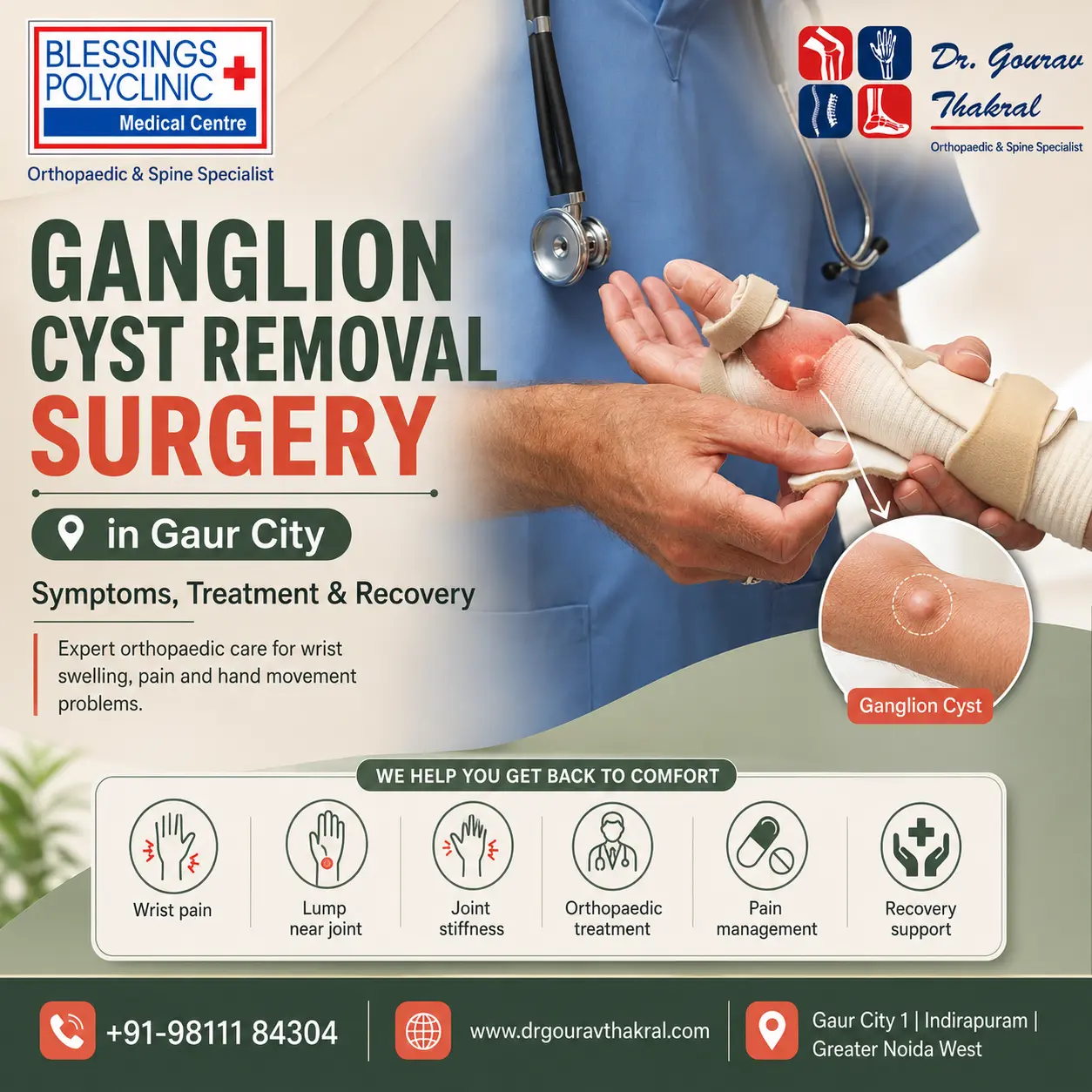
Ganglion Cyst Removal Surgery in Gaur City may become necessary when a lump around the wrist, hand, finger, or joint starts causing pain, stiffness, swelling, weakness, or movement difficulty. A ganglion cyst is usually a fluid-filled lump that commonly develops near joints or tendons. Many cysts are painless, but some can press on nearby structures and affect daily hand use.
Ganglion cysts often appear on the wrist or hand. They may grow slowly, change size, or become more noticeable with activity. Mayo Clinic explains that ganglion cysts are often painless and may not need treatment, but treatment may help when the cyst causes pain or limits joint movement.
For patients dealing with wrist swelling, hand discomfort, or related Musculoskeletal disorders, Dr. Gourav Thakral provides expert orthopaedic evaluation and treatment guidance in Gaur City. As an experienced Orthopaedic doctor, Orthopaedic specialist, and Bone specialist, he helps patients understand whether observation, splinting, aspiration, Pain management, or surgery is the right option.
What Is a Ganglion Cyst?
A ganglion cyst is a non-cancerous lump filled with thick, jelly-like fluid. It usually forms near a joint or tendon sheath. The wrist is one of the most common locations, but it can also develop near fingers, ankles, feet, or other joints.
The cyst may feel soft, firm, or slightly movable. Its size can increase or decrease over time. Some patients notice more swelling after repetitive hand activity. Others may feel pain when bending the wrist, gripping objects, lifting weight, or putting pressure on the hand.
A proper diagnosis is important because not every lump is a ganglion cyst. An Orthopaedic doctor can examine the swelling and suggest further tests if needed.
Common Symptoms of Ganglion Cyst
Some ganglion cysts do not cause any symptoms. Many patients visit a doctor because they notice a visible lump. Others seek care because the lump causes pain, stiffness, or hand weakness.
Common symptoms include wrist swelling, a round or oval lump, discomfort while bending the wrist, pain during gripping, tenderness near the cyst, reduced movement, and stiffness around the joint. If the cyst presses on a nerve, it may cause tingling, numbness, muscle weakness, or pain. Mayo Clinic notes that ganglion cysts can cause pain, tingling, numbness, or muscle weakness if they press on a nerve or other structures.
Patients searching for Wrist pain treatment should get the lump checked early, especially when pain or stiffness affects daily work.
Why Do Ganglion Cysts Develop?
The exact cause of ganglion cysts is not always clear. They may develop when fluid from a joint or tendon sheath collects and forms a sac-like swelling. Repetitive wrist use, joint stress, previous injury, tendon irritation, or joint-related problems may play a role in some patients.
Ganglion cysts can appear in people who use their hands repeatedly for work, sports, typing, gym training, tools, or household tasks. However, they can also develop without any obvious reason.
Since these cysts are connected with joints and tendons, they fall under common hand and wrist Musculoskeletal disorders. A careful clinical examination helps confirm the condition and rule out other causes of swelling.
When Should You Consult an Orthopaedic Specia?
You should consult an Orthopaedic surgeon if the lump becomes painful, grows in size, limits wrist movement, or affects hand function. Medical evaluation is also important if you feel tingling, numbness, weakness, or repeated stiffness.
Consultation is helpful when:
The lump is increasing in size
Wrist pain affects daily activity
The cyst returns after previous treatment
Hand grip feels weak
Joint movement becomes restricted
Numbness or tingling develops
The swelling looks unusual
Pain continues despite rest
Early diagnosis helps decide whether the cyst needs only observation or active treatment.
Diagnosis of Ganglion Cyst
Diagnosis usually starts with a physical examination. The doctor checks the size, location, tenderness, movement, and firmness of the lump. The doctor may also check wrist movement, grip strength, nerve symptoms, and joint stiffness.
In some cases, the doctor may use light to see whether the lump is fluid-filled. X-rays may help rule out bone or joint problems. Ultrasound or MRI may help when the diagnosis is unclear or when the cyst is deep.
A Bone specialist may advise further testing if the lump looks different from a typical ganglion cyst or if symptoms suggest another hand condition.
Non-Surgical Treatment Options
Not every ganglion cyst needs surgery. If the cyst is painless and does not affect movement, the doctor may suggest observation. Many cysts can be watched over time.
Non-surgical treatment may include rest, activity modification, wrist splinting, medicines, and Pain management. A splint may reduce wrist movement and help settle pain caused by activity. If the cyst is painful or large, aspiration may be considered. In aspiration, the doctor drains fluid from the cyst using a needle.
Mayo Clinic lists immobilization and aspiration among treatment options when a ganglion cyst causes pain or affects joint movement. However, aspiration may not always remove the root of the cyst, so recurrence can happen. NYU Langone notes that aspiration may shrink the cyst, but it may return because the connection to the joint or tendon sheath is not removed.
When Is Ganglion Cyst Removal Surgery Needed?
Ganglion cyst removal surgery may be considered when the cyst causes persistent pain, keeps returning, restricts wrist movement, or affects daily function. Surgery may also help when the cyst presses on nerves or tendons.
Surgery may be needed when:
Pain continues despite non-surgical care
The cyst returns after aspiration
The lump affects wrist movement
Grip strength becomes weak
Nerve symptoms appear
The cyst creates repeated discomfort
Daily work becomes difficult
The patient wants definitive removal after evaluation
Cleveland Clinic explains that surgery may be considered if other treatments do not provide relief or if the cyst comes back. It also notes that surgeons remove the whole cyst, including its root-like stalk when present.
What Happens During Ganglion Cyst Removal Surgery?
During surgery, the surgeon removes the cyst along with its stalk or connection when possible. This helps reduce the chance of recurrence. The surgery may be done through an open method or arthroscopic method, depending on the cyst location, size, and surgeon’s assessment.
Mayo Clinic states that ganglion cyst removal can be done through one larger incision or several small incisions using arthroscopy. The doctor explains the most suitable method after checking the patient’s symptoms, cyst location, and wrist condition.
The aim of surgery is to remove the cyst safely, reduce pain, improve movement, and help the patient return to normal hand use.
Recovery After Ganglion Cyst Surgery
Recovery after ganglion cyst removal depends on the cyst location, surgery type, wound healing, and hand use. Some patients may need a dressing, splint, medicines, and follow-up visits. The doctor may advise gentle movement after the initial healing period.
Recovery may include wound care, swelling control, pain relief, finger movement, wrist exercises, and gradual return to work. Heavy lifting or forceful gripping may need to be avoided for some time.
If stiffness develops after surgery, Joint stiffness treatment may include hand exercises, controlled movement, physiotherapy, or guided rehabilitation. Following the recovery plan helps protect wrist function and reduce long-term stiffness.
Ganglion Cyst Removal Surgery in Gaur City by Dr. Gourav Thakral
If you have a painful lump around the wrist, hand, or joint, Dr. Gourav Thakral can help with proper diagnosis and treatment planning in Gaur City. He evaluates cyst size, pain level, wrist movement, nerve symptoms, daily activity limitations, and previous treatment history before suggesting the next step.
Patients may need observation, splinting, aspiration, medicines, pain management, or surgery depending on their condition. As an experienced Orthopaedic specialist, Dr. Gourav Thakral focuses on patient-specific care and clear treatment guidance.
Patients searching for Orthopaedic treatment for wrist pain, hand swelling, or ganglion cyst concerns can consult Dr. Gourav Thakral for expert advice.
Final Thoughts
A ganglion cyst is often harmless, but it should not be ignored if it causes pain, stiffness, weakness, numbness, or restricted movement. The right treatment depends on symptoms, cyst location, size, and effect on daily activity.
For Ganglion Cyst Removal Surgery in Gaur City, consult Dr. Gourav Thakral for proper evaluation, treatment planning, and recovery guidance.
FAQs
1. What is a ganglion cyst?
A ganglion cyst is a fluid-filled, non-cancerous lump that commonly develops near a joint or tendon, especially around the wrist or hand.
2. Does every ganglion cyst need surgery?
No. Many painless cysts need only observation. Surgery may be considered when the cyst causes pain, stiffness, nerve symptoms, or keeps returning.
3. Can a ganglion cyst cause wrist pain?
Yes. A ganglion cyst can cause wrist pain, especially when it presses on nearby tissues or affects wrist movement.
4. What is aspiration for a ganglion cyst?
Aspiration is a non-surgical procedure where fluid is drained from the cyst using a needle. The cyst may return because the root is not removed.
5. When is ganglion cyst removal surgery needed?
Surgery may be needed when pain continues, the cyst returns, wrist movement becomes limited, or nerve symptoms develop.