Best Joint Dislocation Treatment in Greater Noida West
Joint Dislocation Treatment in Greater Noida West is important for patients who suffer from severe joint pain, swelling, visible deformity, weakness, numbness, or difficulty moving a joint after injury. A joint dislocation happens when the bones of a joint move out of their normal place.
This problem may affect the shoulder, knee, elbow, hip, ankle, finger, or wrist. It can happen due to sports injury, fall, accident, sudden twist, or direct trauma. Since a dislocation can also damage ligaments, nerves, blood vessels, or nearby bones, timely care is very important.
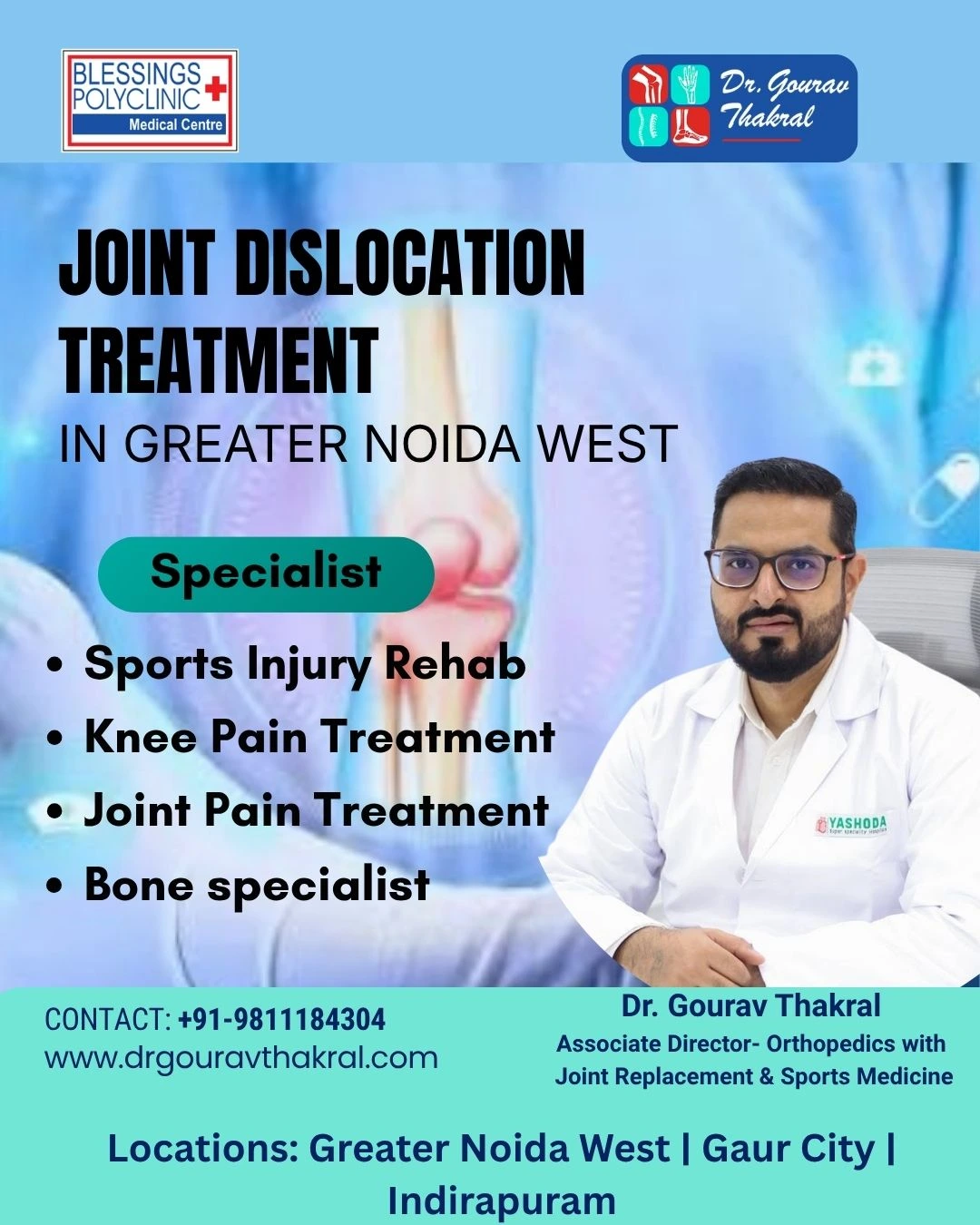
Dr. Gourav Thakral provides expert orthopaedic evaluation and treatment guidance for joint dislocation, joint pain, sports injury, bone injury, and mobility-related problems in Greater Noida West.
What Is Joint Dislocation?
A joint is the place where two bones meet. A dislocation happens when one or more bones slip out of the joint. This can cause sudden pain and loss of movement.
The shoulder is one of the most common joints to dislocate. However, dislocation can also happen in the knee, hip, elbow, ankle, wrist, and fingers.
A dislocation should not be pushed back at home. It needs proper medical care. Wrong handling can increase damage and delay recovery.
Common Symptoms of Joint Dislocation
Symptoms usually appear immediately after injury. The affected joint may look abnormal or out of shape.
Common symptoms include:
Severe joint pain
Swelling around the joint
Visible deformity
Difficulty moving the joint
Weakness
Numbness or tingling
Bruising
Joint instability
Pain after fall or sports injury
Inability to use the affected limb
If these symptoms appear, consult an orthopaedic specialist as early as possible.
Causes of Joint Dislocation
Joint dislocation may happen due to sudden force on the joint. It is common in active people, athletes, elderly patients, and people who have weak joints or previous injuries.
Common causes include:
Sports injury
Road accident
Fall from height
Sudden twisting injury
Direct hit to the joint
Gym injury
Workplace injury
Previous dislocation
Ligament weakness
Poor joint stability
In many cases, dislocation happens along with ligament injury, muscle strain, fracture, or joint capsule injury. Therefore, proper diagnosis is needed.
Joint Dislocation Treatment in Greater Noida West
Joint dislocation treatment in Greater Noida West starts with safe evaluation. The doctor checks the joint position, pain level, swelling, movement, nerve function, and blood flow.
Treatment may include:
Pain management
Safe joint reduction
Immobilization with sling, splint, or brace
Digital X-ray advice
MRI advice when needed
Medicines when suitable
Rest and activity restriction
Physiotherapy
Rehabilitation
Surgical care in selected cases
The aim is to place the joint back safely, reduce pain, protect soft tissues, and restore movement.
Why Timely Treatment Is Important
A dislocated joint can damage ligaments, tendons, nerves, blood vessels, cartilage, and nearby bones. If treatment is delayed, the risk of stiffness, repeated dislocation, weakness, and long-term joint pain may increase.
Early joint dislocation treatment in Greater Noida West can help reduce complications and support better recovery.
Joint Pain Treatment in Greater Noida West
After dislocation, joint pain may continue for some time. This pain may happen because of swelling, ligament injury, muscle strain, cartilage damage, or joint instability.
Joint pain treatment in Greater Noida West focuses on finding the exact cause of pain. Treatment may include pain relief, rest, brace support, physiotherapy, strengthening exercises, and gradual return to movement.
If pain continues after the joint is placed back, further evaluation may be needed.
Role of a Joint Specialist in Greater Noida West
A joint specialist in Greater Noida West can help diagnose the type and severity of dislocation. Proper evaluation is important because each joint needs a different treatment plan.
For example, shoulder dislocation may need sling support and rehabilitation. Knee or hip dislocation may need more urgent and detailed evaluation because nearby nerves and blood vessels can be at risk.
Dr. Gourav Thakral provides patient-specific treatment planning for joint injuries, sports injuries, dislocation, and movement problems.
Role of a Bone Specialist
A bone specialist checks whether the dislocation is linked with fracture or bone injury. Sometimes, a dislocation may happen with a small bone break, cartilage injury, or joint surface damage.
Digital X-ray is often advised to confirm joint position and rule out fracture. In some cases, MRI may be needed to check ligaments and soft tissues.
Correct diagnosis helps avoid wrong treatment and delayed healing.
Sports Injury Treatment and Dislocation
Dislocations are common in sports like cricket, football, basketball, badminton, wrestling, gym training, and running activities. A fall, sudden twist, or direct collision can force a joint out of place.
Sports injury treatment after dislocation focuses on pain relief, joint stability, strength recovery, and safe return to activity. Returning to sports too early can increase the risk of another dislocation.
Rehabilitation is an important part of recovery. It helps restore range of motion, muscle strength, balance, and joint control.
When Is Surgery Needed?
Not every dislocation needs surgery. Many cases improve with safe reduction, immobilization, medicines, and physiotherapy.
However, surgery may be considered if:
Dislocation happens again and again
There is major ligament damage
A fracture is present
The joint remains unstable
Nerve or blood vessel injury is suspected
Non-surgical care does not help
The patient is an athlete with repeated instability
The final decision depends on the joint involved, injury severity, age, activity level, and diagnosis.
Recovery After Joint Dislocation
Recovery time depends on the joint, severity of injury, and treatment plan. Mild dislocations may recover faster. Severe injuries may need longer care and rehabilitation.
Recovery may include:
Rest in the early phase
Sling, brace, or splint support
Pain and swelling control
Gradual movement exercises
Strength training
Balance training
Joint stability exercises
Return-to-activity planning
Following the recovery plan is important. Stopping rehab early may increase the risk of stiffness or repeated dislocation.
Prevention Tips
Some dislocations happen suddenly and cannot always be prevented. Still, a few habits can reduce the risk.
Warm up before sports
Strengthen muscles around joints
Use proper technique during exercise
Avoid playing through pain
Wear protective gear when needed
Treat ligament injuries early
Follow rehab after injury
Avoid sudden overload
Improve balance and flexibility
These steps can support better joint health and safer movement.
Why Choose Dr. Gourav Thakral?
Dr. Gourav Thakral provides expert orthopaedic care for joint dislocation, joint pain, sports injury, fracture care, ligament injury, and mobility problems.
Patients looking for joint dislocation treatment in Greater Noida West can consult him for proper diagnosis and treatment guidance. His approach focuses on safe reduction, pain relief, joint stability, mobility improvement, rehabilitation, and long-term prevention.
Conclusion
Joint dislocation can be painful and serious. It should not be ignored or treated at home. Early medical care can help reduce pain, protect the joint, and prevent repeated dislocation.
For expert Joint Dislocation Treatment in Greater Noida West, consult Dr. Gourav Thakral for joint pain treatment in Greater Noida West, joint specialist care, bone specialist evaluation, orthopaedic treatment, and sports injury treatment.
FAQs
What is joint dislocation?
Joint dislocation happens when bones in a joint move out of their normal position. It can cause pain, swelling, deformity, and movement difficulty.
What are common symptoms of joint dislocation?
Common symptoms include severe joint pain, swelling, visible deformity, bruising, numbness, weakness, and difficulty moving the joint.
Can I put a dislocated joint back myself?
No. Do not try to push a dislocated joint back yourself. It should be treated by a trained doctor to avoid nerve, blood vessel, or bone damage.
Is surgery always needed for joint dislocation?
No. Many dislocations improve with safe reduction, support, medicines, and physiotherapy. Surgery is needed only in selected severe or repeated cases.
Can sports injury cause joint dislocation?
Yes, sports injury can cause shoulder, knee, finger, ankle, or elbow dislocation due to fall, collision, twisting, or direct impact.
Where can I get joint dislocation treatment in Greater Noida West?
You can consult Dr. Gourav Thakral for joint dislocation treatment in Greater Noida West, joint pain treatment, orthopaedic treatment, bone specialist care, and sports injury treatment.