Hip Fracture Surgery in Gaur City: Expert Care for Elderly Patients
Hip Fracture Surgery in elderly patients is often needed after a fall, slip, or injury. In older adults, even a minor fall can cause a serious hip fracture because bones may become weak with age or osteoporosis.
A hip fracture can cause severe hip pain, inability to stand, swelling, leg shortening, or difficulty moving the leg. Therefore, it needs urgent medical evaluation. The NHS states that a broken hip usually needs hospital treatment straight away, and most people need surgery for treatment.
For patients looking for Fracture treatment, Hip pain treatment, Orthopaedic trauma treatment, and Trauma care in Gaur City, Dr. Gourav Thakral provides expert orthopaedic evaluation and treatment guidance. As an experienced Bone fracture specialist, Orthopaedic specialist, and Bone specialist, he helps elderly patients and families understand the safest treatment and recovery plan.
What Is a Hip Fracture?
A hip fracture is a break near the upper part of the thigh bone. It commonly happens near the hip joint. In elderly patients, it often occurs after a fall at home, in the bathroom, on stairs, or while walking.
Hip fractures are serious because they affect walking, balance, and daily independence. Also, elderly patients may already have diabetes, blood pressure, heart disease, or weak bones. So, treatment must be planned carefully.
Common Symptoms of Hip Fracture
Hip fracture symptoms usually start suddenly after a fall or injury.
Common signs include:
Severe hip pain
Pain in the groin or thigh
Inability to stand
Difficulty walking
Swelling around the hip
Bruising
Leg turning outward
One leg looking shorter
Pain while moving the leg
Unable to bear weight
If an elderly person falls and cannot stand, do not force walking. Instead, seek urgent Trauma care.
Why Elderly Patients Are at Higher Risk
Elderly patients are more prone to hip fractures because of weak bones, poor balance, poor vision, muscle weakness, and medical conditions. Osteoporosis is also a major risk factor.
Falls are common in older adults. However, when bone strength is low, a small fall can cause a major fracture.
Risk factors include:
Osteoporosis
Old age
Previous fracture
Poor balance
Weak muscles
Vitamin D deficiency
Unsafe home surfaces
Poor eyesight
Long-term steroid use
Low physical activity
Because of these risks, elderly fracture cases need both Fracture treatment and fall-prevention planning.
When Should You Consult an Orthopaedic Doctor?
You should consult an Orthopaedic doctor immediately if an elderly person has hip pain after a fall. You should also seek urgent care if the person cannot stand or walk.
Do not wait for pain to settle on its own. A delayed diagnosis can make treatment and recovery more difficult.
Patients searching for the Best orthopaedic doctor in Gaur City can consult Dr. Gourav Thakral for hip fracture evaluation and treatment planning.
Diagnosis of Hip Fracture
Diagnosis starts with a clinical examination. The doctor checks pain, swelling, leg position, movement, blood supply, and overall medical condition.
X-rays usually confirm the fracture. However, in some cases, MRI or CT scan may be needed if the fracture is not clearly visible on X-ray.
The doctor also checks the patient’s fitness for surgery. This may include blood tests, ECG, chest evaluation, and medical clearance.
Does Every Hip Fracture Need Surgery?
Most hip fractures in elderly patients need surgery. Surgery helps stabilize the bone or replace the damaged part of the hip joint. This can reduce pain and help the patient sit, stand, and walk earlier.
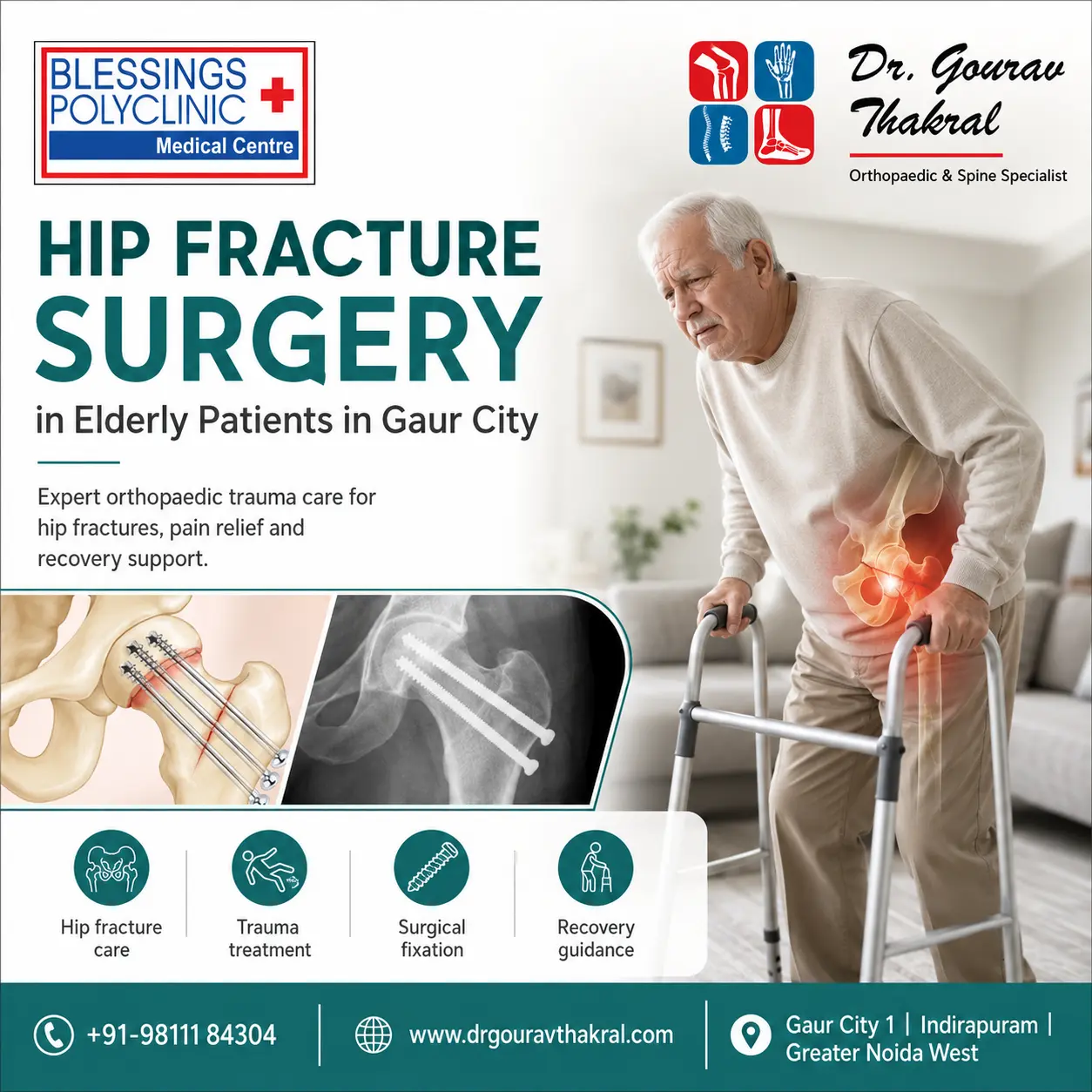
Mayo Clinic explains that hip fractures may be repaired with metal screws, plates, or rods. In some cases, artificial replacement of part of the hip joint may be needed.
However, the exact treatment depends on fracture type, age, bone quality, medical condition, and walking ability before injury.
Types of Hip Fracture Surgery
There are different surgery options for elderly hip fractures. The doctor chooses the best option after checking the fracture pattern and patient condition.
1. Screw Fixation
Some fractures can be fixed with screws. This may be used when the fracture is stable and bone alignment is suitable.
2. Plate or Nail Fixation
Some fractures near the upper thigh bone may need a plate, rod, or nail. These implants hold the broken bone in proper position while it heals.
3. Partial Hip Replacement
In some elderly patients, the broken part of the hip joint may be replaced with an artificial implant. This is often considered when the fracture affects the femoral neck.
4. Total Hip Replacement
In selected cases, total hip replacement may be advised, especially when the joint is already damaged or the fracture pattern needs replacement.
Mayo Clinic notes that full or partial hip replacement may be recommended if blood supply to the ball part of the hip joint is damaged, especially in older people with femoral neck fractures.
Why Early Surgery Matters
Early treatment can help reduce pain and support faster mobilization. It may also reduce complications linked with long bed rest.
Long bed rest can increase the risk of chest infection, blood clots, bed sores, muscle weakness, and confusion in elderly patients. Therefore, doctors usually aim to treat hip fractures as early as safely possible.
AAOS guidance for older adults with hip fractures also supports early mobilization, and after surgical treatment, immediate full weight bearing as tolerated may be considered in suitable cases.
Recovery After Hip Fracture Surgery
Recovery depends on age, fracture type, surgery method, medical condition, and pre-injury walking ability. Some patients walk with support within a few days, while others need more time.
Recovery may include:
Pain control
Wound care
Walker support
Physiotherapy
Breathing exercises
Fall prevention
Nutrition support
Bone health treatment
Follow-up X-rays
Home safety guidance
Physiotherapy is very important. It helps improve walking, balance, strength, and confidence.
Physiotherapy After Hip Fracture Surgery
Physiotherapy usually starts as advised by the doctor. At first, the focus is on safe sitting, standing, and walking with support.
Later, exercises help improve hip movement, leg strength, balance, and daily function. However, every patient should follow the weight-bearing advice given by the surgeon.
Do not rush walking without support unless the doctor allows it.
Bone Health After Hip Fracture
A hip fracture in an elderly patient often shows weak bone health. Therefore, osteoporosis evaluation may be needed.
The doctor may advise calcium, vitamin D, bone-strengthening medicines, sunlight exposure, safe exercises, and fall prevention. This helps reduce the risk of another fracture.
A Bone specialist can guide the patient on long-term bone health and recovery.
Home Safety Tips for Elderly Patients
After recovery, home safety is very important. Many hip fractures happen because of avoidable falls.
Helpful steps include:
Remove loose rugs
Use bathroom grab bars
Keep floors dry
Improve lighting
Use non-slip footwear
Avoid clutter
Use walking support if advised
Check vision regularly
Keep medicines reviewed
Use railings on stairs
These steps can reduce fall risk and support safer movement.
Hip Fracture Surgery in Gaur City by Dr. Gourav Thakral
If an elderly family member has hip pain, difficulty walking, or inability to stand after a fall, consult Dr. Gourav Thakral in Gaur City.
He evaluates the fracture type, X-ray findings, bone health, age, medical condition, and walking needs before suggesting treatment. Patients searching for Hip fracture surgery, Fracture treatment, Orthopaedic trauma treatment, Hip pain treatment, or Best orthopaedic doctor in Gaur City can consult Dr. Gourav Thakral for expert care.
Final Thoughts
Hip fracture in elderly patients is a serious condition. It needs urgent diagnosis, proper surgery planning, trauma care, and guided rehabilitation. Early treatment can help reduce pain, support walking, and improve recovery.
For Hip Fracture Surgery in Gaur City, consult Dr. Gourav Thakral, an experienced Orthopaedic doctor, Bone fracture specialist, and Bone specialist, for safe evaluation and treatment guidance.
FAQs
1. What is hip fracture surgery?
Hip fracture surgery is a procedure to fix or replace the broken part of the hip using screws, plates, rods, nails, or hip replacement implants.
2. Is hip fracture serious in elderly patients?
Yes. Hip fracture is serious in elderly patients because it affects walking, mobility, independence, and overall health.
3. Does every elderly hip fracture need surgery?
Most elderly hip fractures need surgery. However, the final decision depends on fracture type, medical fitness, and patient condition.
4. How soon should hip fracture treatment start?
Hip fracture needs urgent evaluation. Surgery is usually planned as early as safely possible after medical assessment.
5. Can elderly patients walk after hip fracture surgery?
Many elderly patients can walk with support after surgery as advised by the doctor and physiotherapist.