Frozen Shoulder Surgery in Gaur City: Arthroscopic Release for Severe Shoulder Stiffness
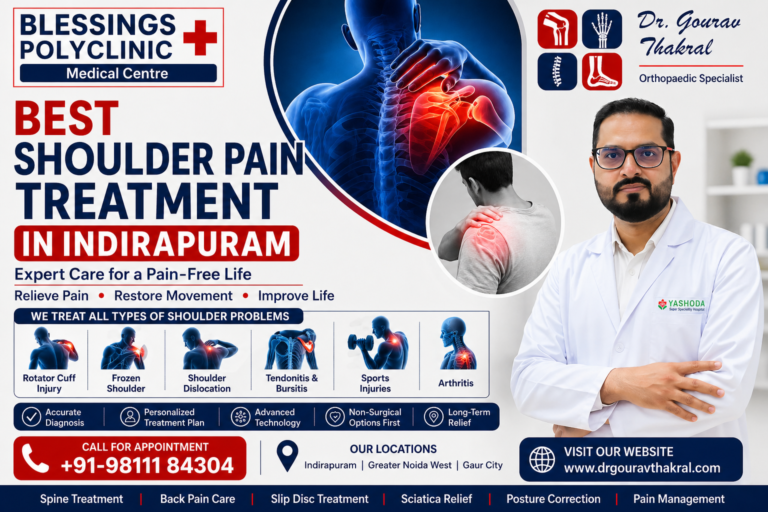
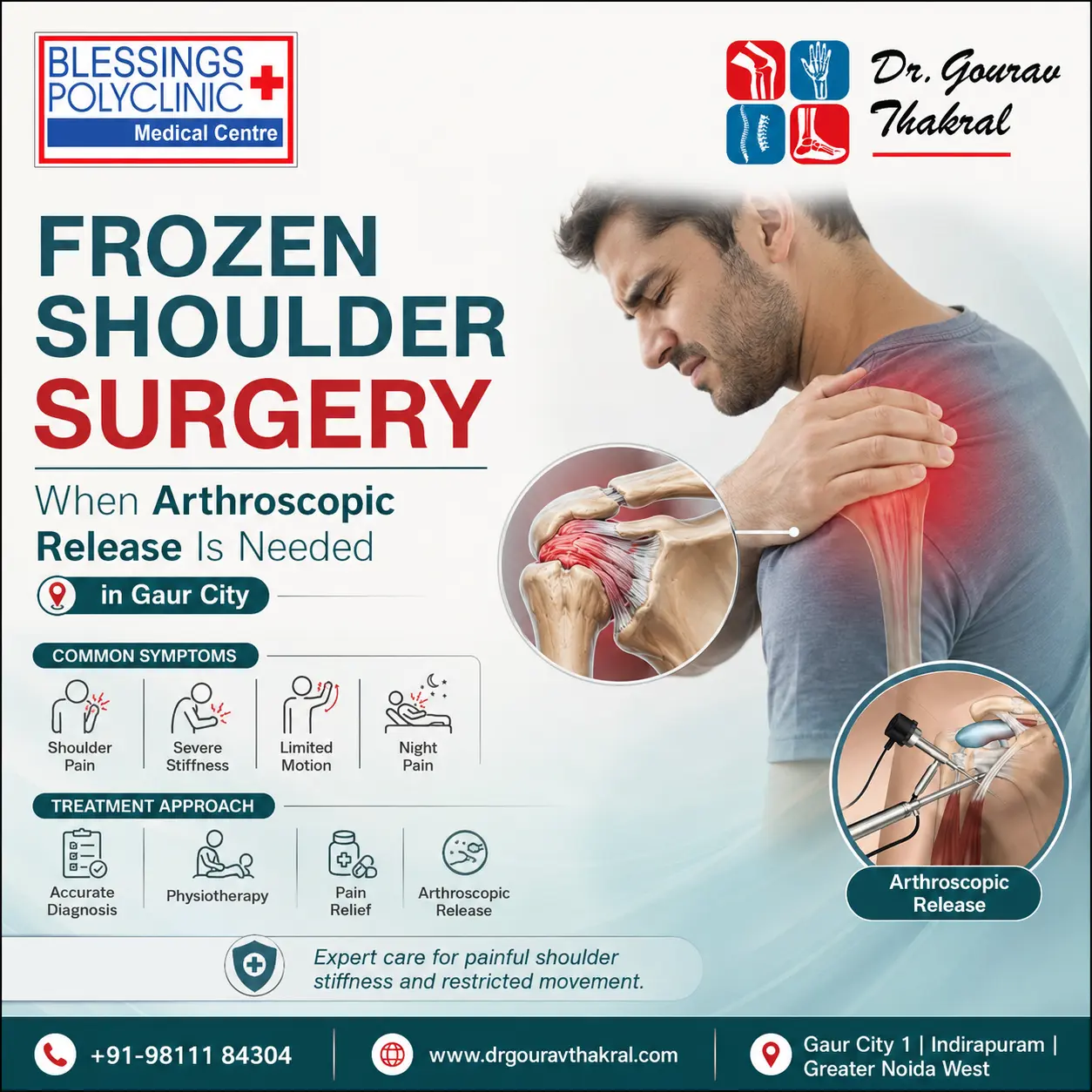
Frozen Shoulder Surgery in Gaur City may be needed when severe shoulder stiffness, pain, and limited movement do not improve with medicines, injections, and physiotherapy. Frozen shoulder is also called adhesive capsulitis. In this condition, the shoulder capsule becomes tight and thick. As a result, arm movement becomes painful and restricted.
Many patients find it difficult to lift the arm, wear clothes, comb hair, reach the back pocket, or sleep on the painful side. At first, the pain may be more noticeable. Later, stiffness often becomes the bigger problem.
For patients looking for Shoulder pain treatment, Joint pain treatment, or Joint stiffness treatment in Gaur City, Dr. Gourav Thakral provides expert orthopaedic evaluation and treatment guidance. As an experienced Orthopaedic specialist, Joint specialist, and Bone specialist, he helps patients understand whether physiotherapy, medicines, injections, stretching, or arthroscopic release may be suitable.
Mayo Clinic explains that frozen shoulder treatment usually includes range-of-motion exercises. Sometimes, steroid and numbing medicine injections are used. Rarely, surgery is needed to loosen the tight shoulder tissue so the joint can move more freely.
What Is Frozen Shoulder?
Frozen shoulder is a condition where the shoulder joint becomes painful and stiff. The capsule around the shoulder joint tightens and restricts movement. Because of this, both active movement and assisted movement become limited.
This is different from simple shoulder pain. In many other shoulder problems, a doctor or therapist may still be able to move the arm fully. However, in frozen shoulder, movement remains restricted even when someone else tries to move the arm.
AAOS explains that frozen shoulder usually improves over time without surgery, although recovery may take up to three years. The main treatment goal is to control pain and restore motion and strength through physical therapy.
Common Symptoms of Frozen Shoulder
Frozen shoulder usually develops slowly. However, the stiffness can become very frustrating over time.
Common symptoms include:
Shoulder pain
Severe shoulder stiffness
Difficulty lifting the arm
Pain while sleeping
Difficulty wearing clothes
Trouble reaching overhead
Difficulty reaching behind the back
Reduced shoulder rotation
Pain during daily work
Weakness due to limited movement
If shoulder stiffness affects daily life, proper Joint stiffness treatment can help identify the stage and severity.
Stages of Frozen Shoulder
Frozen shoulder often passes through three stages. Each stage may last for months.
1. Freezing Stage
Pain increases slowly. Shoulder movement starts reducing. Night pain may also become common.
2. Frozen Stage
Pain may reduce slightly. However, stiffness becomes more severe. Daily work becomes difficult.
3. Thawing Stage
Movement starts improving gradually. However, recovery may still take time.
Mayo Clinic also describes frozen shoulder as a condition that commonly develops in stages and may improve slowly over time.
Why Does Frozen Shoulder Happen?
The exact cause is not always clear. However, certain factors can increase the risk. Frozen shoulder is more common after shoulder injury, surgery, long immobilization, diabetes, thyroid problems, and age-related joint stiffness.
It may also happen when a person avoids shoulder movement due to pain. Over time, the capsule tightens and movement reduces further.
A Joint specialist checks the shoulder carefully because stiffness can also happen due to arthritis, rotator cuff tear, shoulder injury, or nerve-related pain.
When Should You Consult an Orthopaedic Specialist?
You should consult an Orthopaedic specialist if shoulder pain and stiffness continue for weeks. Also, seek care if you cannot lift your arm, rotate your shoulder, or reach behind your back.
Early diagnosis helps avoid unnecessary delay. It also helps start the right treatment at the right stage.
Consultation becomes important when:
Shoulder stiffness keeps increasing
Pain disturbs sleep
Daily work becomes difficult
Physiotherapy is not helping enough
You have diabetes or thyroid issues
Arm movement remains restricted
Pain and stiffness affect quality of life
Patients searching for the Best orthopaedic doctor in Gaur City can consult Dr. Gourav Thakral for proper evaluation and treatment planning.
Diagnosis of Frozen Shoulder
Diagnosis starts with a clinical examination. The doctor checks shoulder movement, pain level, stiffness, strength, and rotation. He may compare both shoulders.
X-rays may help rule out arthritis or bone problems. MRI or ultrasound may be advised if the doctor suspects rotator cuff tear, labral injury, or another shoulder condition.
A correct diagnosis is important because every shoulder pain case is not frozen shoulder.
Non-Surgical Treatment for Frozen Shoulder
Most frozen shoulder cases improve without surgery. However, treatment can take time. The aim is to reduce pain, improve movement, and prevent long-term stiffness.
Non-surgical treatment may include:
Pain medicines
Anti-inflammatory medicines
Hot or cold therapy
Shoulder exercises
Physiotherapy
Stretching program
Steroid injection
Activity modification
Regular follow-up
Cleveland Clinic explains that frozen shoulder treatment usually starts with pain relief methods, therapy, and sometimes surgery if motion does not return on its own.
Role of Physiotherapy
Physiotherapy is very important in frozen shoulder care. It helps improve range of motion and reduces stiffness gradually. However, exercises should be done correctly.
Too much force can increase pain. On the other hand, avoiding movement completely can increase stiffness. Therefore, guided therapy is helpful.
Cleveland Clinic notes that physical therapy is one of the main treatments because it helps loosen the shoulder capsule and improve range of motion.
When Is Frozen Shoulder Surgery Needed?
Frozen shoulder surgery is rarely the first treatment. It may be considered when pain and stiffness continue despite proper non-surgical care. It may also be needed when shoulder movement remains severely limited and daily activities are affected.
Mayo Clinic notes that surgery is rarely needed, but it may be done to loosen the connective tissue inside the shoulder joint when motion remains restricted.
Your doctor may consider surgery when:
Shoulder stiffness remains severe
Daily activities are badly affected
Physiotherapy does not improve movement
Injections and medicines give limited relief
Range of motion stays restricted
Pain and stiffness continue for many months
The patient cannot perform basic shoulder tasks
The decision depends on symptoms, stiffness level, stage, medical history, and response to previous treatment.
What Is Arthroscopic Release?
Arthroscopic release is a minimally invasive shoulder procedure. The surgeon uses a small camera and fine instruments through tiny cuts. During the procedure, the tight shoulder capsule is carefully released so the joint can move more freely.
This surgery is also called arthroscopic capsular release. It is usually planned for selected patients with resistant frozen shoulder.
AAOS has surgical education material on arthroscopic capsular release for adhesive capsulitis, and it describes arthroscopic pan-capsular release as a surgical method used to restore shoulder function and improve range of motion in selected cases.
Recovery After Arthroscopic Release
Recovery after frozen shoulder surgery depends on stiffness severity, patient health, diabetes control, and rehabilitation. Physiotherapy starts soon after surgery as advised. This is important because the shoulder can become stiff again if movement is delayed.
Recovery usually includes:
Pain control
Sling for comfort if advised
Early guided shoulder movement
Physiotherapy
Stretching exercises
Gradual strengthening
Regular follow-up
Home exercise program
The goal is to maintain the movement gained during surgery and improve function gradually.
Why Post-Surgery Exercises Matter
Exercises are a major part of recovery. Surgery releases the tight capsule. However, exercises help maintain motion. Without proper rehabilitation, stiffness may return.
Therefore, patients must follow the exercise plan regularly. Also, they should avoid aggressive self-stretching unless advised by the doctor or physiotherapist.
Frozen Shoulder Surgery in Gaur City by Dr. Gourav Thakral
If shoulder stiffness, pain, and limited movement are affecting your daily life, Dr. Gourav Thakral can help with proper diagnosis and treatment planning in Gaur City.
He evaluates shoulder movement, stiffness stage, pain level, diabetes history, X-ray findings, and response to previous treatment before suggesting the next step. Patients searching for Frozen shoulder surgery, Shoulder pain treatment, Joint pain treatment, or Joint stiffness treatment can consult Dr. Gourav Thakral for expert care.
Final Thoughts
Frozen shoulder can cause long-lasting pain and stiffness. Most patients improve with physiotherapy, medicines, injections, and regular exercises. However, selected patients may need arthroscopic release when stiffness remains severe despite proper treatment.
For Frozen Shoulder Surgery in Gaur City, consult Dr. Gourav Thakral, an experienced Orthopaedic specialist, Joint specialist, and Bone specialist, for accurate diagnosis and recovery guidance.
FAQs
1. What is frozen shoulder?
Frozen shoulder is a condition where the shoulder capsule becomes tight, painful, and stiff. It limits shoulder movement.
2. Does frozen shoulder always need surgery?
No. Most cases improve with medicines, injections, physiotherapy, and exercises. Surgery is needed only in selected resistant cases.
3. What is arthroscopic release?
Arthroscopic release is a minimally invasive surgery where the tight shoulder capsule is released using a camera and small instruments.
4. When is frozen shoulder surgery needed?
It may be needed when severe stiffness and pain continue despite proper physiotherapy, injections, and medicines.
5. Can frozen shoulder cause night pain?
Yes. Frozen shoulder can cause night pain, especially in the early painful stage.