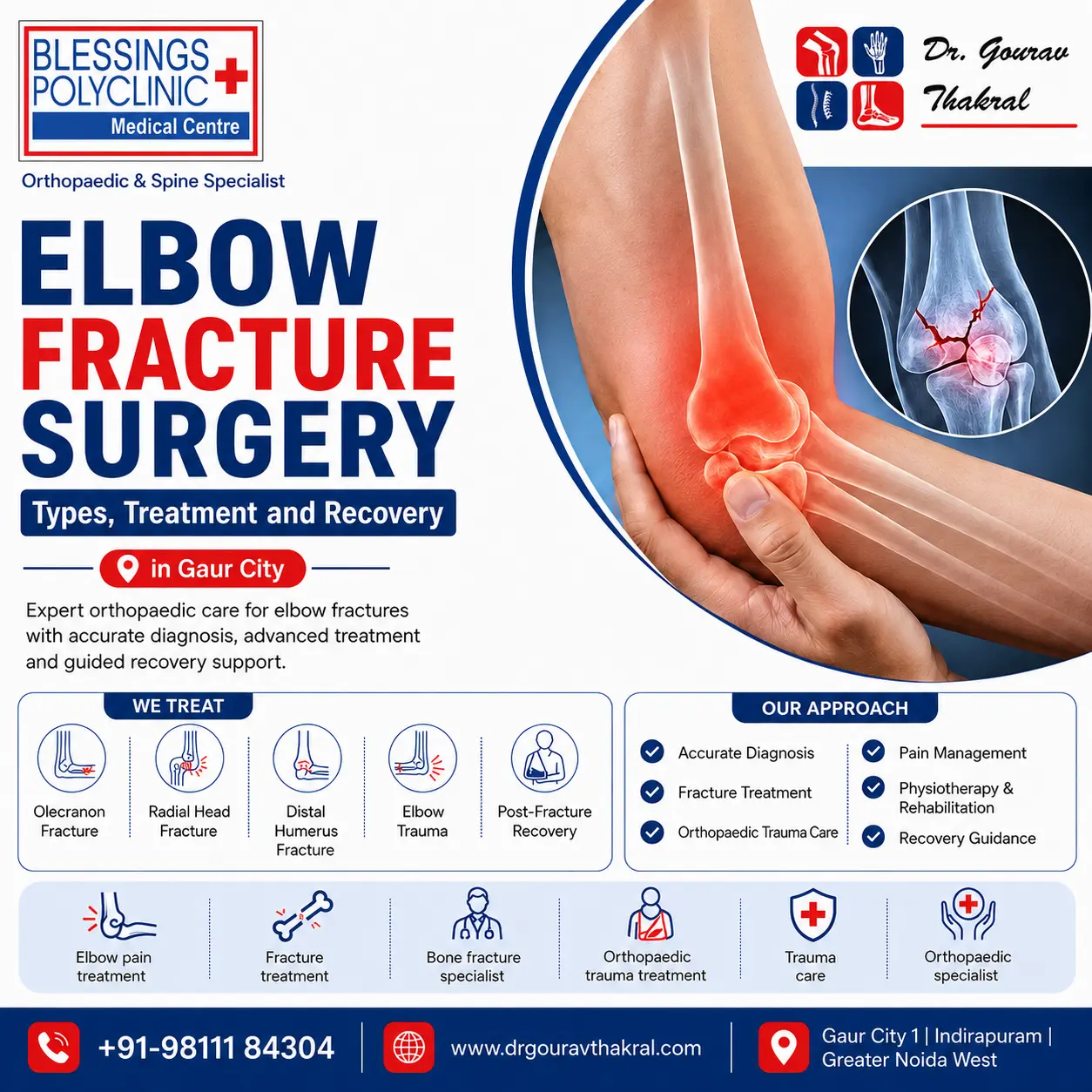
Elbow Fracture Surgery in Gaur City: Types, Treatment and Recovery
Elbow Fracture Surgery in Gaur City may become necessary when a broken elbow bone is displaced, unstable, complex, or affecting normal elbow movement. The elbow is an important joint for bending, straightening, lifting, eating, writing, working, and daily tasks. So, even a small fracture around the elbow can cause pain, swelling, stiffness, and movement difficulty.
An elbow fracture can happen after a fall, road accident, sports injury, direct impact, or sudden trauma. Some elbow fractures heal with a splint, sling, medicines, and physiotherapy. However, when the bone pieces move out of place or the joint becomes unstable, surgery may help restore alignment and support better recovery. Cleveland Clinic explains that elbow fractures may need surgical or non-surgical treatment depending on the severity of the break.
For patients looking for Elbow pain treatment, Fracture treatment, and advanced orthopaedic care in Gaur City, Dr. Gourav Thakral provides expert evaluation and treatment guidance. As an experienced Orthopaedic doctor, Orthopaedic specialist, and Bone fracture specialist, he helps patients understand the fracture type, treatment options, and recovery process.
What Is an Elbow Fracture?
An elbow fracture means one or more bones around the elbow joint have broken. The elbow joint includes the lower end of the upper arm bone, called the humerus, and the upper ends of the forearm bones, called the radius and ulna. A fracture may involve the olecranon, radial head, distal humerus, or other parts of the elbow joint.
The olecranon is the bony tip of the elbow. The radial head helps with forearm rotation. The distal humerus forms the upper part of the elbow joint. Since these bones work together for movement and stability, proper alignment is very important after injury.
If the fracture affects the joint surface, movement can become painful and stiff. That is why proper diagnosis matters before choosing treatment.
Common Causes of Elbow Fracture
Elbow fractures often happen when a person falls on an outstretched hand or directly on the elbow. A road accident, sports injury, workplace injury, or direct hit can also cause this fracture. In older adults, weak bones may increase the chance of fracture even after a simple fall.
High-energy injuries can sometimes cause complex fractures. In such cases, patients may need Orthopaedic trauma treatment and careful evaluation. Severe injuries may also affect nearby nerves, blood vessels, ligaments, or soft tissues.
You should not ignore elbow pain after an injury, especially if swelling, bruising, deformity, or movement difficulty appears.
Symptoms of Elbow Fracture
An elbow fracture usually causes sudden pain after injury. The patient may find it difficult to bend or straighten the elbow. Some people also feel pain while rotating the forearm, gripping objects, or lifting anything.
Common symptoms include:
Pain around the elbow
Swelling and bruising
Difficulty bending or straightening the elbow
Tenderness around the joint
Visible deformity after injury
Pain while using the hand or wrist
Numbness or tingling in the fingers
Weakness while lifting objects
If numbness, coldness, severe swelling, or finger movement difficulty occurs, urgent Trauma care is important. These symptoms may indicate nerve or blood vessel involvement.
When Is Elbow Fracture Surgery Needed?
Not every elbow fracture needs surgery. Simple and stable fractures may heal with immobilization and follow-up care. Surgery is usually considered when the fracture is displaced, unstable, open, joint-involving, or linked with ligament, nerve, or blood vessel injury.
Surgery may be needed when:
Bone pieces have shifted out of position
The elbow joint surface is affected
The fracture is unstable
The elbow cannot move properly
There is an open wound with fracture
Nerves or blood vessels are at risk
The fracture has multiple fragments
Non-surgical treatment cannot maintain alignment
AAOS explains that olecranon fractures may need non-surgical care when the bone pieces are not displaced, while surgery may be required when the pieces move out of place.
Types of Elbow Fracture Surgery
The type of surgery depends on the fracture location, bone quality, injury severity, and joint stability. The main goal is to restore alignment, fix the bone securely, and support safe movement during recovery.
Open Reduction and Internal Fixation
Open reduction and internal fixation, also called ORIF, is one of the common procedures for displaced elbow fractures. In this surgery, the surgeon places the broken bone pieces back into the correct position and fixes them with plates, screws, wires, or pins. Johns Hopkins Medicine explains that ORIF brings the bone pieces back into proper alignment and helps them heal.
Plate and Screw Fixation
Plate and screw fixation may help in complex fractures where the bone needs strong support. The surgeon uses metal implants to hold the bone fragments in the correct position. This method is often used when the fracture involves the joint surface or multiple pieces.
Tension Band Wiring
Tension band wiring may be used in selected olecranon fractures. It helps hold the broken pieces together and supports healing. The suitability depends on the fracture pattern and bone quality.
Pin Fixation
Some elbow fractures may need pins to hold the bone in place. This option depends on the patient’s age, fracture type, and stability.
External Fixation
In severe trauma, open fractures, or badly damaged soft tissues, the doctor may use external fixation in selected cases. This method supports the bone from outside the body while soft tissues heal.
Treatment Before Surgery
Before surgery, the doctor may use a splint or sling to protect the elbow and reduce pain. Medicines may help control swelling and discomfort. The doctor also checks finger movement, blood flow, skin condition, and nerve function.
X-rays are usually needed to understand the fracture. In complex cases, a CT scan may help the Orthopaedic specialist understand the fracture pattern more clearly. This helps in planning the safest treatment.
Recovery After Elbow Fracture Surgery
Recovery after elbow fracture surgery depends on the fracture type, surgery method, bone quality, swelling, stiffness, and physiotherapy. The elbow can become stiff quickly, so guided movement plays an important role.
After surgery, the elbow may be protected with a splint, brace, or sling for some time. The patient may need wound care, medicines, follow-up X-rays, and physiotherapy. AAOS notes that many patients start elbow and forearm motion exercises shortly after surgery, sometimes as early as the next day, depending on the injury and repair stability.
Cleveland Clinic also explains that many elbow fracture patients stay in a cast or splint for at least three to six weeks, and recovery time can vary depending on the injury.
Why Physiotherapy Is Important
Physiotherapy helps reduce stiffness and improve elbow movement after surgery. It also helps restore strength and daily function. The elbow joint needs careful rehabilitation because too much rest can increase stiffness, while too much force can affect healing.
Physiotherapy may include:
Gentle elbow bending and straightening
Forearm rotation exercises
Wrist and finger movement
Swelling control
Grip strengthening
Gradual return to daily activity
Patients should follow the doctor’s and physiotherapist’s advice. Regular exercises can improve recovery, but forceful movement without guidance may cause pain or complications.
Why Early Treatment Matters
Early treatment helps restore elbow alignment and reduces the risk of long-term stiffness, pain, weakness, and poor movement. Delayed treatment can make the fracture harder to correct, especially when the joint surface is involved.
A proper evaluation helps the doctor decide whether the fracture needs casting, bracing, physiotherapy, or surgery. Early care also helps detect nerve, blood vessel, or soft tissue problems after trauma.
For safe Fracture treatment, patients should avoid self-treatment after a serious elbow injury. A timely consultation with a Bone fracture specialist can support better diagnosis and treatment planning.
Elbow Fracture Surgery in Gaur City by Dr. Gourav Thakral
If you are dealing with elbow pain, swelling, movement difficulty, or suspected fracture after an injury, Dr. Gourav Thakral can help with proper diagnosis and treatment planning. He evaluates the fracture type, X-ray findings, joint involvement, stability, and patient needs before suggesting treatment.
Patients searching for the Best orthopaedic care in Gaur City can consult Dr. Gourav Thakral for elbow fracture surgery, trauma care, fracture treatment, and recovery guidance. His treatment approach focuses on accurate diagnosis, safe healing, pain relief, and better movement.
Final Thoughts
Elbow fracture surgery may be needed when the broken bone is displaced, unstable, or affecting the joint surface. The right treatment depends on the fracture type, severity, and overall condition of the patient.
If you have elbow pain, swelling, deformity, or difficulty moving the arm after an injury, consult Dr. Gourav Thakral in Gaur City for proper evaluation and treatment guidance. Timely care can help restore alignment, reduce stiffness, and support better recovery.
FAQs
1. Does every elbow fracture need surgery?
No. Stable and non-displaced elbow fractures may heal with a splint, sling, medicines, and follow-up care. Surgery may be needed for displaced, unstable, or joint-involving fractures.
2. What are the common types of elbow fracture surgery?
Common options include open reduction and internal fixation, plate and screw fixation, tension band wiring, pin fixation, and external fixation in selected cases.
3. How long does elbow fracture recovery take?
Recovery varies from patient to patient. Some patients regain routine function in a few months, while complex fractures may need longer rehabilitation.
4. Is physiotherapy needed after elbow fracture surgery?
Yes. Physiotherapy helps reduce stiffness, improve movement, and restore strength after surgery.
5. What symptoms suggest an elbow fracture?
Pain, swelling, bruising, deformity, tenderness, and difficulty bending or straightening the elbow may suggest a fracture.