Shoulder Pain Treatment in Greater Noida West
Shoulder pain is one of the most common orthopaedic problems affecting people of all ages. It can interfere with daily activities like lifting objects, working on a computer, sleeping comfortably, driving, exercising, or even simple arm movement. Whether the pain is mild or severe, early diagnosis and proper treatment are important to avoid long-term stiffness and reduced movement.
If you are searching for Shoulder Pain Treatment in Greater Noida West, consult Dr. Gourav Thakral for advanced diagnosis, rehabilitation, and non-surgical treatment options designed to improve movement and reduce pain.
Understanding Shoulder Pain
The shoulder is a highly flexible joint made up of muscles, tendons, ligaments, and bones working together. Because of its wide range of motion, the shoulder is more vulnerable to injuries and strain.
Shoulder pain may develop suddenly after an injury or gradually due to repetitive activities and poor posture.
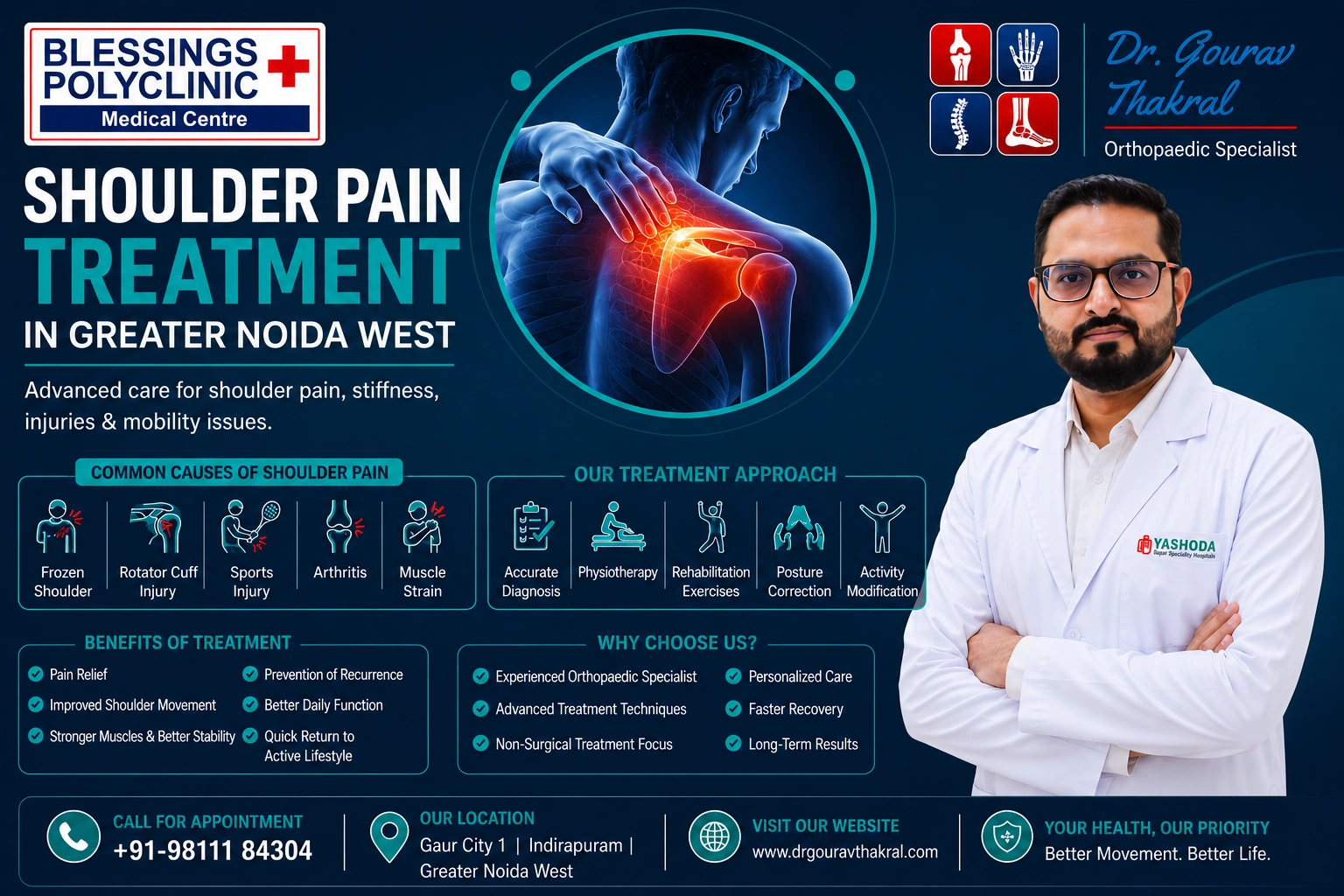
Common Causes of Shoulder Pain
Frozen Shoulder
Frozen shoulder causes stiffness, pain, and restricted movement. It commonly affects middle-aged individuals and patients with diabetes.
Rotator Cuff Injury
The rotator cuff muscles help stabilize shoulder movement. Injury or inflammation can lead to weakness and pain while lifting the arm.
Sports Injuries
Athletes and active individuals may experience shoulder injuries due to repetitive overhead movements or sudden impact.
Arthritis
Arthritis can damage shoulder joints and lead to swelling, stiffness, and difficulty in movement.
Muscle Strain
Poor posture, lifting heavy objects incorrectly, or overuse can strain shoulder muscles and ligaments.
Nerve Compression
Pain radiating from the neck or spine may sometimes affect the shoulder area.
Symptoms That Require Medical Attention
You should consult an orthopaedic specialist if you experience:
-
- Persistent shoulder pain
- Difficulty lifting the arm
- Stiffness in the shoulder joint
- Pain while sleeping
- Swelling or tenderness
- Clicking sounds during movement
- Weakness in the arm
- Pain after injury or fall
- Reduced shoulder movement
Ignoring these symptoms may worsen the condition and delay healing.
Diagnosis of Shoulder Problems
Accurate diagnosis is important to identify the exact cause of pain. A complete clinical examination helps determine whether the pain is due to muscle strain, tendon injury, arthritis, frozen shoulder, or nerve-related problems.
Diagnosis may include:
- Physical examination
- Range of motion assessment
- Posture analysis
- Strength testing
- Imaging if required
Proper evaluation helps create an effective treatment plan.
Shoulder Pain Treatment Options
Treatment depends on the severity of pain, movement restriction, age, activity level, and underlying condition.
Physiotherapy
Physiotherapy helps improve flexibility, strengthen muscles, and restore shoulder movement. Regular exercises also help reduce stiffness and prevent recurrence.
Rehabilitation Exercises
Rehabilitation programs are designed to improve arm function, flexibility, and muscle stability.
Posture Correction
Incorrect posture can increase stress on shoulder muscles and joints. Posture correction techniques help reduce pressure and improve movement.
Activity Modification
Temporary changes in daily activities may reduce irritation and support healing.
Non-Surgical Care
Many shoulder conditions improve successfully with non-surgical treatment and rehabilitation support.
Importance of Early Treatment
Delaying treatment may increase stiffness and reduce shoulder function. Early treatment improves recovery outcomes and helps patients return to normal activities more comfortably.
Proper Orthopaedic care focuses on reducing pain, restoring movement, and preventing future injury.
Shoulder Pain and Mobility Issues
Shoulder pain can affect mobility and daily function. Limited movement may make simple tasks difficult, such as:
- Dressing
- Lifting objects
- Working at a desk
- Exercising
- Driving
- Sleeping comfortably
Programs focused on Mobility improvement help patients regain confidence and normal movement.
Joint and Muscle Rehabilitation
Many patients benefit from therapies designed to reduce stiffness and improve flexibility. In some cases, Joint mobilization techniques may help improve shoulder movement and reduce tightness.
Treatment plans are designed according to each patient’s condition, activity level, and pain severity.
Pain Relief and Recovery Support
Managing pain is an important part of shoulder rehabilitation. Proper Pain management techniques help patients stay active during recovery and improve participation in therapy programs.
Patients often experience Faster recovery when treatment begins early and rehabilitation is followed consistently.
Personalized Shoulder Treatment Plans
Every shoulder condition is different. Factors such as age, injury type, occupation, posture, and muscle strength influence recovery.
A Personalized treatment approach helps create targeted rehabilitation and recovery strategies based on individual patient needs.
Why Choose Dr. Gourav Thakral?
Patients from Greater Noida West, Gaur City, Noida Extension, and nearby areas consult Dr. Gourav Thakral for advanced orthopaedic and rehabilitation support.
Reasons patients trust the clinic:
- Accurate diagnosis
- Non-surgical treatment focus
- Physiotherapy guidance
- Sports injury
- Shoulder mobility support
- Advanced rehabilitation techniques
- Long-term recovery planning
Tips to Prevent Shoulder Pain
- Maintain correct posture
- Avoid repetitive strain
- Warm up before exercise
- Strengthen shoulder muscles
- Avoid lifting heavy objects incorrectly
- Take breaks during long desk work
- Do stretching exercises regularly
FAQs
1. What is the most common cause of shoulder pain?
Frozen shoulder, rotator cuff injuries, arthritis, and muscle strain are common causes.
2. Can shoulder pain improve without surgery?
Yes, many shoulder conditions improve with physiotherapy, rehabilitation, posture correction, and non-surgical treatment.
3. Does physiotherapy help shoulder pain?
Yes, physiotherapy improves flexibility, movement, strength, and pain relief.
4. How long does shoulder pain recovery take?
Recovery time depends on the severity of the condition and patient response to treatment.
5. When should I consult a specialist for shoulder pain?
Consult a specialist if pain continues for several days, movement becomes restricted, or pain affects daily activities.