Osteochondritis Dissecans Knee Treatment in Greater Noida Gaur City
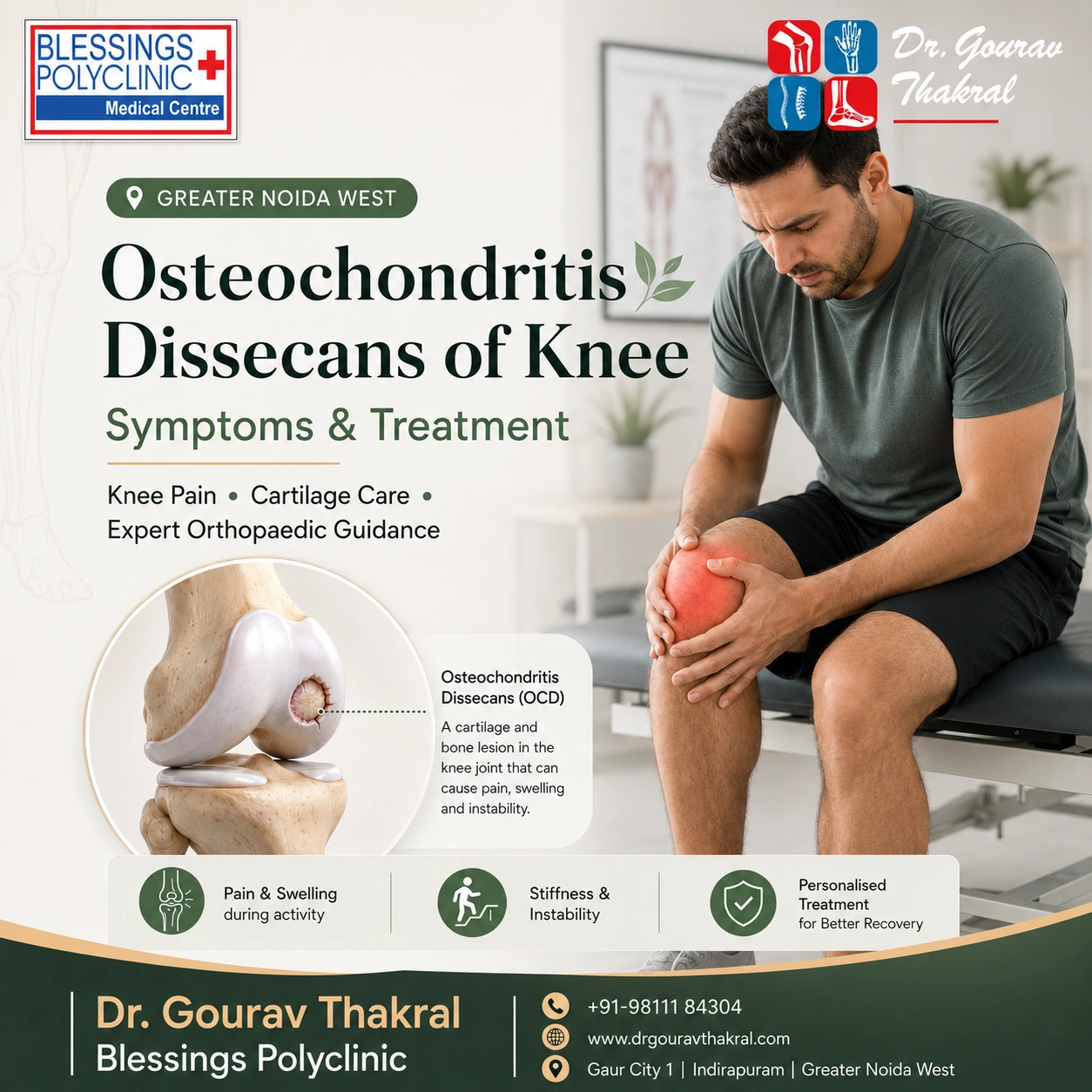
Osteochondritis Dissecans Knee Treatment is important when knee pain, swelling, locking, or stiffness affects walking, sports, stairs, or daily activity. This condition affects the bone and cartilage inside the knee joint. As a result, the knee may become painful, unstable, or difficult to move.
Osteochondritis dissecans of knee is often seen in active children, teenagers, and young adults. However, adults can also develop symptoms. It may happen when a small area of bone under the cartilage becomes weak due to reduced blood supply. Over time, the bone and cartilage may loosen. AAOS explains that osteochondritis dissecans can cause pain and swelling after sports or activity, and advanced cases may cause catching or locking in the joint.
For patients in Greater Noida West, Gaur City, and Indirapuram, Dr. Gourav Thakral provides expert orthopaedic evaluation for knee pain, sports injury, cartilage problems, and joint movement issues. As an experienced Orthopaedic Surgeon, Orthopaedic specialist, Spine & Pain Expert, and Joint Replacement Specialist, he helps patients choose the right treatment plan based on age, symptoms, MRI findings, and activity needs.
What Is Osteochondritis Dissecans of Knee?
Osteochondritis dissecans, also called OCD, is a knee condition where a small part of bone and cartilage becomes weak. If the problem progresses, the affected fragment may loosen inside the joint. Because of this, the knee may hurt, swell, catch, or lock.
This is not simple knee pain. It is a cartilage and bone problem that needs proper diagnosis. Mayo Clinic notes that osteochondritis dissecans mainly affects active children and teens between 10 and 20 years of age. It can also increase the risk of early osteoarthritis if the joint does not heal fully.
Common Symptoms of Osteochondritis Dissecans of Knee
Symptoms may start slowly. At first, pain may appear only after sports, running, jumping, or long walking. However, if the condition becomes worse, pain and swelling may affect daily movement too.
Common symptoms include:
- Knee pain during activity
- Swelling after walking or sports
- Knee stiffness
- Clicking or catching
- Locking sensation
- Pain while climbing stairs
- Difficulty running
- Reduced knee movement
- Feeling of knee instability
- Pain after repeated sports activity
If knee pain keeps coming back, timely Knee pain treatment in Greater Noida West, Gaur City, or Indirapuram can help prevent further joint problems.
Why Does This Condition Happen?
The exact cause is not always clear. However, repeated knee stress, minor injuries, sports activity, and reduced blood supply to the bone may play a role. Mayo Clinic says experts do not know the exact cause, but repeated small injuries over time may reduce blood flow to the end of the affected bone.
This is why athletes, runners, football players, cricketers, basketball players, and active young people may notice symptoms more often. Proper Sports injury treatment can help detect the issue early.
When Should You See an Orthopaedic Specialist?
You should consult an Orthopaedic specialist if knee pain continues, keeps returning, or affects sports and daily work. Also, do not ignore swelling, locking, or stiffness.
You should visit a doctor if:
- Knee pain lasts for many days
- Swelling appears after activity
- The knee locks or catches
- Running becomes painful
- Stairs become difficult
- The knee feels unstable
- Pain affects sports performance
- Movement becomes limited
Patients looking for an Orthopaedic Surgeon in Greater Noida West, Gaur City, or Indirapuram can consult Dr. Gourav Thakral for proper knee evaluation.
Diagnosis of Osteochondritis Dissecans
Diagnosis starts with a physical examination. The doctor checks pain location, swelling, movement, walking pattern, and knee stability.
Tests may include:
- X-ray
- MRI
- CT scan in selected cases
- Knee movement assessment
- Sports activity review
MRI is very useful because it shows cartilage condition, bone changes, and whether the lesion is stable or unstable. AAOS has a clinical guideline for osteochondritis dissecans of the knee that focuses on diagnosis and treatment in both growing and mature patients.
Treatment Options for Osteochondritis Dissecans
Treatment depends on age, lesion size, cartilage condition, symptoms, and whether the fragment is stable or loose.
1. Rest and Activity Modification
For young patients with stable lesions, rest and avoiding high-impact sports may help. AAOS explains that OCD lesions in children and young teens may heal on their own in many cases. Resting and avoiding vigorous sports can help reduce pain and swelling.
2. Physiotherapy
Physiotherapy helps improve knee strength, flexibility, balance, and movement control. It is especially useful when pain has reduced and the doctor allows exercise.
Physiotherapy may focus on:
- Quadriceps strengthening
- Hamstring flexibility
- Hip strengthening
- Balance training
- Safe walking pattern
- Gradual return to activity
3. Rehabilitation
Rehabilitation is important for safe recovery. It helps patients return to school, sports, gym, and daily routine without overloading the knee too early.
A good rehab plan supports:
- Better knee control
- Improved movement
- Reduced stiffness
- Safer return to sports
- Long-term joint protection
4. Pain Management
Proper pain management greater noida can reduce discomfort and improve daily movement. It may include medicines, activity changes, icing, bracing, or other treatment as advised.
However, painkillers alone cannot fix cartilage damage. So, diagnosis matters.
5. Arthroscopic Surgery
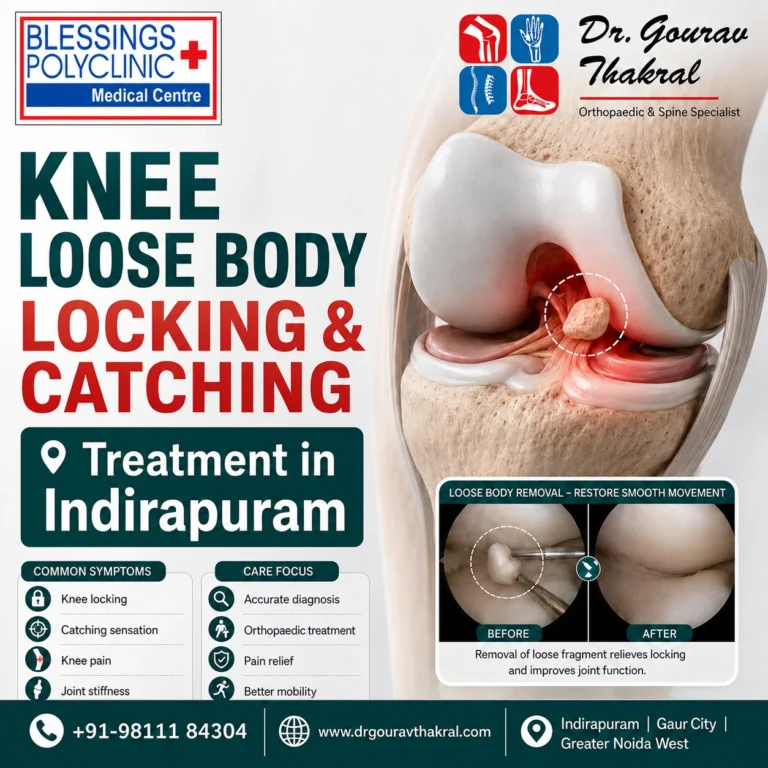
Arthroscopic surgery guar city may be needed when the fragment becomes unstable, loose, or symptoms continue despite proper non-surgical care. Surgery may include drilling, fixation, loose body removal, or cartilage repair depending on the condition.
A medical review explains that surgical options may include debridement, loose body removal, microfracture, arthroscopic fixation, subchondral drilling, and cartilage restoration procedures in selected cases.
Sports Injury Treatment and Return to Activity
Osteochondritis dissecans can affect athletes because the knee faces repeated stress during running, jumping, turning, and landing. Therefore, Sports injury treatment gaur city should not only reduce pain. It should also protect the cartilage and guide safe return to activity.
The doctor may advise a gradual return plan after symptoms improve and imaging shows healing. Returning too early can worsen pain or delay recovery.
Joint Pain Treatment in Greater Noida West, Gaur City and Indirapuram
Patients often search for Joint pain treatment gaur city when knee pain affects walking, stairs, or sports. However, joint pain can happen due to many causes such as cartilage injury, ligament injury, meniscus tear, arthritis, infection, or sports injury.
That is why personalized treatment is important. Dr. Gourav Thakral checks the exact cause before advising medicines, physiotherapy, rehabilitation, injection, arthroscopic surgery, or advanced orthopaedic treatment.
Is Joint Replacement Surgery Needed?
Most patients with osteochondritis dissecans do not need Joint replacement surgery indirapuram, especially young patients. Treatment usually focuses on cartilage healing, pain control, rehabilitation, and joint preservation.
However, if severe cartilage damage leads to advanced arthritis later in life, a Joint Replacement Specialist may evaluate long-term options. This is why early diagnosis can help protect the joint.
What About Foot & Ankle Disorders?
Some patients with knee pain also have abnormal walking patterns, flat foot, ankle instability, or other Foot & ankle disorders. These issues can change knee loading and increase discomfort.
During evaluation, the doctor may check foot alignment, walking pattern, and lower-limb mechanics if needed. This helps create a better treatment plan.
Why Choose Dr. Gourav Thakral?
Dr. Gourav Thakral provides orthopaedic care for knee pain, sports injuries, cartilage problems, spine pain, joint problems, and muscle conditions. Patients from Greater Noida West, Gaur City, and Indirapuram can consult for diagnosis and treatment planning.
Care may include:
- Expert evaluation by an Orthopaedic Surgeon
- Guidance from a Spine & Pain Expert
- Knee pain treatment for activity-related pain
- Sports injury treatment and safe return planning
- Physiotherapy and Rehabilitation support
- Arthroscopic surgery when needed
- Advanced orthopaedic treatment for complex cases
- Long-term joint health guidance
Final Thoughts
Osteochondritis dissecans of knee can cause pain, swelling, stiffness, locking, and sports-related discomfort. Early diagnosis helps protect cartilage and prevent worsening joint damage.
For Osteochondritis Dissecans Knee Treatment in Greater Noida West, Gaur City, and Indirapuram, consult Dr. Gourav Thakral at Blessings Polyclinic for expert orthopaedic evaluation and treatment planning.
FAQs
1. What is osteochondritis dissecans of knee?
It is a knee condition where a small area of bone and cartilage becomes weak due to reduced blood supply. It can cause pain, swelling, and locking.
2. Who is at risk?
Active children, teenagers, athletes, and young adults are more commonly affected. However, adults can also develop symptoms.
3. Can it heal without surgery?
Yes. Stable lesions in growing children may heal with rest, activity restriction, physiotherapy, and follow-up.
4. When is arthroscopic surgery needed?
Arthroscopic surgery may be needed when the fragment is loose, unstable, or symptoms continue despite non-surgical treatment.
5. Can physiotherapy help?
Yes. Physiotherapy helps improve strength, movement, balance, and safe return to activity.