Orthopaedic Specialist in Gaur City: Joint, Bone & Mobility Care
Orthopaedic Specialist in Gaur City may be needed when joint pain, bone problems, stiffness, swelling, weakness, sports injuries, or movement difficulty starts affecting daily life.
Orthopaedic problems can involve the knees, hips, shoulders, elbows, wrists, spine, ankles, or feet. Therefore, the right treatment starts with identifying the exact source of pain.
People looking for an Orthopaedic specialist in Gaur City can consult Dr. Gourav Thakral for a detailed evaluation and personalised treatment guidance.
Early care can help reduce pain, improve movement, restore strength, and prevent symptoms from becoming worse.
What Does an Orthopaedic Specialist Treat?
An orthopaedic specialist treats problems related to bones, joints, muscles, tendons, ligaments, and movement.
Common conditions include:
- Knee pain
- Hip pain
- Shoulder pain
- Back pain
- Neck pain
- Wrist pain
- Elbow pain
- Foot and ankle problems
- Fractures
- Sports injuries
- Arthritis
- Ligament injuries
- Tendon problems
Because these problems can have different causes, proper diagnosis is important.
When Should You Consult an Orthopaedic Specialist?
You may need an orthopaedic consultation if:
- Joint pain keeps returning
- Swelling develops
- Movement becomes limited
- Walking becomes difficult
- Pain affects sleep
- A sports injury does not improve
- Weakness develops
- Pain starts after a fall
- An old injury causes stiffness
Early evaluation can make treatment simpler.
Orthopaedic Specialist in Gaur City
An Orthopaedic specialist in Gaur City can assess problems involving bones, joints, muscles, tendons, ligaments, and the spine.
During consultation, the doctor may ask:
- When did the pain start?
- Which movement makes it worse?
- Is swelling present?
- Is there weakness?
- Was there an injury?
- Does pain affect walking?
- Is stiffness present?
After that, the affected joint or body part may be examined.
Orthopaedic Care in Gaur City
Orthopaedic care in Gaur City may include both non-surgical and surgical treatment depending on the condition.
Treatment may include:
- Medicines
- Physiotherapy
- Activity modification
- Strengthening
- Stretching
- Joint support
- Posture correction
- Sports rehabilitation
- Injections in selected cases
- Surgery when required
Most importantly, treatment should match the diagnosis.
Joint Pain Treatment in Gaur City
Joint pain treatment in Gaur City may be needed when pain affects the knee, hip, shoulder, elbow, wrist, ankle, or fingers.
Common causes include:
- Arthritis
- Overuse
- Sports injury
- Tendon irritation
- Ligament injury
- Previous fracture
- Muscle weakness
For this reason, joint pain should not always be treated with painkillers alone.
A full evaluation can help find the cause.
Knee Pain Treatment
Knee pain is common in adults and active individuals.
Possible causes include:
- Arthritis
- Ligament strain
- Meniscus problems
- Tendon irritation
- Sports injury
- Overuse
Treatment may include physiotherapy, medicines, strengthening, and activity changes.
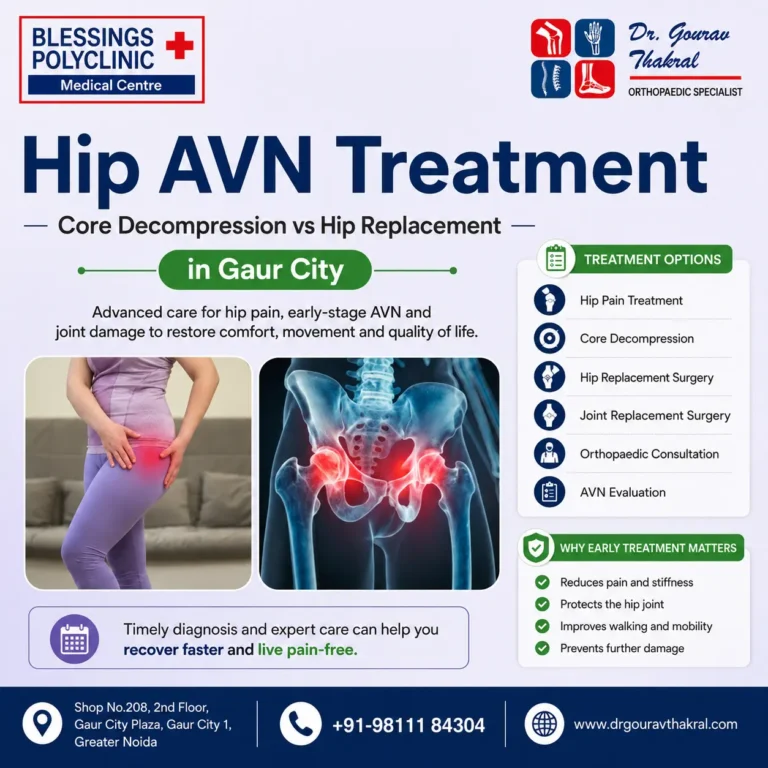
Hip Pain Treatment
Hip pain may affect walking, stairs, sitting, and exercise.
Common causes include:
- Muscle strain
- Tendon problems
- Arthritis
- Hip impingement
- Sports injury
In many cases, early treatment can improve movement and reduce pain.
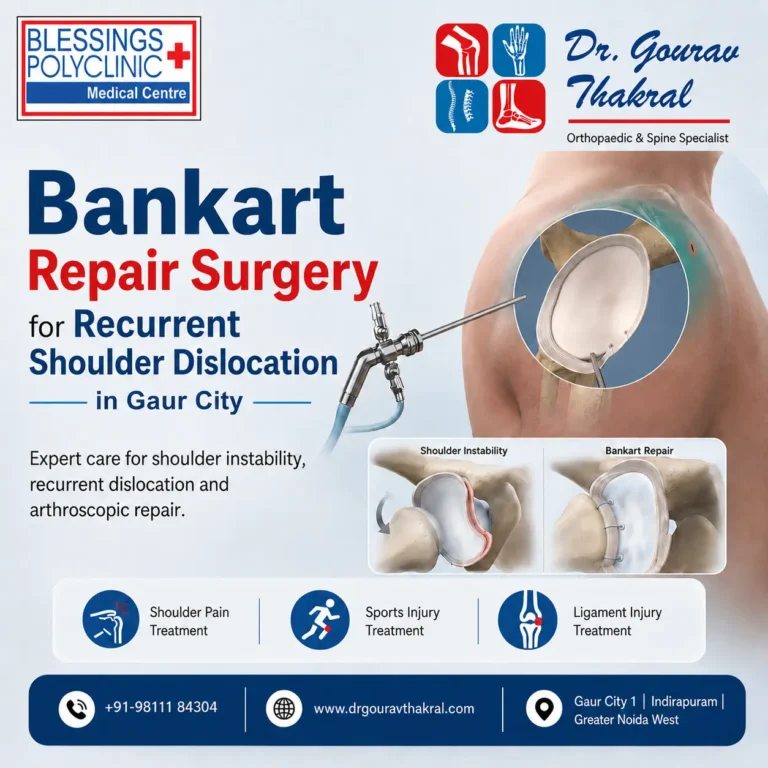
Shoulder Pain Treatment
Shoulder pain may develop because of:
- Rotator cuff problems
- Tendon irritation
- Shoulder impingement
- Sports injury
- Arthritis
- Previous fall
Treatment often focuses on improving movement and strength.
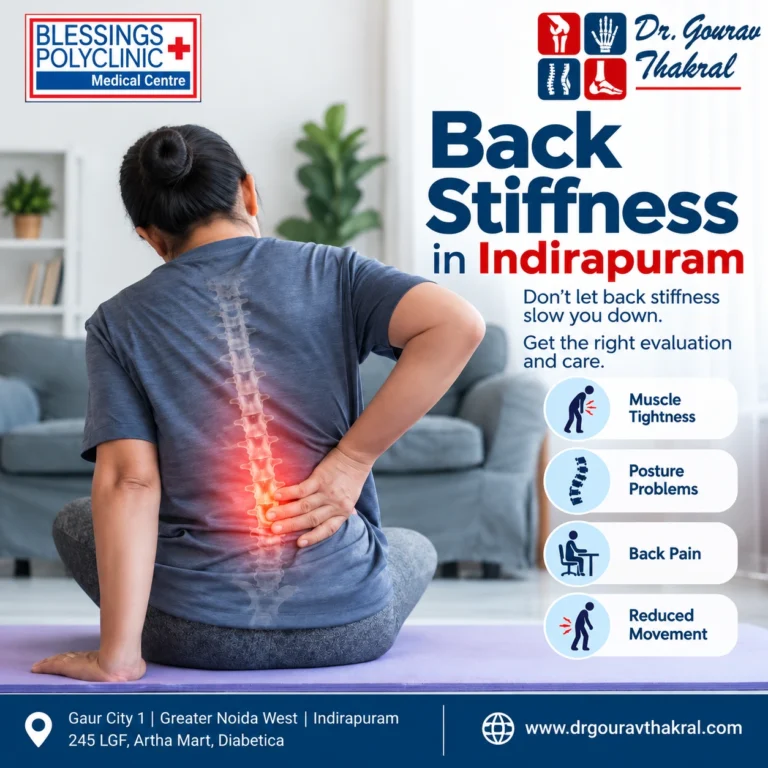
Back and Neck Pain
Back and neck problems may develop because of posture, muscle strain, disc problems, or nerve pressure.
Symptoms may include:
- Pain
- Stiffness
- Numbness
- Tingling
- Weakness
Therefore, spine-related symptoms may need a detailed orthopaedic evaluation.
Sports Injury Care
Sports injuries can affect muscles, tendons, ligaments, and joints.
Common problems include:
- ACL injury
- Shoulder strain
- Ankle sprain
- Tennis elbow
- Muscle strain
- Meniscus injury
A structured rehabilitation plan can help support a safer return to sports.
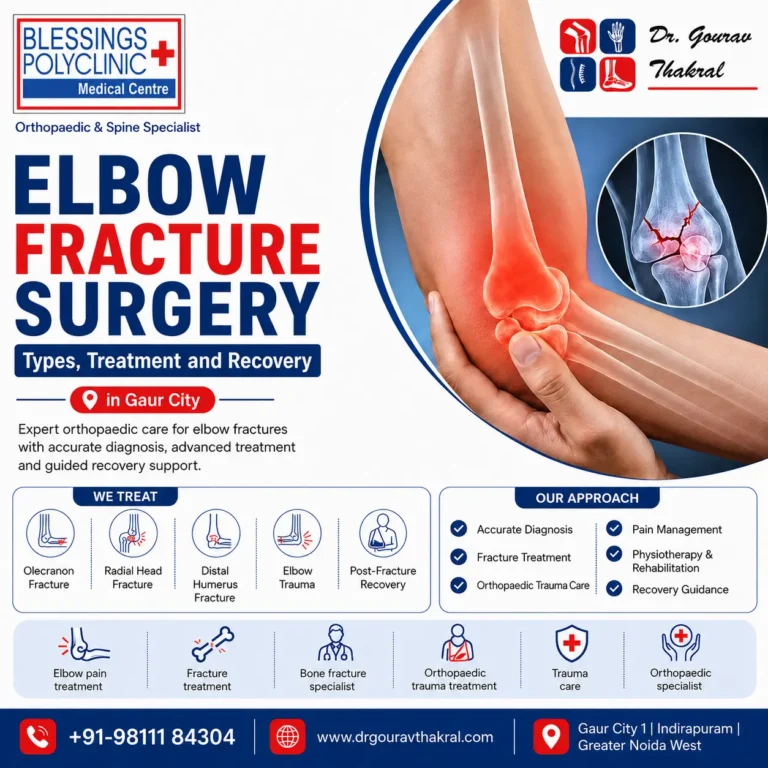
Fracture Care
A fracture may happen after a fall, accident, or sports injury.
Possible signs include:
- Severe pain
- Swelling
- Bruising
- Reduced movement
- Deformity
An X-ray may be needed to confirm the fracture.
Treatment may include support, casting, fixation, or surgery depending on the injury.
Arthritis Care
Arthritis can cause:
- Joint pain
- Morning stiffness
- Swelling
- Reduced movement
- Difficulty walking
Treatment depends on the type and severity of arthritis.
In addition, physiotherapy and strengthening may help maintain movement.
Diagnosis in Orthopaedic Care
A detailed examination may include:
- Joint movement
- Muscle strength
- Tenderness
- Swelling
- Walking pattern
- Joint stability
- Nerve function
If needed, imaging may also be advised.
X-Ray
An X-ray may help identify:
- Fractures
- Arthritis
- Bone alignment
- Joint changes
- Old injuries
However, soft tissues are not shown clearly on X-rays.
MRI Scan
MRI may be advised when the doctor needs more detail about:
- Ligaments
- Tendons
- Cartilage
- Meniscus
- Discs
- Nerves
The decision depends on the symptoms and examination findings.
Non-Surgical Orthopaedic Treatment
Many orthopaedic problems improve without surgery.
Treatment may include:
- Medicines
- Physiotherapy
- Strengthening
- Stretching
- Activity modification
- Joint support
- Posture correction
- Sports rehabilitation
Therefore, surgery is not always the first option.
Physiotherapy
Physiotherapy may help:
- Improve movement
- Reduce stiffness
- Strengthen muscles
- Improve balance
- Support joint stability
- Help return to activity
A suitable programme should match the exact condition.
Joint Replacement Specialist in Gaur City
A Joint Replacement specialist in Gaur City may be involved when joint damage becomes severe and everyday movement is significantly affected.
Joint replacement may be considered for advanced problems involving:
- Knee
- Hip
- Other major joints
However, replacement surgery is not needed for every patient.
Before considering surgery, treatment may include:
- Medicines
- Physiotherapy
- Activity changes
- Weight management
- Injections in selected cases
The decision depends on pain, movement, joint damage, and daily function.
When Is Joint Replacement Considered?
Joint replacement may be considered when:
- Joint pain is severe
- Walking becomes difficult
- Daily activities are badly affected
- Joint damage is advanced
- Non-surgical treatment has not helped
The final decision is based on the patient’s condition and imaging.
Can Orthopaedic Problems Improve Without Surgery?
Yes. Many problems improve with non-surgical care.
For example, treatment may include physiotherapy, exercise, medicines, and activity changes.
However, recovery time varies depending on the condition.
Warning Signs You Should Not Ignore
Seek medical care if you have:
- Severe swelling
- Inability to walk
- Visible deformity
- Sudden weakness
- Severe pain after injury
- Increasing numbness
- Joint locking
- Pain that keeps getting worse
These symptoms may need early treatment.
Tips for Better Joint and Bone Health
Helpful habits include:
- Stay physically active
- Warm up before exercise
- Maintain a healthy body weight
- Strengthen muscles
- Use proper lifting technique
- Maintain good posture
- Avoid sudden training increases
- Treat injuries early
- Take recovery days
In addition, regular movement can help maintain joint flexibility.
Why Choose Dr. Gourav Thakral?
Dr. Gourav Thakral provides orthopaedic care for joint pain, bone problems, sports injuries, fractures, arthritis, and movement-related conditions.
Patients looking for an Orthopaedic specialist in Gaur City can consult him for a detailed evaluation and personalised treatment plan.
The treatment approach focuses on:
- Finding the cause of pain
- Reducing discomfort
- Improving movement
- Restoring strength
- Supporting joint health
- Helping recovery after injury
- Preventing repeat problems
- Considering surgery only when required
Conclusion
Orthopaedic problems may affect bones, joints, muscles, tendons, ligaments, and the spine.
For Orthopaedic Specialist in Gaur City, consult Dr. Gourav Thakral for joint evaluation, fracture care, sports injury management, physiotherapy guidance, and personalised orthopaedic care in Gaur City.
Early diagnosis can help reduce pain, improve movement, and support better daily function.
FAQs
1. What problems does an orthopaedic specialist treat?
An orthopaedic specialist treats joint pain, fractures, sports injuries, arthritis, tendon problems, ligament injuries, and spine-related conditions.
2. Do all orthopaedic problems need surgery?
No. Many problems improve with medicines, physiotherapy, strengthening, and activity changes.
3. When should I see an orthopaedic specialist?
Consult a specialist when pain continues, swelling develops, movement becomes limited, or an injury does not improve.
4. Can physiotherapy help joint pain?
Yes. Physiotherapy may improve strength, flexibility, movement, and joint stability.
5. When is joint replacement required?
Joint replacement may be considered when joint damage is severe and daily activity is significantly affected.
6. Can sports injuries be treated without surgery?
Yes. Many sports injuries improve with rehabilitation, strengthening, and activity modification.