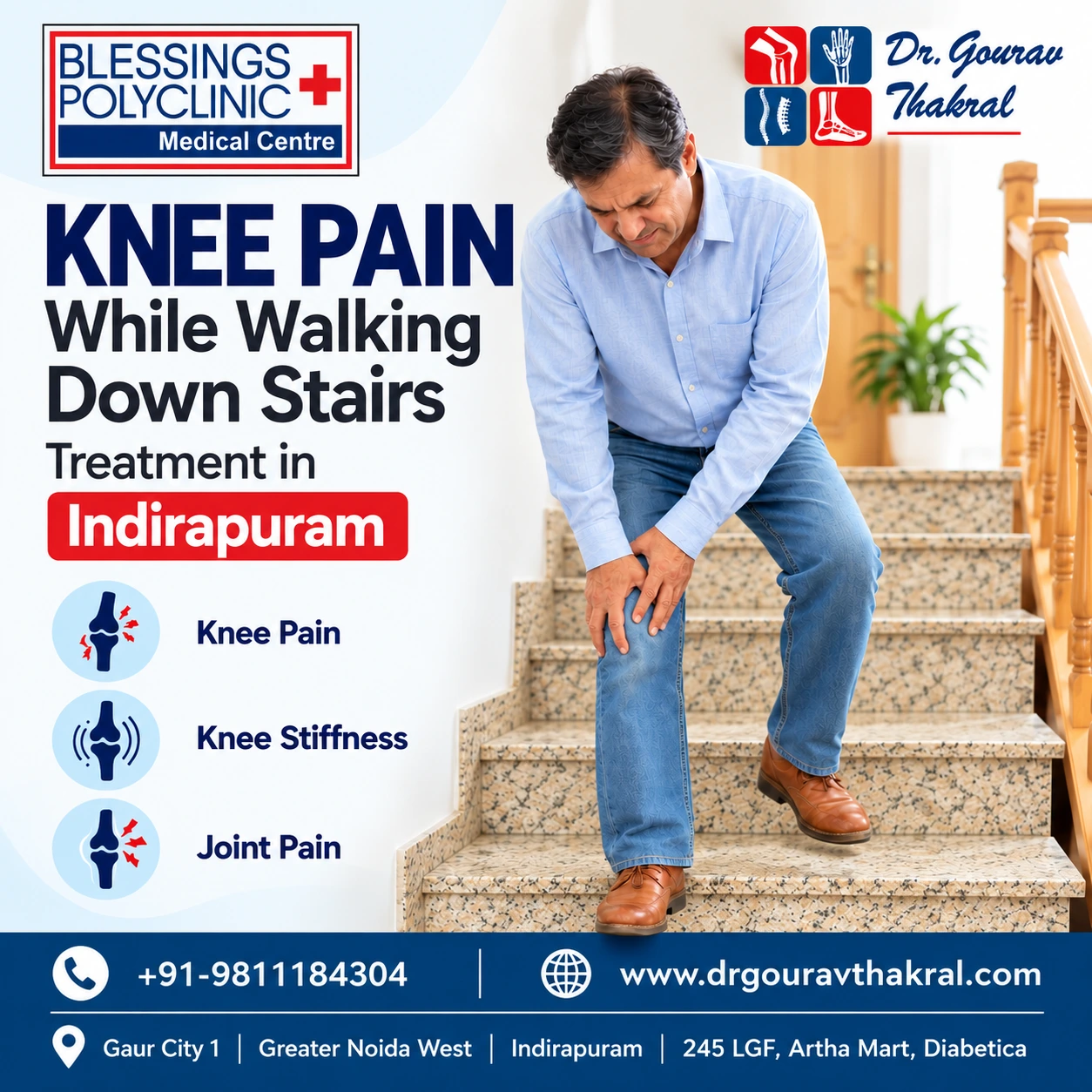
Knee Pain While Walking Down Stairs Treatment in Indirapuram
Knee Pain While Walking Down Stairs Treatment in Indirapuram may be needed when descending stairs causes pain around the kneecap, stiffness, weakness, clicking, or discomfort inside the knee.
Walking downstairs places extra pressure on the knee because the muscles must control the body while the knee bends. Therefore, pain during this movement may be linked to kneecap irritation, weak thigh muscles, arthritis, tendon strain, or another joint problem.
People looking for knee pain treatment in Indirapuram can consult Dr. Gourav Thakral for a detailed orthopaedic evaluation.
Early care can help reduce pain, improve knee movement, restore strength, and make stairs more comfortable.
Why Does the Knee Hurt While Walking Down Stairs?
Going downstairs requires controlled bending of the knee. As a result, the kneecap and surrounding muscles work harder than during normal walking.
Common causes include:
- Patellofemoral pain
- Kneecap irritation
- Weak quadriceps muscles
- Arthritis
- Tendon problems
- Meniscus irritation
- Previous knee injury
- Poor movement control
- Muscle imbalance
- Overuse
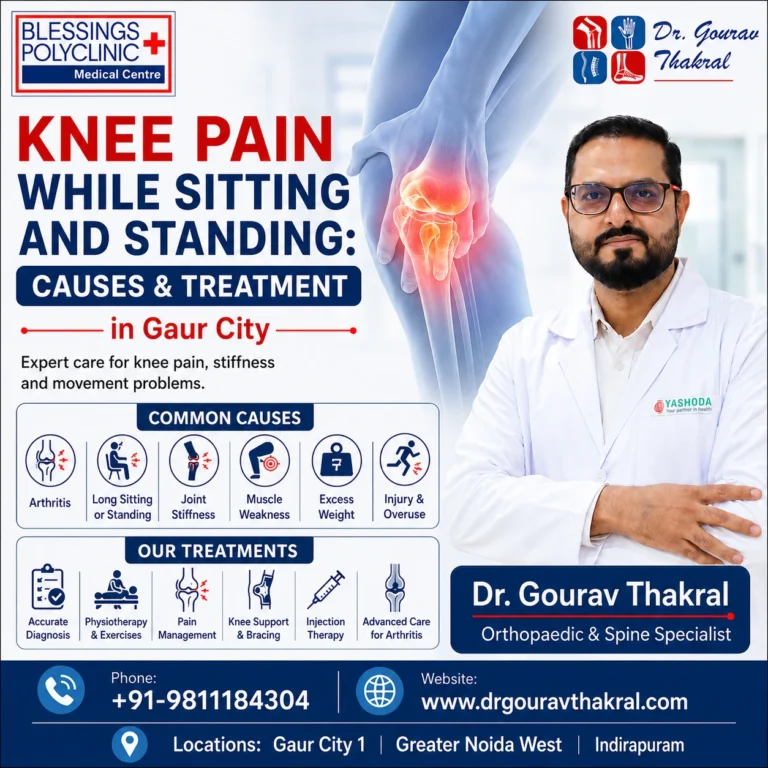
Because several conditions can cause similar symptoms, proper diagnosis is important.
Common Symptoms
Symptoms may appear only during stairs at first. However, they can later affect other activities.
Common signs include:
- Pain around the kneecap
- Pain while walking downstairs
- Pain while getting up from a chair
- Knee stiffness
- Clicking
- Mild swelling
- Weakness
- Pain during squats
- Pain after long sitting
- Difficulty bending the knee
If these symptoms keep returning, Knee Pain While Walking Down Stairs Treatment in Indirapuram may help identify the cause.
Patellofemoral Pain
Patellofemoral pain is a common reason for pain around the front of the knee.
It may become worse during:
- Stairs
- Squatting
- Running
- Sitting for long periods
- Getting up from a chair
Muscle weakness or poor kneecap movement may contribute to the problem. Therefore, treatment often focuses on strengthening and movement correction.
Knee Arthritis
Arthritis may cause pain, stiffness, swelling, and reduced movement.
For example, some people notice more pain while going downstairs because the knee joint is under greater load.
Symptoms may include:
- Joint pain
- Morning stiffness
- Swelling
- Difficulty bending
- Pain during stairs
People looking for joint pain treatment in Indirapuram may benefit from a full knee assessment.
Knee Stiffness
A stiff knee may not bend smoothly while going downstairs.
Common causes include:
- Arthritis
- Previous injury
- Muscle tightness
- Lack of movement
- Joint swelling
Therefore, knee stiffness treatment in Indirapuram may focus on restoring movement, reducing pain, and improving strength.
Weak Thigh Muscles
The quadriceps muscles help control the knee while walking downstairs.
If these muscles are weak, the knee may take more stress. As a result, pain around the kneecap may increase.
Strengthening exercises can often help improve control.
Tendon Problems
Tendons around the knee may become irritated because of repeated activity.
This may happen after:
- Running
- Jumping
- Gym workouts
- Repeated stair use
- Sudden increase in exercise
Symptoms can include pain, tenderness, and stiffness.
Fortunately, many tendon problems improve with activity changes and physiotherapy.
Meniscus Problems
The meniscus acts like a cushion inside the knee.
Injury or irritation may cause:
- Pain
- Clicking
- Catching
- Swelling
- Difficulty bending
However, not every click means a meniscus tear. A proper examination can help identify the cause.
Knee Pain Treatment in Indirapuram
Knee pain treatment in Indirapuram starts with finding the exact cause of pain.
First, the doctor may ask when symptoms started. Next, activities such as walking downstairs, squatting, sitting, and exercising are discussed.
Questions may include:
- Is pain mainly in front of the knee?
- Is swelling present?
- Does the knee click?
- Is stiffness worse in the morning?
- Does squatting increase pain?
- Was there a previous injury?
- Does the knee feel weak?
Afterward, knee movement, strength, stability, and walking pattern may be checked.
Diagnosis of Knee Pain
A physical examination may include:
- Knee movement
- Swelling
- Tenderness
- Muscle strength
- Kneecap movement
- Joint stability
- Walking pattern
- Stair movement
If needed, imaging may also be advised.
X-Ray
An X-ray may help identify:
- Arthritis
- Bone alignment
- Joint-space changes
- Previous fracture
- Bone-related problems
However, X-rays do not show ligaments and meniscus clearly.
MRI Scan
MRI may be advised when the doctor suspects:
- Meniscus injury
- Ligament injury
- Cartilage damage
- Tendon problems
Therefore, MRI is usually considered when symptoms or examination findings suggest a soft-tissue problem.
Non-Surgical Knee Pain Treatment
Many cases improve without surgery.
Treatment may include:
- Activity modification
- Medicines
- Ice
- Physiotherapy
- Knee strengthening
- Hip strengthening
- Stretching
- Movement correction
- Weight management
- Joint support
Most importantly, treatment should match the exact diagnosis.
Physiotherapy for Knee Pain
Physiotherapy may help improve knee strength and control.
A programme may include:
- Quadriceps strengthening
- Hamstring exercises
- Hip strengthening
- Balance training
- Knee mobility
- Stair-control exercises
In addition, exercise intensity can be increased gradually as symptoms improve.
Knee Care in Indirapuram
Good knee care in Indirapuram focuses on reducing strain and improving movement.
Helpful steps may include:
- Strengthening thigh muscles
- Maintaining healthy body weight
- Avoiding sudden training increases
- Improving stair technique
- Wearing suitable footwear
- Taking recovery breaks
As a result, the knee may handle daily movement more comfortably.
Joint Pain Treatment in Indirapuram
Joint pain treatment in Indirapuram may be useful when knee pain occurs with stiffness, swelling, or pain in other joints.
For example, pain may also affect the:
- Hip
- Ankle
- Lower back
- Other knee
A complete evaluation can help identify whether arthritis, overuse, or another problem is present.
Knee Stiffness Treatment in Indirapuram
Knee stiffness treatment in Indirapuram may be needed when movement becomes limited after sitting, waking up, or walking.
Treatment may include:
- Physiotherapy
- Stretching
- Strengthening
- Activity changes
- Medicines
- Joint support
Regular movement may also help reduce stiffness.
Role of an Orthopaedic Doctor in Indirapuram
An Orthopaedic doctor in Indirapuram can assess knee pain related to bones, joints, muscles, tendons, ligaments, and cartilage.
During the visit, the doctor may:
- Check knee movement
- Assess swelling
- Test muscle strength
- Check kneecap movement
- Review X-rays or MRI
- Plan physiotherapy
- Suggest further treatment if needed
Therefore, early evaluation can help prevent symptoms from getting worse.
Can Knee Pain Affect Walking?
Yes. Pain can change the way a person walks.
As a result, extra stress may move to the:
- Hip
- Ankle
- Other knee
- Lower back
Long-lasting knee pain should not be ignored.
Can You Continue Using Stairs With Knee Pain?
It depends on the severity of symptoms.
If stairs cause sharp pain, swelling, or weakness, reduce repeated stair use for a short time.
Instead, physiotherapy may help improve:
- Knee strength
- Hip strength
- Balance
- Movement control
Once symptoms improve, stair activity can be increased gradually.
Can Squats Make the Pain Worse?
Sometimes. Deep squats also increase pressure around the kneecap.
If squatting causes pain, reduce the depth or resistance until the cause is clear.
Proper technique and strengthening may help later.
When Is Surgery Needed?
Most cases do not need surgery.
However, surgery may be considered when:
- Severe joint damage is present
- A major meniscus injury causes locking
- Pain continues despite proper treatment
- Knee movement remains badly limited
The decision depends on symptoms, examination findings, and imaging.
Warning Signs You Should Not Ignore
Seek medical care if you have:
- Severe swelling
- Inability to put weight on the knee
- Knee locking
- Repeated giving way
- Severe pain after injury
- Major weakness
- Visible deformity
- Rapidly worsening pain
These symptoms may need early treatment.
When Should You Visit a Doctor?
Consider an orthopaedic consultation if:
- Stair pain continues for several days
- Knee swelling develops
- Stiffness keeps returning
- Walking becomes difficult
- Clicking becomes painful
- The knee feels weak
- Home care does not help
Early assessment can make treatment easier.
Tips to Reduce Knee Pain on Stairs
Helpful habits include:
- Use the handrail when needed
- Take controlled steps
- Avoid rushing downstairs
- Strengthen thigh muscles
- Improve hip strength
- Wear supportive footwear
- Avoid sudden training increases
- Maintain a healthy body weight
- Treat knee pain early
In addition, physiotherapy can help improve movement control.
Why Choose Dr. Gourav Thakral for Knee Pain While Walking Down Stairs Treatment in Indirapuram?
Dr. Gourav Thakral provides orthopaedic care for knee pain, stiffness, arthritis, sports injuries, and movement-related knee conditions.
Patients looking for Knee Pain While Walking Down Stairs Treatment in Indirapuram can consult him for a detailed examination and personalised treatment plan.
The treatment approach focuses on:
- Finding the cause of pain
- Reducing stiffness
- Improving knee movement
- Restoring muscle strength
- Improving stair control
- Supporting better walking
- Preventing repeat symptoms
- Considering surgery only when required
Conclusion
Knee pain while walking downstairs may develop because of kneecap irritation, arthritis, muscle weakness, tendon problems, meniscus irritation, or previous injury.
For Knee Pain While Walking Down Stairs Treatment in Indirapuram, consult Dr. Gourav Thakral for knee evaluation, physiotherapy guidance, joint pain care, and personalised orthopaedic treatment.
Early diagnosis can help reduce pain, improve strength, and make stairs and daily movement more comfortable.
FAQs
1. Why does my knee hurt more while going downstairs?
Going downstairs increases pressure around the kneecap and requires more muscle control, which can make existing knee problems more painful.
2. Can weak muscles cause stair pain?
Yes. Weak thigh or hip muscles may reduce knee control and increase stress on the joint.
3. Can arthritis cause pain while going downstairs?
Yes. Arthritis can cause pain, stiffness, and swelling during stairs and other weight-bearing activities.
4. Can physiotherapy help?
Yes. Physiotherapy may improve knee strength, movement, balance, and stair control.
5. Is clicking while using stairs serious?
Not always. However, painful clicking with swelling or locking should be evaluated.
6. Can knee stiffness make stairs difficult?
Yes. Reduced knee movement can make bending and controlling the leg during stairs uncomfortable.