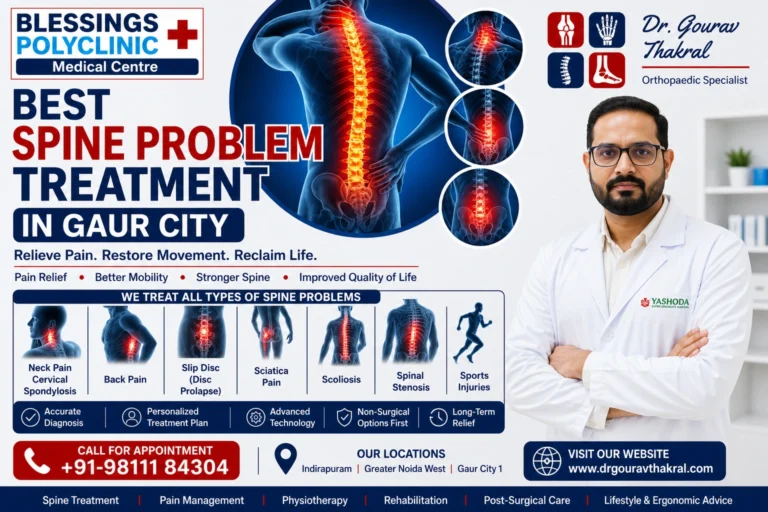
Best Non-Surgical Spine Treatment In Greater Noida West
Back pain, neck stiffness, leg pain, numbness, or difficulty sitting for long hours should not be ignored. These symptoms may develop because of poor posture, muscle strain, a slip disc, sciatica, nerve pressure, or age-related changes in the spine.
Non-surgical spine treatment in Greater Noida West can help manage many spine conditions without immediately choosing an operation. Depending on the problem, treatment may include medicines, physiotherapy, posture correction, exercises, lifestyle changes, and pain-relief methods.
Dr. Gourav Thakral provides orthopaedic and spine evaluation for back pain, neck pain, slip disc, sciatica, stiffness, weakness, and movement-related problems.
First, the cause of the symptoms is checked. After that, a personalised treatment plan is prepared according to the patient’s condition, age, daily routine, and activity level.
What Is Non-Surgical Spine Treatment?
Non-surgical spine treatment includes methods that do not require an operation. Instead, the main goals are to reduce pain, improve movement, strengthen the supporting muscles, and reduce pressure on the nerves.
Many spine conditions improve with conservative care. However, the treatment must match the exact cause of the symptoms.
Non-surgical care may include:
- Medicines
- Physiotherapy
- Posture correction
- Back-strengthening exercises
- Core-strengthening exercises
- Activity changes
- Workstation correction
- Weight-management guidance
- Heat or cold therapy
- Bracing in selected cases
- Injection treatment when suitable
Moreover, proper guidance can help patients understand which activities are safe and which movements may worsen their symptoms.
Common Spine Problems
The spine supports the body and protects the spinal cord. It also allows bending, twisting, sitting, standing, and walking.
Therefore, problems in the spine can affect both movement and nerve function.
Common spine conditions include:
- Lower back pain
- Neck pain
- Slip disc
- Sciatica
- Muscle strain
- Cervical spondylosis
- Lumbar spondylosis
- Spinal stenosis
- Disc degeneration
- Nerve compression
- Facet joint pain
- Posture-related pain
- Sports-related back injury
- Age-related spine changes
A spine specialist in Greater Noida West can check whether the pain is coming from the muscles, discs, small joints, bones, or nerves.
Common Symptoms of Spine Problems
Spine conditions do not always cause pain only in the back or neck. Sometimes, the symptoms travel into the arms, hands, legs, or feet.
Common symptoms include:
- Lower back pain
- Neck pain
- Back stiffness
- Pain after sitting
- Pain while standing
- Difficulty bending
- Pain while lifting objects
- Pain travelling into the leg
- Pain travelling into the arm
- Numbness
- Tingling
- Burning pain
- Muscle weakness
- Difficulty walking
- Reduced movement
- Leg heaviness
- Pain that affects sleep
- Pain after driving
At first, the symptoms may be mild. However, they can gradually affect work, sleep, exercise, and daily movement.
Common Causes of Back and Neck Pain
Back and neck pain may happen for several reasons. For example, long sitting and poor posture can put extra pressure on the muscles and spinal discs.
Other common causes include:
- Weak back muscles
- Weak core muscles
- Sudden heavy lifting
- Incorrect lifting technique
- Sudden twisting movement
- Muscle strain
- Slip disc
- Nerve pressure
- Sports injury
- Road accident
- Excess body weight
- Lack of exercise
- Arthritis of the spine
- Age-related changes
- Poor sleeping position
- Repeated gym strain
Sometimes, pain improves after rest. Still, repeated or severe symptoms need proper evaluation.
Non-Surgical Spine Treatment in Greater Noida West
Non-surgical spine treatment in Greater Noida West starts with a detailed medical check-up.
The doctor may ask about:
- Pain location
- Duration of symptoms
- Daily work routine
- Previous injuries
- Activities that increase pain
- Numbness or tingling
- Muscle weakness
- Walking difficulty
- Sleep problems
Next, the spine, muscles, reflexes, and nerve function are examined.
Based on the findings, the patient may receive:
- Short-term medicines
- Physiotherapy
- Posture advice
- Exercise guidance
- Lifestyle changes
- Workstation correction
- Weight-control guidance
- Pain-management treatment
In many cases, surgery is not the first choice. Instead, guided non-surgical care may help reduce symptoms and restore movement.
Spine Care in Greater Noida West
Spine care in Greater Noida West focuses on more than temporary pain relief. It also aims to improve posture, strength, flexibility, and daily movement.
A complete spine-care plan may include:
- Accurate diagnosis
- Pain control
- Muscle strengthening
- Nerve assessment
- Posture correction
- Movement guidance
- Workstation advice
- Safe exercise planning
- Prevention of repeated pain
- Follow-up care
In addition, patients are guided about warning signs that may require urgent medical attention.
Role of a Spine Specialist in Greater Noida West
A spine specialist in Greater Noida West evaluates back pain, neck pain, slip disc, sciatica, nerve pain, and spine injuries.
During the consultation, the specialist may check:
- Spine movement
- Pain pattern
- Muscle strength
- Reflexes
- Sensation
- Walking pattern
- Posture
- Nerve tension
- Balance
- Daily activity limits
Afterward, an X-ray or MRI may be advised if required.
However, every patient with mild back pain does not need an MRI. Imaging is recommended according to the symptoms and examination findings.
Back Pain Treatment in Greater Noida West
Back pain can affect sitting, standing, walking, driving, sleeping, and working.
Therefore, back pain treatment in Greater Noida West begins with finding the actual cause.
The pain may come from:
- Muscles
- Spinal discs
- Small spine joints
- Nerves
- Poor posture
- Weak core muscles
- An old injury
- Arthritis
Treatment may include medicines, physiotherapy, posture correction, exercises, and activity changes.
Moreover, small changes at work and home can reduce pressure on the back.
Complete bed rest is usually not advised for long periods. Instead, gentle movement may help prevent stiffness and weakness.
Lower Back Pain
Lower back pain is one of the most common spine complaints. It may develop after lifting a heavy object, sitting for long hours, gym exercise, or a sudden twist.
Common symptoms include:
- Pain near the waist
- Morning stiffness
- Pain after sitting
- Difficulty bending
- Pain while standing
- Pain while changing position
- Muscle tightness
In many cases, lower back pain improves with guided care. However, pain travelling into the leg may suggest nerve irritation.
Slip Disc Treatment in Greater Noida West
A slip disc happens when part of a spinal disc moves outward or becomes swollen. As a result, it may irritate or press a nearby nerve.
A slip disc may occur in the neck or lower back. However, it is more common in the lower spine.
Common symptoms include:
- Lower back pain
- Pain travelling into the leg
- Numbness
- Tingling
- Burning pain
- Muscle weakness
- Pain while sitting
- Pain while bending
- Pain during coughing or sneezing
- Difficulty walking
Slip disc treatment in Greater Noida West does not always require surgery.
Non-surgical treatment may include:
- Pain-relief medicines
- Physiotherapy
- Core-strengthening exercises
- Posture correction
- Nerve-movement exercises
- Activity modification
- Workstation changes
- Injection treatment in selected cases
The treatment plan depends on the disc level, nerve pressure, symptoms, and muscle strength.
Can a Slip Disc Improve Without Surgery?
Yes, many slip disc cases improve without surgery.
Over time, swelling around the nerve may reduce. In addition, physiotherapy can improve muscle support around the spine.
Non-surgical treatment may be suitable when:
- Pain is under control
- Muscle strength is normal
- Symptoms are improving
- Walking is possible
- Bladder control is normal
- Bowel control is normal
- Severe nerve damage is not present
However, urgent care is required if weakness increases or bladder and bowel control is affected.
Sciatica Treatment in Greater Noida West
Sciatica is pain caused by irritation or pressure on the sciatic nerve.
Usually, the pain starts in the lower back and travels through the buttock into the thigh, calf, or foot.
Common symptoms include:
- Shooting leg pain
- Burning pain
- Numbness
- Tingling
- Leg weakness
- Pain while sitting
- Pain while walking
- Lower back stiffness
- Pain during coughing or sneezing
Sciatica treatment in Greater Noida West depends on the cause of the nerve pressure.
Treatment may include:
- Medicines
- Physiotherapy
- Posture correction
- Nerve exercises
- Core strengthening
- Activity changes
- Heat or cold therapy
- Injection treatment in selected cases
Although mild sciatica may improve with treatment, severe weakness should not be ignored.
Neck Pain Treatment in Greater Noida West
Neck pain can affect working, driving, sleeping, reading, and using a mobile phone.
Common causes include:
- Poor posture
- Long screen time
- Muscle strain
- Cervical spondylosis
- Slip disc in the neck
- Nerve pressure
- Sports injury
- Sudden neck movement
- Poor sleeping position
Neck pain treatment in Greater Noida West may include:
- Medicines
- Physiotherapy
- Posture correction
- Neck-strengthening exercises
- Workstation changes
- Activity modification
- Heat therapy
- Pain management
If neck pain travels into the shoulder, arm, or hand, a nerve may be involved.
Therefore, numbness, tingling, or arm weakness should be checked early.
Cervical Spondylosis
Cervical spondylosis is an age-related condition affecting the neck bones and discs.
Common symptoms may include:
- Neck stiffness
- Pain during movement
- Shoulder pain
- Headache
- Arm pain
- Hand numbness
- Tingling
- Weakness
Treatment is often non-surgical. It may include medicines, physiotherapy, posture correction, and exercises.
However, severe spinal cord pressure may need further evaluation.
Pain Management in Greater Noida West
Pain management in Greater Noida West helps reduce discomfort while the underlying spine condition is treated.
Pain-management options may include:
- Prescribed medicines
- Physiotherapy
- Heat or ice application
- Activity modification
- Muscle relaxation methods
- Posture changes
- Guided exercises
- Injection treatment in selected cases
Pain relief should not be the only goal. Instead, treatment should also improve movement and address the actual cause.
Moreover, patients should avoid taking painkillers for long periods without medical advice.
Physiotherapy for Spine Problems
Physiotherapy is an important part of non-surgical spine care.
It may help:
- Reduce stiffness
- Improve flexibility
- Strengthen core muscles
- Improve posture
- Reduce nerve irritation
- Correct movement patterns
- Improve walking
- Prevent repeated pain
- Support a safe return to activity
A physiotherapy plan may include:
- Gentle stretching
- Back-strengthening exercises
- Core exercises
- Hip strengthening
- Posture training
- Walking exercises
- Balance exercises
- Nerve-movement exercises
However, exercises should be chosen according to the diagnosis.
For example, an exercise that helps muscle strain may not be suitable during severe nerve pressure.
Posture Correction
Poor posture can increase pressure on the neck and lower back.
Therefore, simple changes can reduce repeated pain.
Helpful posture tips include:
- Keep the computer screen at eye level
- Support the lower back
- Keep both feet on the floor
- Avoid bending the neck for long periods
- Take short movement breaks
- Use a chair of the correct height
- Avoid working from a bed
- Change sitting position regularly
- Keep heavy objects close to the body
In addition, patients should avoid holding a mobile phone between the neck and shoulder.
Workstation Care
People who work for long hours at a desk may develop back or neck pain.
A better workstation should include:
- A supportive chair
- Screen at eye level
- Keyboard at a comfortable height
- Feet supported on the floor
- Elbows close to the body
- Regular movement breaks
Moreover, standing or walking for a few minutes every 30 to 45 minutes may reduce stiffness.
Safe Exercise for Spine Health
Regular exercise can support spine health. Still, the exercise level should match the patient’s condition.
Helpful activities may include:
- Walking
- Gentle stretching
- Core exercises
- Hip-strengthening exercises
- Back-strengthening exercises
- Light mobility exercises
- Balance training
- Swimming when suitable
On the other hand, sudden heavy lifting or deep bending may increase pain in some patients.
Stop exercising and seek advice if pain, numbness, or weakness becomes worse.
When Is an X-Ray Required?
An X-ray may be advised when the doctor suspects:
- Arthritis
- Bone injury
- Fracture
- Spine alignment problem
- Age-related changes
- Spinal deformity
However, an X-ray does not show spinal nerves or discs clearly.
When Is an MRI Required?
An MRI may be advised when:
- Pain continues despite treatment
- Leg or arm weakness is present
- Numbness is increasing
- A slip disc is suspected
- Severe nerve pain is present
- Symptoms started after a major injury
- Surgery is being considered
- The diagnosis remains unclear
MRI can show discs, nerves, ligaments, and other soft tissues.
However, scan findings should always be compared with the patient’s symptoms and physical examination.
When Should You Visit a Spine Specialist?
You should consult a spine specialist when pain continues, keeps returning, or affects daily activity.
Seek early care if you have:
- Severe back pain
- Severe neck pain
- Pain travelling into the leg
- Pain travelling into the arm
- Numbness
- Tingling
- Muscle weakness
- Difficulty walking
- Pain after an accident
- Pain that affects sleep
- Loss of balance
- Increasing stiffness
In addition, urgent care is needed if bladder or bowel control is affected.
Warning Signs That Need Urgent Care
Some spine symptoms require quick medical evaluation.
These warning signs include:
- Loss of bladder control
- Loss of bowel control
- Numbness around the inner thighs
- Sudden leg weakness
- Sudden arm weakness
- Difficulty walking
- Severe pain after an accident
- Fever with back pain
- Unexplained weight loss
- Severe night pain
These symptoms may indicate serious nerve or spinal cord pressure.
When May Spine Surgery Be Needed?
Most spine conditions do not require surgery. However, surgery may be considered in selected cases.
It may be required when:
- Nerve pressure is severe
- Muscle weakness is increasing
- Bladder or bowel control is affected
- Pain remains severe after proper treatment
- Walking becomes very difficult
- A fracture makes the spine unstable
- The spinal cord is compressed
- Non-surgical treatment does not provide relief
Even then, the decision is made after checking symptoms, examination findings, and scan reports.
Tips to Prevent Spine Pain
Healthy habits can reduce the risk of repeated back and neck pain.
Helpful tips include:
- Maintain good posture
- Take breaks from sitting
- Exercise regularly
- Strengthen the core muscles
- Maintain a healthy weight
- Lift objects correctly
- Warm up before exercise
- Avoid sudden heavy lifting
- Use supportive footwear
- Sleep in a comfortable position
- Follow physiotherapy advice
- Treat pain early
As a result, the spine may remain stronger and more flexible.
Why Choose Dr. Gourav Thakral?
Dr. Gourav Thakral provides orthopaedic and spine care for back pain, neck pain, slip disc, sciatica, nerve pressure, and movement-related conditions.
Patients looking for non-surgical spine treatment in Greater Noida West can consult him for diagnosis and personalised treatment guidance.
His treatment approach focuses on:
- Correct diagnosis
- Non-surgical care when suitable
- Pain relief
- Better movement
- Muscle strengthening
- Posture correction
- Safe rehabilitation
- Surgery only when required
Conclusion
Back pain, neck pain, slip disc, and sciatica can affect work, sleep, walking, exercise, and daily movement.
However, many spine problems can improve with timely non-surgical care.
For non-surgical spine treatment in Greater Noida West, consult Dr. Gourav Thakral for back pain treatment, slip disc care, sciatica treatment, neck pain management, physiotherapy guidance, and personalised spine care.
Early diagnosis can help reduce pain, improve mobility, and prevent the problem from becoming long-term.
FAQs
1. What is non-surgical spine treatment?
Non-surgical spine treatment includes medicines, physiotherapy, exercises, posture correction, lifestyle changes, and pain-management methods that do not require surgery.
2. Can back pain improve without surgery?
Yes. Many cases improve with medicines, physiotherapy, posture correction, and guided exercises.
3. Does every slip disc require surgery?
No. Many slip disc cases improve with non-surgical care. However, surgery may be needed if severe weakness or nerve damage develops.
4. What are the common symptoms of sciatica?
Sciatica may cause lower back pain, shooting leg pain, numbness, tingling, burning, or weakness.
5. Can neck pain cause arm numbness?
Yes. Pressure on a nerve in the neck may cause arm pain, numbness, tingling, or weakness.