Heel Pain After Standing All Day: Treatment in Greater Noida West
Heel Pain After Standing All Day: Treatment in Greater Noida West may be needed when long hours of standing cause aching, burning, stiffness, tenderness, or sharp pain around the heel.
People who work on their feet for many hours may notice pain by evening or after returning home. In some cases, the discomfort improves with rest. However, repeated heel pain can also be linked to plantar fascia strain, tendon irritation, poor footwear, flat feet, or another foot-related problem.
People looking for heel pain treatment in Greater Noida West can consult Dr. Gourav Thakral for a detailed orthopaedic evaluation.
Early care can help reduce pain, improve walking comfort, and prevent the problem from becoming long-term.
Why Does Heel Pain Start After Standing All Day?
Standing for many hours places repeated pressure on the heel.
Over time, the tissues under and around the foot may become irritated.
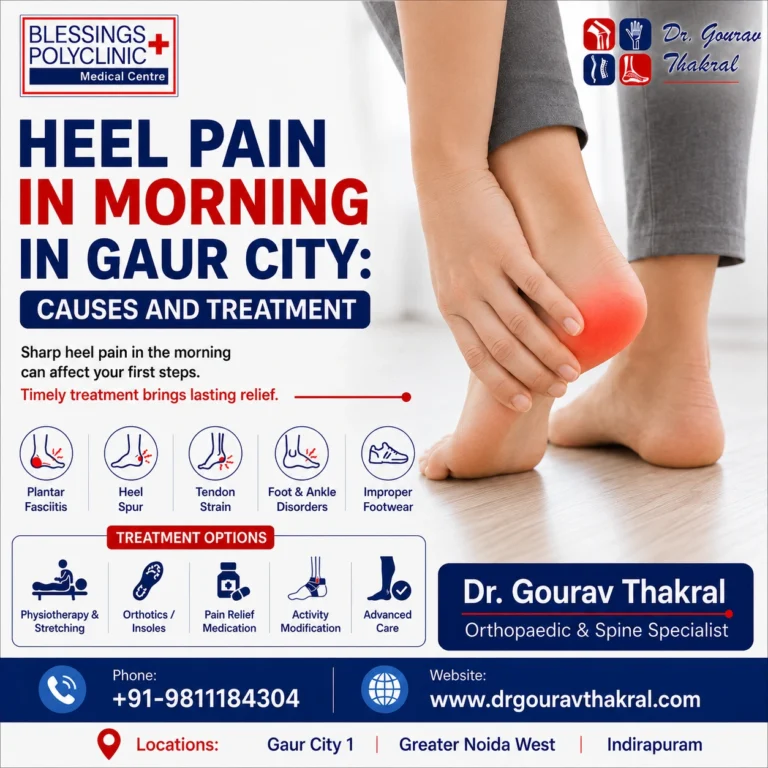
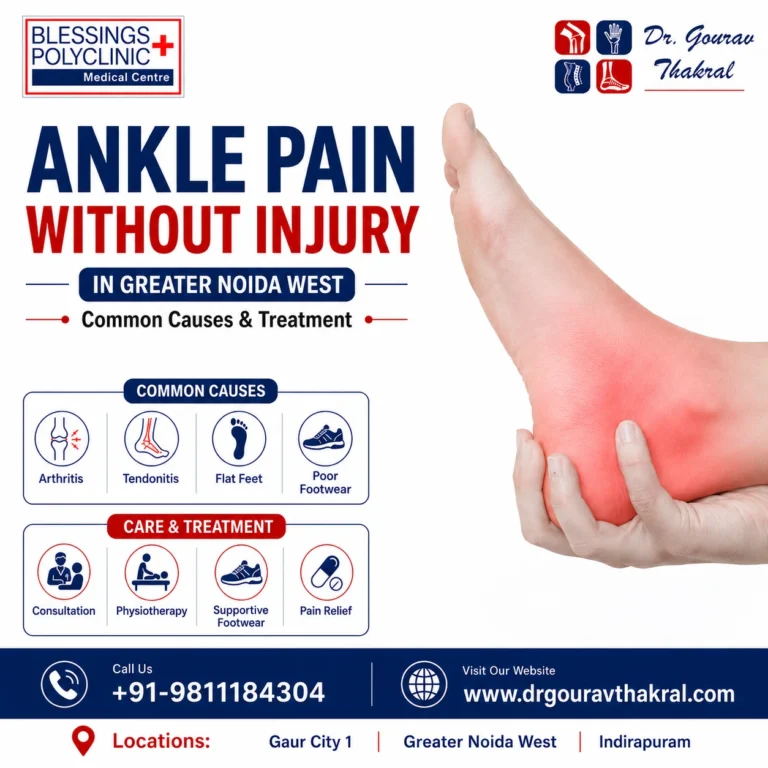
Common causes include:
- Plantar fascia strain
- Heel pad pressure
- Tight calf muscles
- Tendon irritation
- Flat feet
- Poor footwear
- Hard flooring
- Long work shifts
- Sudden increase in standing
- Excess body weight
Because several problems can cause similar pain, proper evaluation is important.
Common Symptoms
Symptoms may start gradually during the day.
Common signs include:
- Heel pain after standing
- Tenderness under the heel
- Burning sensation
- Foot stiffness
- Pain while walking
- Pain after a long shift
- Pain after sitting
- Mild swelling
- Tightness around the heel
- Difficulty walking barefoot
If these symptoms keep returning, Heel Pain After Standing All Day: Treatment in Greater Noida West may help identify the cause.
Plantar Fascia Strain
The plantar fascia is a strong band of tissue under the foot.
Long standing can place repeated tension on this tissue. As a result, pain may develop under the heel.
Common symptoms include:
- Heel pain
- Tightness
- Pain after rest
- Pain after prolonged standing
- Tenderness under the foot
Treatment may include stretching, activity changes, supportive footwear, and physiotherapy.
Heel Pad Pain
The heel pad helps absorb pressure while standing and walking.
Long hours on hard floors can increase stress on this area.
Symptoms may include:
- Deep heel pain
- Tenderness
- Pain after standing
- Discomfort while walking barefoot
Supportive footwear and activity changes may help reduce repeated pressure.
Tight Calf Muscles
Tight calf muscles can increase tension around the heel.
This may happen because of:
- Long standing
- Poor ankle flexibility
- Lack of stretching
- Running
- Gym activity
Therefore, guided stretching may be helpful in selected cases.
Tendon Irritation
The tendons around the heel may become irritated after repeated standing or activity.
Common symptoms include:
- Pain behind the heel
- Stiffness
- Tenderness
- Pain after walking
- Tightness after rest
Fortunately, many tendon problems improve with non-surgical care.
Poor Footwear
Shoes without proper support can increase stress on the heel.
Problems may occur when footwear is:
- Too flat
- Worn out
- Too tight
- Poorly cushioned
- Unsuitable for long standing
Therefore, footwear assessment can be an important part of heel pain care.
Flat Feet and Heel Pain
Flat feet can change how weight moves through the foot.
Some people have no symptoms. However, others may develop:
- Heel pain
- Arch pain
- Ankle discomfort
- Tired feet
- Pain after long standing
In such cases, strengthening and supportive footwear may help.
Heel Pain Treatment in Greater Noida West
Heel pain treatment in Greater Noida West starts with finding the exact cause of pain.
First, the doctor may ask:
- How long do you stand each day?
- Is pain worse in the evening?
- Does walking increase pain?
- Is swelling present?
- Does pain improve after rest?
- Which shoes do you wear?
- Is pain present in one heel or both?
Afterward, the heel, foot, ankle movement, and walking pattern may be checked.
Diagnosis of Heel Pain
A physical examination may include:
- Heel tenderness
- Foot alignment
- Ankle movement
- Calf tightness
- Arch position
- Muscle strength
- Walking pattern
If needed, imaging may also be advised.
X-Ray
An X-ray may help identify:
- Bone changes
- Arthritis
- Old injury
- Heel spur
- Alignment problems
However, not every person with heel pain needs an X-ray.
MRI Scan
MRI may be advised when the doctor needs more detail about:
- Tendons
- Soft tissues
- Stress injuries
- Other deeper problems
The decision depends on symptoms and examination findings.
Non-Surgical Heel Pain Treatment
Many cases improve without surgery.
Treatment may include:
- Activity modification
- Medicines
- Ice
- Stretching
- Physiotherapy
- Footwear changes
- Heel support
- Weight management
- Injection treatment in selected cases
Most importantly, treatment should match the exact cause.
Physiotherapy for Heel Pain
Physiotherapy may help:
- Improve ankle flexibility
- Reduce calf tightness
- Strengthen foot muscles
- Improve walking pattern
- Reduce repeated strain
In addition, exercises can be adjusted as symptoms improve.
Stretching
Gentle stretching may help reduce tightness.
A guided routine may include:
- Calf stretching
- Plantar fascia stretching
- Ankle mobility exercises
- Foot strengthening
However, stretching should not cause sharp pain.
Joint Pain Treatment in Greater Noida West
Joint pain treatment in Greater Noida West may be useful when heel pain occurs with discomfort in the ankle, knee, hip, or other joints.
For example, heel pain may change the way a person walks. As a result, extra stress can shift to nearby joints.
A complete orthopaedic assessment can help identify whether more than one area is involved.
Sports Injury Treatment in Greater Noida West
Sports injury treatment in Greater Noida West may be needed when heel pain starts after running, jumping, gym training, or another physical activity.
Sports-related heel pain can involve:
- Plantar fascia
- Achilles tendon
- Calf muscles
- Foot joints
Therefore, return to exercise should be gradual.
Role of an Orthopaedic Specialist in Greater Noida West
An Orthopaedic specialist in Greater Noida West can assess heel pain related to bones, joints, tendons, muscles, and foot alignment.
During the visit, the specialist may:
- Check heel tenderness
- Assess ankle movement
- Examine foot alignment
- Review X-rays if needed
- Plan physiotherapy
- Suggest footwear changes
- Recommend further treatment when required
A proper diagnosis can help avoid unnecessary treatment.
Can Heel Pain Affect Walking?
Yes. Heel pain can change how a person places weight on the foot.
As a result, extra stress may move to the:
- Ankle
- Knee
- Hip
- Lower back
Therefore, repeated heel pain should not be ignored.
Can Standing on Hard Floors Make Heel Pain Worse?
Yes. Long hours on hard floors can increase pressure on the heel.
Supportive footwear and cushioned surfaces may help reduce stress.
However, persistent pain should still be evaluated.
Should You Keep Standing With Heel Pain?
It depends on the severity of symptoms.
If standing causes sharp pain or swelling, long periods on your feet may need to be reduced temporarily.
Regular sitting breaks may also help.
When Is Surgery Needed?
Most heel pain does not need surgery.
However, surgery may be considered when:
- Pain continues despite proper treatment
- A severe structural problem is present
- Walking is badly affected
- Other treatments have not helped
The decision depends on the exact diagnosis.
Warning Signs You Should Not Ignore
Seek medical care if you have:
- Severe swelling
- Inability to walk
- Redness with fever
- Severe pain after injury
- Numbness
- Weakness
- Foot colour changes
- Rapidly worsening pain
These symptoms may need early assessment.
When Should You Visit a Doctor?
Consider an orthopaedic consultation if:
- Heel pain keeps returning
- Pain continues after rest
- Standing becomes difficult
- Walking is affected
- Swelling develops
- Home care does not help
- Pain affects work
Early evaluation can make treatment easier.
Tips to Reduce Heel Pain After Standing All Day
Helpful habits include:
- Wear supportive footwear
- Avoid worn-out shoes
- Take regular sitting breaks
- Stretch when advised
- Avoid walking barefoot on hard floors
- Increase activity gradually
- Maintain a healthy body weight
- Use proper work footwear
- Treat symptoms early
In addition, regular foot and ankle exercises may improve long-term comfort.
Why Choose Dr. Gourav Thakral?
Dr. Gourav Thakral provides orthopaedic care for heel pain, foot and ankle problems, joint pain, sports injuries, and movement-related conditions.
Patients looking for Heel Pain After Standing All Day: Treatment in Greater Noida West can consult him for a detailed evaluation and personalised treatment plan.
The treatment approach focuses on:
- Finding the cause of heel pain
- Reducing discomfort
- Improving foot movement
- Supporting better walking
- Improving flexibility
- Reducing repeated pressure
- Preventing recurring symptoms
- Considering advanced treatment only when required
Conclusion
Heel pain after standing all day may develop because of plantar fascia strain, heel pad pressure, tight calf muscles, tendon irritation, flat feet, or poor footwear.
For Heel Pain After Standing All Day: Treatment in Greater Noida West, consult Dr. Gourav Thakral for heel evaluation, physiotherapy guidance, footwear advice, joint care, and personalised orthopaedic treatment.
Early diagnosis can help reduce pain, improve walking comfort, and make long working days easier.
FAQs
1. Why does my heel hurt after standing all day?
Long standing can place repeated pressure on the heel and may irritate the plantar fascia, heel pad, tendons, or surrounding tissues.
2. Can poor footwear cause heel pain?
Yes. Unsupportive, flat, tight, or worn-out shoes can increase pressure on the heel.
3. Can physiotherapy help heel pain?
Yes. Physiotherapy may improve ankle flexibility, muscle strength, foot control, and walking comfort.
4. Should I stop standing completely?
Not always. However, long standing may need to be reduced temporarily if it causes sharp pain or swelling.
5. Can heel pain affect my knee?
Yes. A painful heel may change your walking pattern and place extra stress on the knee or hip.
6. When is an X-ray needed?
An X-ray may be advised when bone changes, arthritis, previous injury, or another structural problem is suspected.