Ankle Pain Without Injury in Greater Noida West: Common Causes and Treatment
Ankle pain without injury can begin slowly and make walking, standing, climbing stairs, exercising, or performing daily activities uncomfortable. Some people notice stiffness after rest, while others experience swelling, tenderness, or pain after standing for long hours.
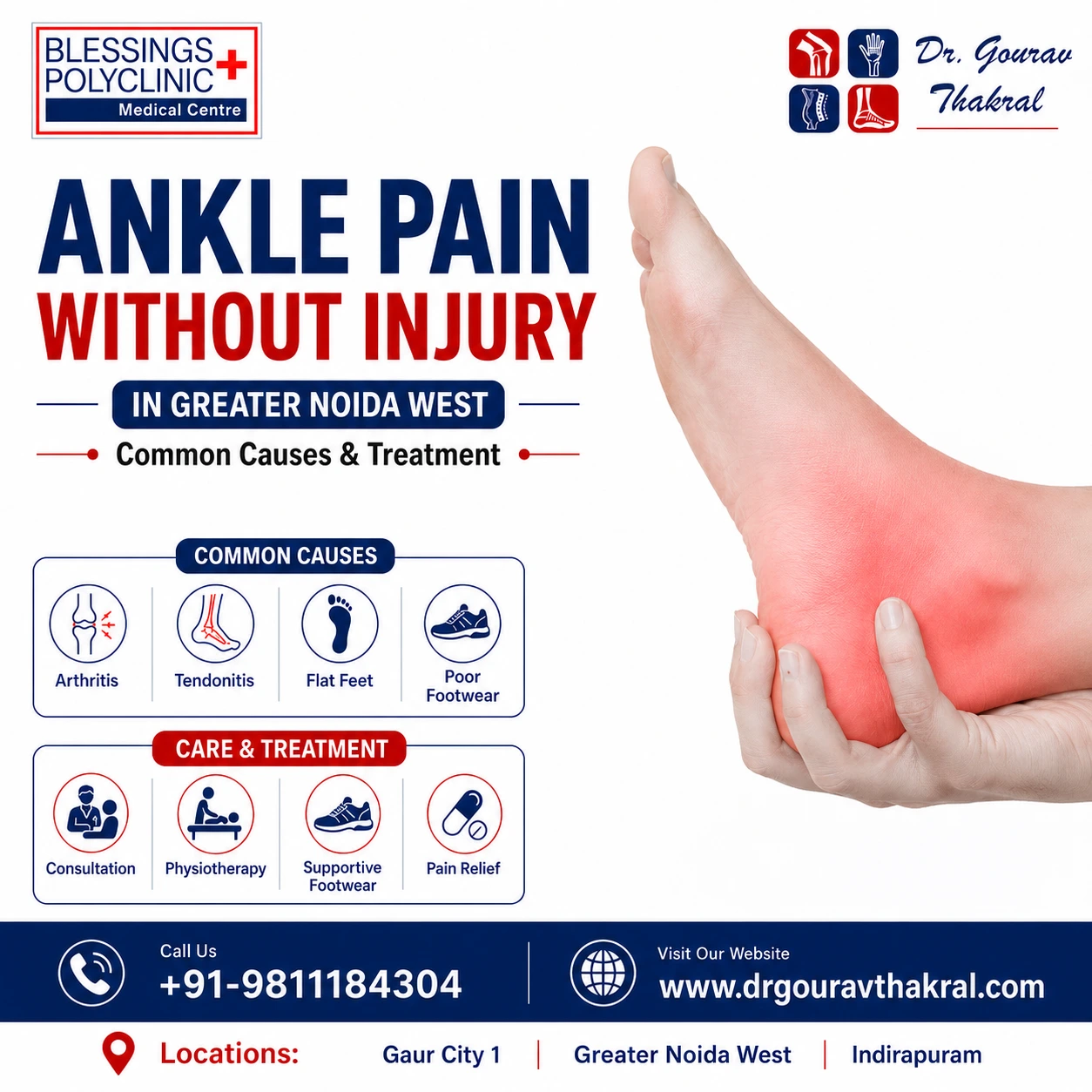
Although ankle pain is often linked to a twist or fall, it may also occur because of arthritis, tendon irritation, bursitis, overuse, unsuitable footwear, nerve problems, or changes in the way a person walks. Therefore, ongoing pain should not be ignored.
People looking for ankle pain treatment in Greater Noida West can consult Dr. Gourav Thakral for orthopaedic evaluation and personalised treatment guidance.
Early diagnosis can help reduce pain, improve ankle movement, restore walking comfort, and prevent the condition from becoming more difficult to manage.
What Is Ankle Pain Without Injury?
Ankle pain without injury means discomfort that begins without a clear fall, twist, accident, or direct impact.
The ankle contains bones, joints, cartilage, ligaments, tendons, muscles, nerves, and other soft tissues. Since all these structures support walking and balance, irritation in any one of them may cause pain.
The discomfort may affect:
- The front of the ankle
- The inner ankle
- The outer ankle
- The back of the ankle
- The area around the heel
- The complete foot and ankle region
In some cases, pain starts after increased walking or exercise. In others, it may develop even during normal daily activity.
Common Symptoms
Symptoms depend on the structure causing the problem.
Common signs include:
- Ankle pain while walking
- Pain during standing
- Morning stiffness
- Swelling
- Tenderness
- Warmth around the joint
- Reduced ankle movement
- Pain while climbing stairs
- Difficulty walking on uneven ground
- Pain after exercise
- A burning sensation
- Tingling or numbness
- Weakness
- Clicking or grinding
- Limping
Arthritis affecting the ankle may cause pain, stiffness, swelling, tenderness, and difficulty walking, especially after rest or increased activity.
Why Can Ankle Pain Start Without an Injury?
Not every ankle problem begins with a sudden accident.
Pain may develop because of:
- Repeated overuse
- Long hours of standing
- Sudden increase in walking
- Unsuitable footwear
- Arthritis
- Tendon inflammation
- Bursitis
- Flat feet
- Weak ankle muscles
- Excess body weight
- Nerve irritation
- Previous unnoticed injury
- Gout or inflammatory conditions
- Changes in walking pattern
Sometimes, the patient may not remember a minor twist or strain. However, repeated pressure can still irritate the joint or surrounding tissues.
Common Causes of Ankle Pain Without Injury
Ankle Arthritis
Arthritis is a common cause of gradual ankle pain and stiffness.
The main types that may affect the foot and ankle include:
- Osteoarthritis
- Rheumatoid arthritis
- Post-traumatic arthritis
- Gout-related arthritis
Osteoarthritis develops when the protective cartilage inside the joint gradually wears down. As a result, movement may become painful and stiff.
Rheumatoid arthritis is an inflammatory condition that may affect both feet or ankles. Meanwhile, post-traumatic arthritis may develop years after an old fracture or repeated ankle sprains.
Common symptoms include:
- Pain during movement
- Morning stiffness
- Joint swelling
- Tenderness
- Difficulty walking
- Pain after sitting or resting
- Reduced ankle movement
Treatment depends on the type and stage of arthritis.
Achilles Tendonitis
The Achilles tendon connects the calf muscles to the heel bone.
Repeated stress may cause irritation even when there has been no sudden injury.
Common causes include:
- Running
- Long walks
- Tight calf muscles
- Sudden increase in exercise
- Unsuitable footwear
- Reduced ankle flexibility
Symptoms may include:
- Pain behind the ankle
- Morning stiffness
- Tenderness
- Swelling
- Pain while standing on the toes
- Discomfort during walking
Achilles tendon problems are a recognised cause of ankle and heel pain, especially when symptoms worsen during standing on tiptoes or physical activity.
Tendon Overuse
Several tendons pass around the ankle and support movement.
These tendons may become irritated because of repetitive walking, running, gym exercise, or poor foot alignment.
Symptoms may include:
- Pain along one side of the ankle
- Mild swelling
- Weakness
- Pain during movement
- Tenderness
- Difficulty balancing
Treatment may include activity modification, support, physiotherapy, and strengthening.
Bursitis
A bursa is a small fluid-filled sac that reduces friction around joints and tendons.
When a bursa becomes irritated, it may cause:
- Dull ankle pain
- Redness
- Swelling
- Tenderness
- Pain during movement
Bursitis is one possible cause of ankle pain associated with swelling and aching discomfort.
Flat Feet
Flat feet can change the way body weight passes through the ankle.
As a result, extra pressure may affect the ankle joint, tendons, heel, and foot arch.
Common symptoms include:
- Ankle pain
- Foot tiredness
- Arch pain
- Heel pain
- Difficulty standing for long periods
- Uneven shoe wear
Insoles, supportive footwear, stretching, and strengthening may help selected patients.
Unsuitable Footwear
Shoes that are tight, poorly cushioned, worn out, or unstable may increase pressure on the ankle.
Ankle pain may become worse with:
- High heels
- Tight pointed shoes
- Thin or hard soles
- Worn-out sports shoes
- Footwear without arch support
Comfortable shoes with a low heel and soft sole may help reduce ankle stress.
Excessive Walking or Standing
Long standing or a sudden increase in walking may strain the muscles and tendons around the ankle.
This is common among people who:
- Work on their feet
- Walk on hard floors
- Suddenly increase exercise
- Travel long distances
- Start a new fitness routine
Rest and activity changes may provide temporary relief. However, repeated pain requires evaluation.
Gout
Gout can cause sudden joint pain, swelling, warmth, and redness.
Although it commonly affects the big toe, it may also affect the ankle.
The pain may start without any injury and can become severe within a short time.
A hot, swollen, or red ankle requires medical assessment because inflammatory arthritis or infection may need to be ruled out.
Nerve-Related Ankle Pain
Nerve irritation may cause pain even when the bones and joints are normal.
Symptoms may include:
- Burning pain
- Tingling
- Numbness
- Electric-shock sensations
- Weakness
- Pain travelling into the foot
Nerve pressure may develop near the ankle or come from the lower back.
Old or Unnoticed Injury
A previous sprain, fracture, or ligament injury may continue to affect the ankle years later.
In some cases, post-traumatic arthritis or chronic instability develops after an earlier injury, even when the original injury was treated.
Foot & Ankle Disorders
Foot & ankle disorders may affect bones, joints, cartilage, tendons, ligaments, muscles, nerves, and soft tissues.
Common conditions include:
- Ankle arthritis
- Achilles tendonitis
- Tendon inflammation
- Flat feet
- Bursitis
- Plantar fasciitis
- Heel pain
- Stress fracture
- Nerve compression
- Ligament weakness
- Gout
- Foot deformity
Since many conditions cause similar symptoms, a proper clinical examination is important.
Ankle Pain Treatment in Greater Noida West
Ankle pain treatment in Greater Noida West starts with identifying the exact source of discomfort.
The doctor may ask:
- When did the pain begin?
- Is swelling present?
- Is the pain worse in the morning?
- Does walking increase the pain?
- Is there numbness or tingling?
- Have you increased exercise recently?
- What type of footwear do you use?
- Have you had an old ankle injury?
- Is the ankle warm or red?
- Do you have diabetes, gout, or arthritis?
Afterward, the foot and ankle are examined for tenderness, swelling, movement, strength, alignment, and stability.
Diagnosis of Ankle Pain
The evaluation may include:
- Ankle movement
- Joint tenderness
- Swelling
- Muscle strength
- Tendon function
- Foot alignment
- Walking pattern
- Balance
- Nerve function
- Footwear assessment
A doctor may also observe how the patient walks because pain, stiffness, and alignment problems can change the walking pattern.
Digital X-Ray
An X-ray may help identify:
- Arthritis
- Joint-space reduction
- Bone spurs
- Old fractures
- Bone deformity
- Alignment problems
- Stress-related bone changes
However, X-rays do not clearly show tendons, ligaments, and nerves.
MRI Scan
An MRI may be advised when a soft-tissue problem is suspected.
It may help detect:
- Tendon injury
- Ligament damage
- Cartilage problems
- Hidden fracture
- Joint inflammation
- Nerve-related conditions
Still, an MRI is not required for every patient.
Blood Tests
Blood tests may be advised when the doctor suspects:
- Gout
- Rheumatoid arthritis
- Infection
- Inflammatory disease
- Vitamin deficiency
The test results should be considered with the patient’s symptoms and examination.
Foot & Ankle Treatment in Greater Noida West
Complete foot & ankle treatment in Greater Noida West may include pain relief, movement improvement, strengthening, walking correction, and prevention of repeated symptoms.
Treatment depends on:
- Cause of pain
- Duration of symptoms
- Swelling
- Walking ability
- Joint condition
- Tendon strength
- Age
- Daily activity
- Medical history
- Imaging findings
Many conditions can improve with non-surgical care.
Non-Surgical Ankle Pain Treatment
Rest and Activity Modification
Painful activities may need to be reduced temporarily.
These may include:
- Running
- Jumping
- Long standing
- Long-distance walking
- Uneven-ground walking
- High-impact exercise
However, complete rest for a long time may cause stiffness and weakness.
Ice Application
Ice may help when pain or swelling is present.
An ice pack wrapped in a towel may be applied for short periods. It should not be placed directly on the skin.
Ankle Elevation
Keeping the ankle raised may help control swelling.
This is especially useful after long standing or walking.
Supportive Footwear
Comfortable footwear can reduce pressure on the ankle.
Helpful features may include:
- Soft sole
- Low heel
- Proper fit
- Arch support
- Stable base
- Adequate cushioning
Soft insoles or heel pads may also help selected patients.
Ankle Brace
A brace may provide support when weakness or instability is present.
It may also improve walking comfort in some arthritis cases.
However, a brace should be used according to medical guidance.
Medicines
Pain-relief or anti-inflammatory medicines may be prescribed when required.
Patients should avoid taking medicines for long periods without medical advice.
Physiotherapy
Physiotherapy may help:
- Improve ankle movement
- Reduce stiffness
- Strengthen muscles
- Improve balance
- Support tendons
- Correct walking
- Prevent repeated pain
- Improve joint stability
Exercises should be selected according to the diagnosis.
Orthotics and Insoles
Orthotics may help redistribute pressure and support foot alignment.
They may be useful for:
- Flat feet
- Arthritis
- Uneven walking
- Heel pain
- Tendon problems
Custom or suitable shoe inserts can reduce pressure on painful foot and ankle joints in selected patients.
Weight Management
Extra body weight may increase stress on the ankle and foot joints.
Therefore, weight management can support better movement and reduce joint pressure.
Injection Treatment
Injection treatment may be considered for selected joint or tendon conditions.
However, it is not suitable for every patient, and relief may be temporary in some arthritis cases.
When Is Surgery Required?
Most ankle pain without injury does not require surgery.
However, surgery may be considered when:
- Arthritis is advanced
- Pain severely affects daily activities
- The ankle remains unstable
- A tendon is badly damaged
- Joint deformity affects walking
- Non-surgical treatment does not help
- Movement becomes severely restricted
The procedure depends on the diagnosis and extent of joint damage.
Role of an Orthopaedic Doctor
An orthopaedic doctor evaluates problems involving bones, joints, muscles, ligaments, tendons, and nerves.
For ankle pain, the doctor may:
- Examine the painful area
- Check ankle movement
- Assess walking
- Test tendon strength
- Review X-rays or MRI
- Identify arthritis
- Plan physiotherapy
- Recommend footwear or braces
- Advise advanced treatment when required
Correct diagnosis helps avoid delayed recovery and unnecessary treatment.
Role of a Bone Specialist in Greater Noida West
A bone specialist in Greater Noida West may assess ankle pain related to arthritis, bone weakness, stress fractures, old injuries, or joint deformity.
The specialist may guide patients regarding:
- Bone and joint evaluation
- Imaging
- Fracture assessment
- Arthritis care
- Bracing
- Physiotherapy
- Bone-health testing
- Surgical treatment when required
When Should You Visit a Doctor?
Consult a doctor when ankle pain:
- Stops normal daily activities
- Keeps returning
- Continues despite home care
- Becomes worse
- Causes tingling or numbness
- Affects walking
- Is associated with diabetes
Ongoing ankle pain, worsening symptoms, or loss of sensation should be medically assessed.
Seek urgent medical attention if you have:
- Severe ankle pain
- Inability to walk
- Significant redness or warmth
- Fever
- Sudden severe swelling
- Ankle deformity
- Loss of sensation
- A cold or pale foot
Tips to Prevent Ankle Pain
Helpful habits include:
- Wear supportive footwear
- Replace worn-out shoes
- Increase exercise gradually
- Warm up before physical activity
- Stretch the calf muscles
- Strengthen the ankle
- Practise balance exercises
- Maintain a healthy body weight
- Avoid long standing when painful
- Treat foot problems early
- Follow physiotherapy advice
Why Choose Dr. Gourav Thakral?
Dr. Gourav Thakral provides orthopaedic care for ankle pain, foot problems, arthritis, tendon injuries, fractures, joint stiffness, and movement-related conditions.
Patients looking for ankle pain treatment in Greater Noida West can consult him for detailed evaluation and personalised treatment guidance.
His approach focuses on:
- Correct diagnosis
- Pain relief
- Better ankle movement
- Improved walking
- Muscle strengthening
- Joint protection
- Prevention of repeated pain
- Surgery only when required
Conclusion
Ankle pain can develop even without a fall, twist, or clear injury. Arthritis, tendon irritation, flat feet, bursitis, unsuitable footwear, nerve problems, and repeated overuse are some possible causes.
For ankle pain treatment in Greater Noida West, consult Dr. Gourav Thakral for foot and ankle evaluation, pain management, physiotherapy guidance, footwear advice, and personalised orthopaedic care.
Early diagnosis can help reduce pain, restore movement, and make walking more comfortable.
FAQs
Why does my ankle hurt without an injury?
Possible causes include arthritis, tendon irritation, bursitis, flat feet, gout, nerve pressure, unsuitable footwear, or repetitive overuse.
Can ankle arthritis begin without a recent injury?
Yes. Arthritis may develop because of age-related wear, inflammatory conditions, genetics, or an old injury that happened years earlier.
Is physiotherapy useful for ankle pain?
Yes. Physiotherapy may improve movement, muscle strength, balance, walking, and joint stability.
Should I walk when my ankle hurts?
Light movement may be suitable in some cases. However, avoid activities that sharply increase pain and seek medical advice if walking becomes difficult.
Is an X-ray required for ankle pain?
An X-ray may be advised when arthritis, fracture, bone deformity, or another bone problem is suspected.
When should I consult an orthopaedic doctor?
Consult a doctor if pain continues, keeps returning, causes swelling or numbness, or affects walking and daily activities.
Can footwear cause ankle pain?
Yes. Tight, unstable, worn-out, or poorly cushioned footwear may increase pressure on the ankle and surrounding tissues.
Where can I get ankle pain treatment in Greater Noida West?
You can consult Dr. Gourav Thakral for ankle pain treatment in Greater Noida West, foot and ankle disorders, arthritis, tendon problems, and walking difficulty.