Flat Foot Surgery in Adults: Causes, Treatment and Recovery in Gaur City
Flat Foot Surgery in Adults in Gaur City may become necessary when flat feet cause ongoing pain, ankle discomfort, walking difficulty, swelling, or progressive foot deformity. Many adults live with flat feet without any problem. However, when the foot arch collapses, the heel turns outward, or pain starts affecting daily movement, the condition needs proper orthopaedic evaluation.
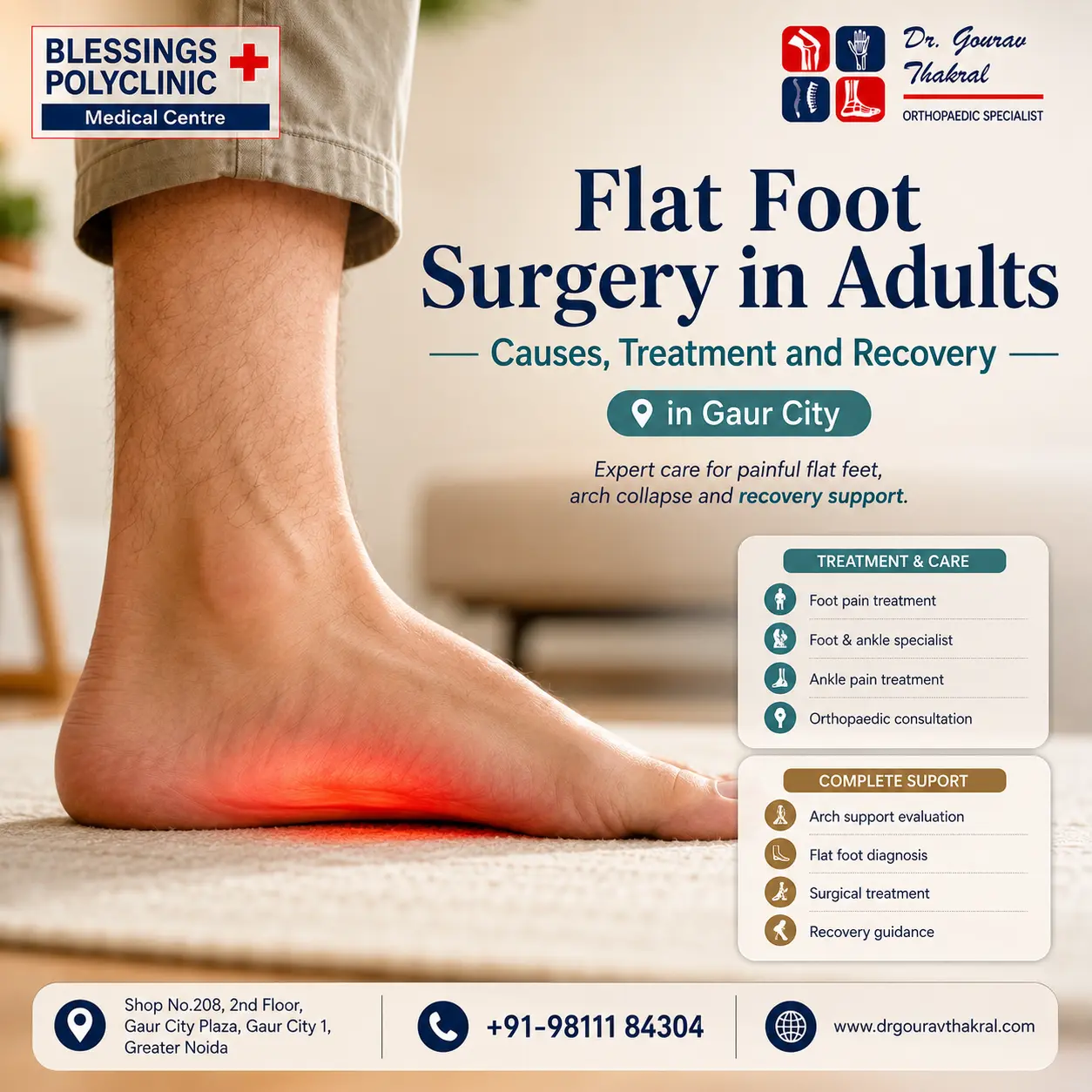
Flat feet occur when the arches on the inside of the feet flatten while standing. Mayo Clinic explains that in flatfeet, the arches flatten under body weight and the feet may point outward while the arch falls toward the floor. Flat feet can develop in childhood or later in life due to injury or age-related wear and tear.
For patients looking for adult flat foot treatment in Gaur City, Dr. Gourav Thakral provides expert orthopaedic care for foot pain, ankle pain, flat foot deformity, and related Foot & ankle disorders. As an experienced Orthopaedic doctor, he helps patients understand whether they need non-surgical care, bracing, physiotherapy, or surgery.
What Is Flat Foot in Adults?
Flat foot in adults means the natural arch of the foot becomes low or collapses. When a person stands, the inner side of the foot may touch the ground more than normal. In some adults, flat foot remains flexible and painless. In others, it becomes painful and progressive.
Adult flat foot may also affect the ankle. The heel may tilt outward, the foot may turn outward, and walking may become uncomfortable. Over time, the person may feel pain on the inner side of the ankle, arch, heel, or outer side of the foot.
A Foot & ankle specialist can examine the foot structure, walking pattern, ankle alignment, tendon strength, and flexibility before planning treatment.
Common Causes of Flat Foot in Adults
Adult flat foot can develop due to multiple reasons. One common reason is weakness or damage in the posterior tibial tendon. This tendon supports the foot arch and helps maintain foot alignment. When it becomes weak, inflamed, stretched, or torn, the arch may gradually collapse.
Other causes may include obesity, arthritis, injury, diabetes, age-related tendon weakness, ligament laxity, previous fractures, foot trauma, or long-standing untreated flat foot. Mayo Clinic notes that flat feet can develop later in life after injury or from wear-and-tear stresses of age.
Some people also develop pain because the foot works harder to maintain balance. This can create stress in the ankle, heel, calf, knee, or lower back.
Symptoms That Need Attention
Flat foot does not always need treatment. If there is no pain or functional problem, many people do not need medical care. However, painful flat foot should not be ignored.
Common symptoms include:
Pain in the arch, heel, or inner ankle
Swelling around the ankle
Foot fatigue after standing or walking
Difficulty walking long distances
Pain that increases with activity
Foot turning outward
Shoe wear on one side
Ankle pain or instability
Reduced balance or walking confidence
The NHS advises seeking medical help when flat feet cause pain, stiffness, weakness, numbness, repeated foot or ankle injuries, walking difficulty, balance problems, one-sided flat foot, or newly developed flat foot in adulthood.
When Is Flat Foot Surgery Needed?
Doctors usually start with non-surgical treatment first. Surgery becomes an option when pain, deformity, or walking difficulty continues despite proper conservative treatment. Mayo Clinic states that nonsurgical treatment may reduce symptoms and provide foot support, while surgery may treat the underlying issue if nonsurgical treatment does not succeed.
Flat foot surgery may be considered when:
Pain continues after non-surgical care
The arch collapse is progressing
Walking becomes difficult
The ankle turns inward or outward abnormally
Tendon damage is severe
The foot becomes stiff or deformed
Daily activity becomes limited
Braces, footwear changes, and therapy do not help enough
A Bone specialist or Orthopaedic specialist will decide the treatment based on foot flexibility, deformity stage, tendon condition, arthritis, pain level, and activity needs.
Non-Surgical Treatment Before Surgery
Many adults improve without surgery, especially in early stages. Non-surgical care focuses on reducing pain, supporting the arch, improving alignment, and strengthening foot and ankle muscles.
Treatment may include supportive shoes, arch supports, custom orthotics, ankle braces, medicines, activity modification, stretching, strengthening exercises, physiotherapy, and weight management when needed. AAOS explains that most patients in early stages can be treated without surgery using orthotics and braces.
For Foot pain treatment and Ankle pain treatment, the doctor may also address swelling, tendon irritation, muscle tightness, and walking mechanics. If symptoms improve, surgery may not be needed.
Types of Flat Foot Surgery in Adults
Flat foot surgery is not the same for every patient. The procedure depends on the stage of deformity, tendon damage, arthritis, flexibility of the foot, and patient goals. The surgeon may combine different procedures to correct alignment, support the arch, and reduce pain.
Surgical options may include tendon repair, tendon transfer, ligament repair, bone realignment, osteotomy, joint fusion, or reconstruction. Flexible flat foot may need reconstruction to restore the arch and correct heel position. Severe rigid flat foot with arthritis may need fusion surgery for stability.
AAOS states that if orthotics and braces do not provide relief, surgery can help pain and foot function, but surgical options vary widely depending on disease stage and deformity.
Recovery After Flat Foot Surgery
Recovery after adult flat foot surgery takes time and patience. The exact timeline depends on the procedure performed and the patient’s healing response. Some patients need a cast or boot, limited weight-bearing, physiotherapy, and gradual return to normal walking.
A review article on adult-acquired flatfoot mentions that range-of-motion exercises may begin around 2 weeks after surgery in some protocols, with progression to full weight-bearing around 8 to 10 weeks, depending on the surgery and surgeon guidance.
Recovery usually includes swelling control, wound care, protected walking, physiotherapy, strengthening, balance training, and footwear guidance. Complex reconstruction may take several months before full comfort and function improve.
Patients should not rush recovery. Following the doctor’s instructions helps protect the repair and improve long-term results.
Why Early Diagnosis Matters
Early diagnosis helps prevent worsening deformity. When adult flat foot progresses, the tendon may weaken further, the arch may collapse more, and the ankle may become painful. In later stages, treatment may become more complex.
Early care can help reduce pain, protect the foot arch, improve walking, and delay or avoid surgery in selected patients. If surgery becomes necessary, timely planning can help improve alignment and function.
People with repeated foot pain, ankle pain, or walking difficulty should consult an Orthopaedic doctor instead of relying only on painkillers or shoe changes.
Flat Foot Surgery in Adults in Gaur City by Dr. Gourav Thakral
If you are dealing with painful flat feet, arch collapse, ankle pain, or walking difficulty, Dr. Gourav Thakral can help with proper diagnosis and treatment planning. He evaluates foot alignment, arch flexibility, tendon strength, ankle movement, pain pattern, and imaging findings before suggesting treatment.
As an experienced Orthopaedic specialist, Dr. Gourav Thakral focuses on stage-wise care. Some patients may need orthotics, braces, physiotherapy, and medicines. Others may need surgical correction when the deformity is severe or non-surgical treatment fails.
Patients searching for the Best orthopaedic doctor in Gaur City can consult Dr. Gourav Thakral for flat foot concerns, foot pain, ankle pain, and other foot and ankle problems.
Final Thoughts
Flat feet in adults are not always serious, but painful or progressive flat foot needs proper attention. If you have arch pain, ankle pain, swelling, walking difficulty, or one-sided foot deformity, do not ignore it.
The right treatment depends on the cause, severity, flexibility, tendon condition, and daily activity needs. Early consultation with Dr. Gourav Thakral can help you understand whether non-surgical treatment or flat foot surgery is the right option for your condition.
FAQs
1. What causes flat foot in adults?
Adult flat foot may happen due to posterior tibial tendon weakness, age-related wear and tear, injury, arthritis, obesity, diabetes, or ligament weakness.
2. Does every adult with flat foot need surgery?
No. Many adults improve with orthotics, supportive shoes, braces, medicines, physiotherapy, and activity modification. Surgery is usually considered when conservative treatment fails.
3. When should I consult a doctor for flat foot?
Consult a doctor if you have foot pain, ankle pain, swelling, walking difficulty, repeated ankle injury, or a newly developed flat foot in adulthood.
4. What is the goal of flat foot surgery?
The goal is to reduce pain, improve alignment, support the arch, correct deformity, and improve walking function.
5. How long does recovery take after flat foot surgery?
Recovery varies depending on the procedure. Many patients need protected walking for several weeks and physiotherapy for strength and mobility.