Joint Dislocation Treatment in Yashoda Medicity, Indirapuram
Joint dislocation is a painful orthopaedic condition where the bones of a joint move out of their normal position. It can happen due to sports injuries, falls, accidents, sudden twisting, or trauma. Commonly affected joints include the shoulder, knee, hip, elbow, ankle, wrist, and fingers. If not treated on time, a dislocation may lead to ligament damage, nerve injury, stiffness, repeated dislocation, and long-term joint instability.
If you are searching for Joint Dislocation Treatment in Yashoda Medicity, Indirapuram, consult an experienced Orthopaedic doctor for proper diagnosis, safe reduction, pain control, rehabilitation, and recovery guidance.
What is Joint Dislocation?
A joint dislocation occurs when two connected bones are forced out of alignment. This condition causes severe pain, swelling, deformity, and difficulty moving the affected joint.
Dislocation can be complete or partial. A partial dislocation is also called subluxation. Both conditions require timely Orthopaedic care to prevent complications.
Common Causes of Joint Dislocation
Joint dislocation may happen due to:
- Road accidents
- Sports injuries
- Sudden fall
- Direct impact
- Twisting injury
- Weak ligaments
- Previous joint injury
- Repeated shoulder instability
- High-impact physical activity
People involved in sports, gym workouts, running, cycling, or physically demanding work are more prone to joint dislocation.
Symptoms of Joint Dislocation
You should consult an Orthopaedic specialist immediately if you notice:
- Severe joint pain
- Swelling around the joint
- Visible deformity
- Inability to move the joint
- Bruising
- Weakness
- Numbness or tingling
- Instability while moving
- Pain after injury or fall
Ignoring these symptoms may worsen the injury.
Types of Joint Dislocation
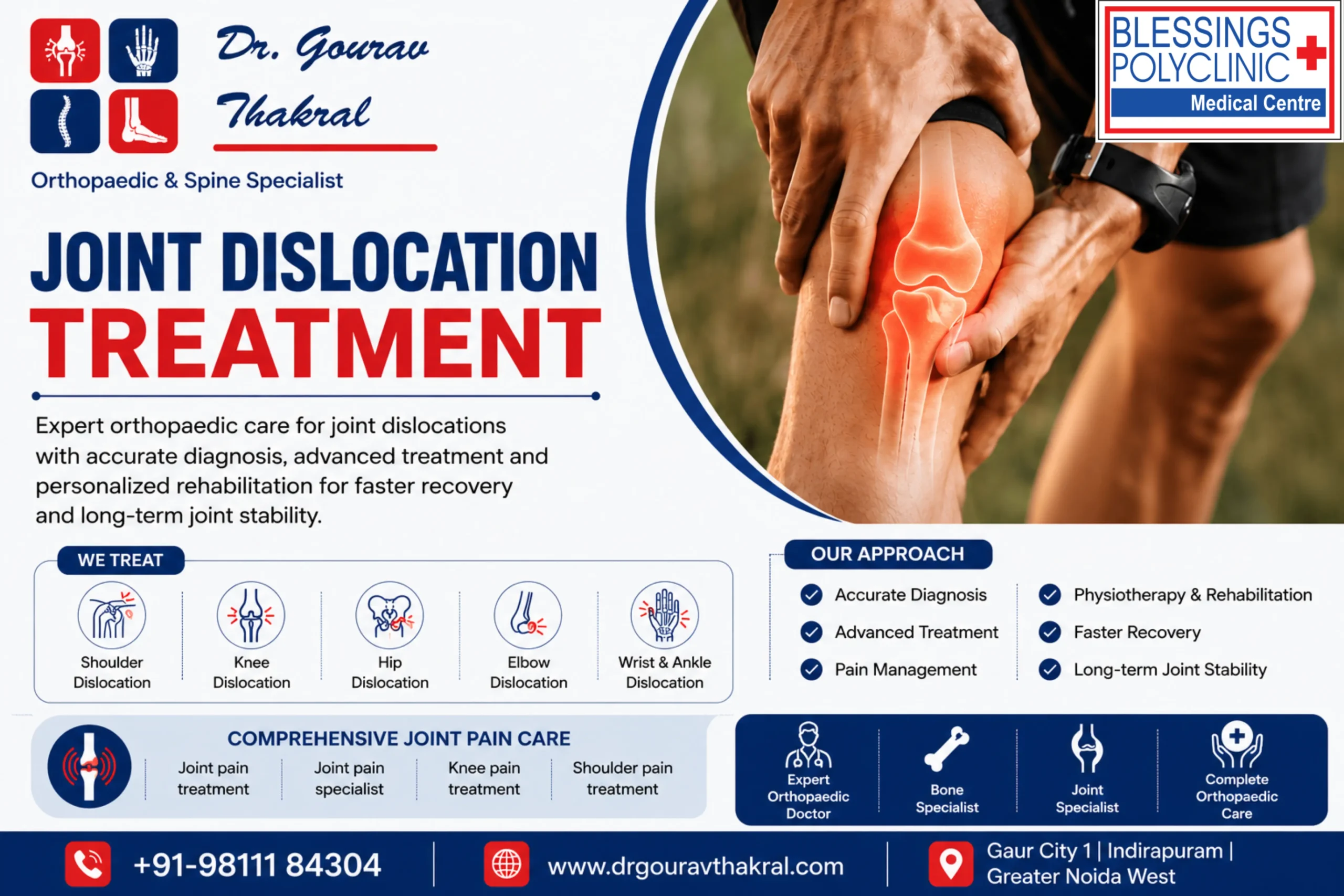
Shoulder Dislocation
Shoulder dislocation is one of the most common types because the shoulder joint has a wide range of movement. It may occur due to sports injuries, falls, or sudden arm movement.
Knee Dislocation
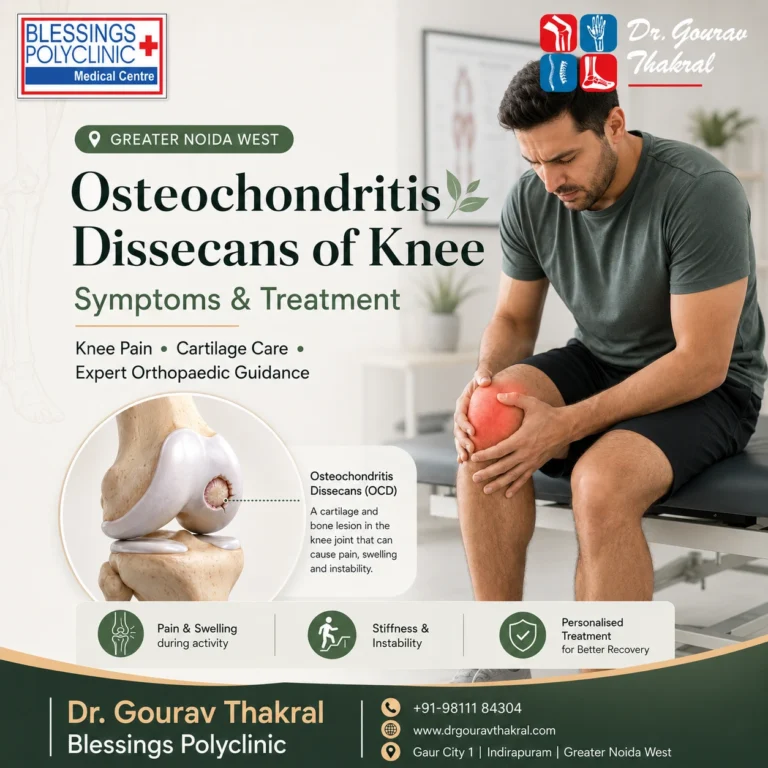
Knee dislocation is serious and may involve ligament injury. Patients may require Knee pain treatment along with ligament assessment and rehabilitation.
Hip Dislocation
Hip dislocation usually happens after high-impact trauma and requires urgent medical attention.
Elbow Dislocation
Elbow dislocation commonly occurs after falling on an outstretched hand.
Ankle & Wrist Dislocation
These injuries may happen during sports, falls, or accidents and require proper alignment and support.
Diagnosis of Joint Dislocation
A Bone specialist examines the affected joint to check swelling, deformity, movement limitation, nerve function, and blood supply.
Diagnosis may include:
- Physical examination
- X-ray
- MRI if ligament injury is suspected
- CT scan in complex injuries
- Joint stability assessment
Proper diagnosis helps plan safe and effective Orthopaedic treatment.
Joint Dislocation Treatment
Treatment depends on the joint involved, severity of injury, ligament damage, and patient condition.
Common treatment options include:
Joint Reduction
The displaced bone is carefully moved back into the correct position by a trained specialist.
Immobilization
A sling, brace, splint, or support may be used to allow healing.
Pain Management
Medication and supportive care help reduce pain and swelling.
Physiotherapy & Rehabilitation
Exercises are recommended to restore strength, flexibility, and mobility.
Surgery
In repeated dislocation, ligament tear, fracture, or severe instability, surgery may be needed.
Joint Pain Treatment After Dislocation
After dislocation, patients may experience stiffness, swelling, weakness, and discomfort. Proper Joint pain treatment helps restore function and prevent repeated injury.
A Joint pain specialist may recommend:
- Rest and support
- Cold therapy
- Medication
- Physiotherapy
- Strengthening exercises
- Mobility training
- Follow-up assessment
Shoulder Pain Treatment After Dislocation
Shoulder dislocation may cause long-term instability if not treated properly. Shoulder pain treatment after dislocation focuses on reducing pain, restoring shoulder movement, strengthening muscles, and preventing repeated dislocation.
Why Choose Dr. Gourav Thakral?
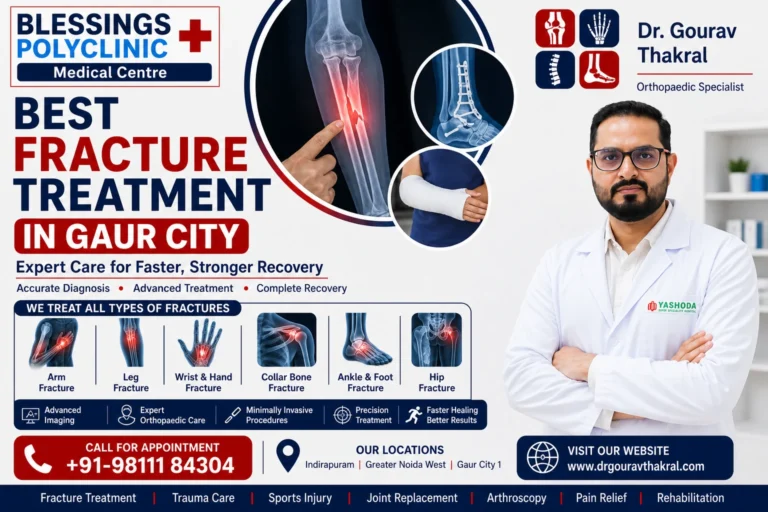
Dr. Gourav Thakral provides advanced orthopaedic care for joint injuries, dislocations, sports injuries, fractures, and mobility problems.
Patients looking for the Best orthopaedic in indirapuram often consult for expert diagnosis and personalized treatment.
Treatment focus includes:
- Accurate diagnosis
- Joint stabilization
- Pain relief
- Rehabilitation support
- Sports injury
- Personalized recovery plan
- Long-term mobility improvement
Prevention Tips
- Warm up before exercise
- Avoid sudden jerky movement
- Strengthen muscles around joints
- Wear protective sports gear
- Avoid lifting heavy weight incorrectly
- Treat previous injuries properly
- Follow physiotherapy after dislocation
FAQs
1. Is joint dislocation serious?
Yes, untreated dislocation can damage ligaments, nerves, blood vessels, and joint stability.
2. Can a dislocated joint heal without treatment?
No, a dislocated joint should be examined and treated by a specialist.
3. Which joint dislocates most commonly?
Shoulder dislocation is very common due to its wide range of movement.
4. Is physiotherapy required after joint dislocation?
Yes, physiotherapy helps restore strength, movement, and stability.
5. When should I consult a doctor?
Consult immediately after severe pain, swelling, deformity, or inability to move the joint.